
Posted inBlog
Germany vs Netherlands for PhD in 2026: Costs, Funding, Language, Jobs
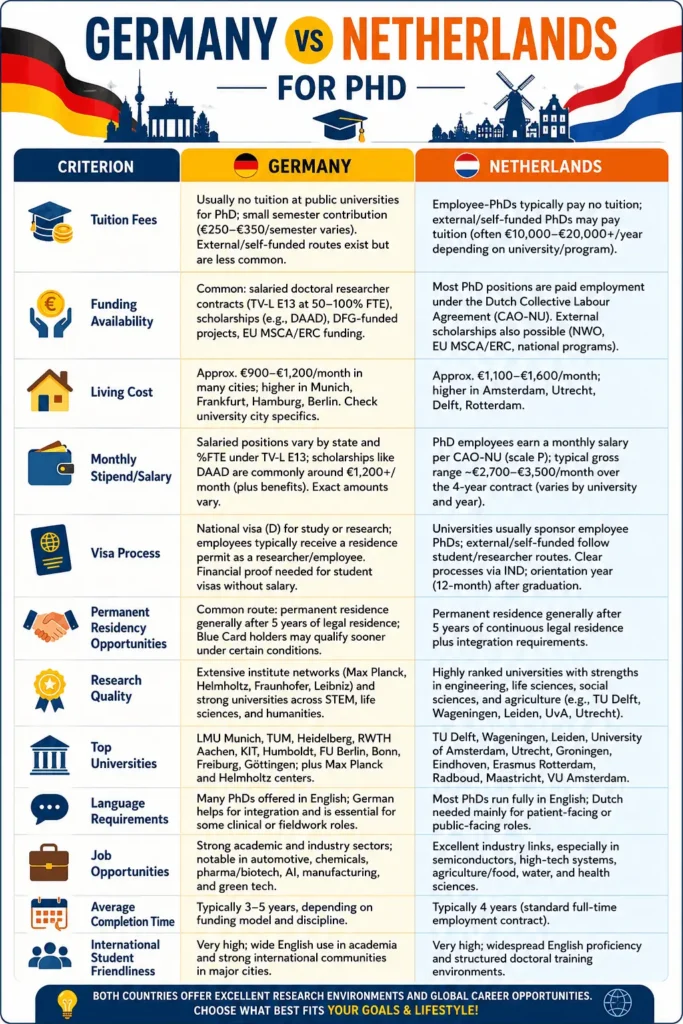
Choosing between a PhD in Germany vs Netherlands can shape your research experience, finances, and career path. This in-depth, fact-checked guide compares tuition, funding, living costs, language and supervision culture, research strengths, visa and residence procedures, and post-PhD job prospects. You will learn how salaries and scholarships differ, what to expect from the application and interview process, where the strongest fields are, how long programs typically take to complete, and which country better fits your goals—whether you want a highly structured employee-style PhD, minimal tuition fees, or strong industry links. We include official resources (DAAD, DFG, NWO, IND, Federal Foreign Office), practical tips, and clear recommendations for different student profiles so you can make a confident, data-informed decision.
