Author: admin

  • Stanford Top 2% Scientists List 2025: Indian Universities with Most Scientists

    Stanford Top 2% Scientists List 2025: Indian Universities with Most Scientists

    Introduction

    Every year, Stanford University in collaboration with Elsevier and Scopus releases the prestigious Stanford Top 2% Scientists list. This ranking identifies the world’s most influential researchers based on standardized citation indicators such as citations, h-index, co-authorship, and impact across disciplines.

    In the 2025 edition, thousands of researchers from India have been recognized for their global contribution. To better understand India’s position in the global research landscape, we analyzed the career-long dataset to find which Indian universities and institutions have the highest number of scientists featured in the Stanford Top 2% Scientists list.

    📄 Download the Curated List of Indian Universities (PDF): Stanford Top 2% Scientists 2025 – Indian Universities with Most Scientists

    📄 Access the Full Elsevier Raw Dataset (Excel): Stanford Top 2% Scientists 2025 – Complete Global List


    What is the Stanford Top 2% Scientists List?

    The Stanford Top 2% Scientists list is a global ranking developed by a team at Stanford University led by Prof. John P.A. Ioannidis. It evaluates millions of researchers worldwide and identifies the top 2% based on their impact. Two versions of the dataset are published each year:

    • Single-year impact – highlights the performance of researchers in the most recent year.
    • Career-long impact – covers an entire research career up to the present.

    For this blog, we focus on the career-long impact dataset, as it reflects the long-term research strength of Indian universities.


    Methodology for Ranking Indian Universities

    To identify the top Indian universities featured in the Stanford Top 2% Scientists list 2025, we:

    1. Downloaded the official career-long dataset from Elsevier.
    2. Filtered for scientists affiliated with Indian institutions.
    3. Grouped entries by institution/university.
    4. Ranked them by the number of scientists featured.

    This method provides a clear picture of which universities consistently produce globally influential researchers.


    Top Indian Universities in Stanford Top 2% Scientists List 2025

    Here are the leading Indian institutions with the highest number of scientists recognized in the Stanford Top 2% Scientists career-long dataset:

    RankInstitution/UniversityNumber of Scientists
    1Indian Institute of Science (IISc), Bangalore134
    2IIT Delhi105
    3IIT Kharagpur91
    4IIT Madras75
    5IIT Bombay70
    6IIT Roorkee56
    7IIT Kanpur49
    8Jadavpur University40
    9Bhabha Atomic Research Centre (BARC)39
    10Banaras Hindu University (BHU)38

    👉 Full curated Indian list available here: Download the Indian Universities List


    Key Insights and Trends

    • Public institutions dominate: IISc and IITs lead the rankings, showing the strength of India’s publicly funded research ecosystem.
    • Medical research is strong: AIIMS New Delhi is the top medical institution contributing to global scientific impact.
    • Rising diversity: Apart from the established giants, universities like BHU, Jadavpur University, and private universities such as VIT are also gaining global recognition.

    Why the Stanford Top 2% Scientists Ranking Matters

    Recognition in the Stanford Top 2% Scientists list is not just a personal achievement but also a reflection of an institution’s global research influence. For students, this ranking highlights the universities that foster cutting-edge science. For policymakers, it showcases India’s growing impact in global research and innovation.


    Conclusion

    The Stanford Top 2% Scientists list 2025 highlights the strength and diversity of Indian research. Institutions like IISc, IITs, AIIMS, and BHU continue to dominate, while several state and private universities are steadily making their mark.

    This blog covered the career-long dataset to identify the universities with the most influential scientists. In future updates, we will also analyze the single-year Stanford Top 2% Scientists list, which shows the most active institutions in recent years.

    📄 Download Resources:

    India’s growing presence in this global ranking proves one thing: its scientists are shaping the future of research worldwide.

    About Publisher

    IR Research Publication is publisher, editorial, and profile building service provider. It was founded with the mission to support scientists, researchers, academicians, and students in advancing their careers and contributing to global scientific knowledge. IR Research Publication is committed to delivering high-quality, reliable, and professional editorial services alongside a credible and ethical publishing platform.

    If you like this article, then visit our Blog page for more such articles.

  • How to Find Postdoctoral Fellowship Opportunities Around the World

    How to Find Postdoctoral Fellowship Opportunities Around the World

    Introduction: Why Choosing the Right Postdoctoral Fellowship Matters

    A postdoctoral fellowship is often the bridge between a Ph.D. and a long-term career in academia, research, or industry. It gives young researchers the chance to deepen their expertise, publish high-impact work, and build valuable networks. However, finding the right fellowship can be overwhelming, as opportunities are scattered across various countries, institutions, and funding bodies.

    In this blog, you’ll find a curated list of trusted websites to help you search for postdoctoral fellowship opportunities in the USA, Europe, Australia, Canada, and India. You’ll also learn strategies to use these resources effectively and key factors to consider before accepting a position.


    Global Portals for Postdoctoral Fellowship Opportunities

    Before diving into country-specific resources, start with global websites that aggregate postdoc positions worldwide:

    • FindAPostDoc – A dedicated platform for PhD and postdoc jobs worldwide.
    • Academic Positions – Lists research jobs across Europe, North America, and beyond.
    • JobRxiv – A free, community-driven job board for science and research jobs.
    • PostdocJobs.com – Specializes in postdoctoral positions and fellowships.
    • Nature Careers – Features academic jobs and postdoctoral fellowship listings in leading institutions.
    • LinkedIn – One of the best platforms for finding postdoctoral fellowship positions. By setting up job alerts, connecting with PIs, and following universities or institutes, you can discover hidden opportunities.

    👉 Tip: Use filters and set email alerts to stay updated on the latest positions.


    Postdoctoral Opportunities in the USA and Canada

    The USA and Canada host some of the world’s most competitive and well-funded fellowships. Here are key sites to explore:

    👉 Tip: Many North American fellowships provide visa sponsorship, but competition is fierce. Apply early and prepare strong research proposals.

    University-Specific Postdoctoral Career Portals in the USA

    Many leading universities maintain their own postdoctoral fellowship portals. These are especially valuable if you have specific institutions in mind:

    👉 Tip: If you’re targeting a specific university, checking their dedicated postdoc office websites often reveals opportunities not listed on global job boards


    Postdoctoral Fellowship in Europe

    Europe offers a rich landscape of fellowships funded by universities, institutes, and the European Union.

    👉 Tip: Many fellowships, like MSCA, require researchers to move to another country for eligibility, making mobility a key factor.


    Postdoctoral Opportunities in Australia

    Australia is a growing hub for cutting-edge research with attractive fellowship programs:

    • SEEK – Australia’s largest job board with postdoc listings.
    • THEunijobs – Times Higher Education’s portal for academic jobs.
    • CSIRO Postdoctoral Fellowships – Competitive positions with Australia’s leading research agency.
    • EMBL Australia – Postdoc opportunities in life sciences.

    👉 Tip: Check whether positions are open to international applicants, and factor in visa processing times when planning your applications.


    Postdoctoral Fellowship in India

    India is rapidly expanding its postdoc opportunities through government fellowships and institutional programs:

    👉 Tip: Many Indian postdocs are tied to individual PI grants. Directly contacting faculty in your field increases your chances of finding openings.


    How to Use Postdoctoral Fellowship Portals Effectively

    • Set job alerts to never miss a deadline.
    • Be specific with keywords (e.g., “postdoctoral fellowship immunology” instead of just “postdoc”).
    • Check PI and lab websites directly, as not all positions are listed on big portals.
    • Track fellowship deadlines such as Marie Curie, Banting, or EMBO.
    • Network actively at conferences, on LinkedIn, and by emailing researchers in your field.
    • Prepare application materials early – CV, publications, cover letters, and research proposals.

    Beyond Job Boards: Hidden Strategies to Secure a Postdoctoral Fellowship

    • Cold-email PIs with tailored research proposals.
    • Ask mentors for referrals to labs abroad.
    • Follow institutes on Twitter and LinkedIn for real-time updates.
    • Join postdoc mailing lists and Slack groups where jobs are often shared informally.

    Key Factors to Consider Before Accepting a Postdoctoral Fellowship

    • Funding security and contract duration.
    • PI’s mentorship style and lab culture.
    • Research resources and collaboration opportunities.
    • Publication potential in your field.
    • Cost of living, visa, and relocation support.
    • Career development opportunities (teaching, networking, industry links).

    Conclusion: Take Charge of Your Postdoctoral Fellowship Search

    Finding the right postdoctoral fellowship is a strategic step that can shape your academic and professional future. By leveraging global portals, regional websites, and hidden opportunities through networking, you can maximize your chances of landing a position that aligns with your research goals.

    Start exploring the listed websites today, set alerts, and don’t hesitate to reach out directly to labs that inspire you. With preparation and persistence, your next big research opportunity is within reach.

    About Publisher

    IR Research Publication is publisher, editorial, and profile building service provider. It was founded with the mission to support scientists, researchers, academicians, and students in advancing their careers and contributing to global scientific knowledge. IR Research Publication is committed to delivering high-quality, reliable, and professional editorial services alongside a credible and ethical publishing platform.

    If you like this article, then visit our Blog page for more such articles.

  • NIRF 2025 Pharmacy Rankings: Top Pharmacy Colleges in India (Full List)

    NIRF 2025 Pharmacy Rankings: Top Pharmacy Colleges in India (Full List)

    Introduction: Quick Overview

    The NIRF 2025 Pharmacy Rankings, released on September 4, 2025, provide a comprehensive evaluation of pharmacy institutions across India. These rankings assess colleges based on parameters such as Teaching, Learning & Resources (TLR), Research & Professional Practices (RPC), Graduation Outcomes (GO), Outreach & Inclusivity (OI), and Perception. For aspiring pharmacy students, understanding these rankings is crucial for making informed decisions about their education and future career paths.


    Top 10 Pharmacy Colleges in India – NIRF 2025 Pharmacy Rankings

    Here are the top 10 pharmacy colleges in India as per the NIRF 2025 rankings:

    RankInstitution NameLocationScore
    1Jamia HamdardNew Delhi86.59
    2Birla Institute of Technology & Science (BITS), PilaniPilani, Rajasthan82.28
    3Panjab UniversityChandigarh76.39
    4JSS College of Pharmacy, OotyOoty, Tamil Nadu76.14
    5National Institute of Pharmaceutical Education and Research (NIPER), HyderabadHyderabad, Telangana75.64
    6Institute of Chemical Technology (ICT), MumbaiMumbai, Maharashtra74.77
    7JSS College of Pharmacy, MysuruMysuru, Karnataka73.38
    8Manipal College of Pharmaceutical SciencesUdupi, Karnataka73.25
    9National Institute of Pharmaceutical Education and Research (NIPER), SAS NagarMohali, Punjab70.96
    10S.R.M. Institute of Science and TechnologyChennai, Tamil Nadu70.84

    (Source: NIRF Pharmacy Rankings 2025)


    Comprehensive NIRF 2025 Pharmacy College List – Curated by IR Research Publication

    Below is the complete list of all ranked pharmacy colleges in India for 2025. This curated compilation has been prepared by IR Research Publication based on the official NIRF 2025 data and provides an easy reference for students, educators, and researchers.

    Download the full curated NIRF 2025 Pharmacy College List (Prepared by IR Research Publication


    Trend Mechanics: Key Observations

    • Jamia Hamdard maintains its position as the top pharmacy college in India, reflecting its consistent performance across all evaluation parameters.
    • BITS Pilani has shown significant improvement, securing the second position, up from third in the previous year.
    • Panjab University has made a notable leap, climbing from the seventh position in 2024 to third in 2025, indicating its growing strength in pharmaceutical sciences.
    • NIPER Hyderabad has slightly slipped to the fifth position, while NIPER Mohali has improved its rank to ninth.
    • JSS College of Pharmacy, Ooty and Manipal College of Pharmaceutical Sciences continue to hold strong positions in the top 10.

    Government vs Private: A Comparative Analysis

    • Jamia Hamdard (Government): Continues to lead, showcasing the strength of government institutions in the pharmacy sector.
    • BITS Pilani (Private): Demonstrates the growing influence of private institutions, with significant improvements in rankings.
    • Panjab University (Government): Highlights the resurgence of government institutions in the top rankings.
    • JSS College of Pharmacy (Private): Reflects the consistent performance of private colleges in the pharmacy domain.

    Geographic Spotlight: Regional Highlights

    • Jamia Hamdard and BITS Pilani represent institutions from Delhi and Rajasthan, respectively, showcasing the diversity of top-ranking colleges across India.
    • Panjab University‘s rise underscores the growing prominence of institutions in the northern region.
    • The presence of multiple top-ranked colleges in Karnataka and Tamil Nadu highlights these states’ strong contributions to pharmaceutical education.

    Why It Matters: Implications for Students

    • Placement Opportunities: Top-ranked colleges often have better industry connections, leading to higher placement rates.
    • Research Opportunities: Institutions with higher rankings tend to have more robust research programs, offering students opportunities to engage in cutting-edge pharmaceutical research.
    • Infrastructure and Facilities: Higher-ranked colleges typically offer state-of-the-art facilities, enhancing the learning experience.
    • Global Recognition: Graduating from a top-ranked institution can enhance a student’s resume, offering better prospects for international opportunities.

    How This Impacts Applicants

    • Informed Decision-Making: Aspiring pharmacy students can make better-informed decisions about where to apply based on the NIRF rankings.
    • Understanding Trends: Recognizing trends, such as the rise of certain institutions, can help applicants anticipate future shifts in the pharmaceutical education landscape.
    • Strategic Planning: Applicants can align their preferences with institutions that offer specific specializations or have strong industry connections in their areas of interest.

    Conclusion

    The NIRF 2025 Pharmacy Rankings provide valuable insights into the landscape of pharmaceutical education in India. Institutions like Jamia Hamdard, BITS Pilani, and Panjab University continue to lead, while others like NIPER Hyderabad and JSS College of Pharmacy maintain their strong positions. For aspiring pharmacy students, these rankings serve as a crucial tool in selecting the right institution that aligns with their academic and career aspirations.

    About Publisher

    IR Research Publication is publisher, editorial, and profile building service provider. It was founded with the mission to support scientists, researchers, academicians, and students in advancing their careers and contributing to global scientific knowledge. IR Research Publication is committed to delivering high-quality, reliable, and professional editorial services alongside a credible and ethical publishing platform.

    If you like this article, then visit our Blog page for more such articles.

  • Top Breakthrough Studies in The Lancet That Changed Healthcare Forever

    Top Breakthrough Studies in The Lancet That Changed Healthcare Forever

    Introduction: Why The Lancet Matters in Global Healthcare

    In the vast world of medical publishing, only a few journals can truly claim to have shaped the course of modern medicine. Among them, The Lancet stands as one of the most respected and impactful. Founded in 1823 by English surgeon Thomas Wakley, The Lancet has grown into a global platform that consistently publishes groundbreaking studies, clinical trial results, and policy-shaping reports.

    Over the decades, The Lancet has not only informed clinicians and researchers but has also influenced governments, global health organizations, and even the general public. When a study appears in The Lancet, it often sparks international discussion and sometimes even changes the way healthcare is delivered. From cardiovascular medicine to infectious diseases, from maternal health to climate change, the journal has continuously been at the forefront of medical progress.

    In this article, we will explore the top breakthrough studies published in The Lancet that changed healthcare forever. These milestones highlight the journal’s unique ability to bridge research and real-world policy, making it one of the most powerful voices in global health.


    The Lancet and Its Legacy in Medical Research

    To understand the importance of these landmark studies, it’s worth reflecting on the legacy of The Lancet. Unlike many academic journals that focus narrowly on a single specialty, The Lancet covers a broad spectrum of medicine and global health. This makes it a central hub for cross-disciplinary knowledge, enabling breakthroughs in one area to influence others.

    The journal’s peer-review process is stringent, and its high impact factor consistently places it among the top-ranked medical publications worldwide. With major offices in London, New York, Amsterdam, and Beijing, and partnerships with researchers across the globe, The Lancet has positioned itself as a truly international voice in medicine.

    Importantly, The Lancet has always aimed to go beyond academic audiences. Its studies are often picked up by policymakers, health ministries, and organizations such as the World Health Organization (WHO). As a result, its research has the power to influence not only hospitals and clinics but also national and international strategies.


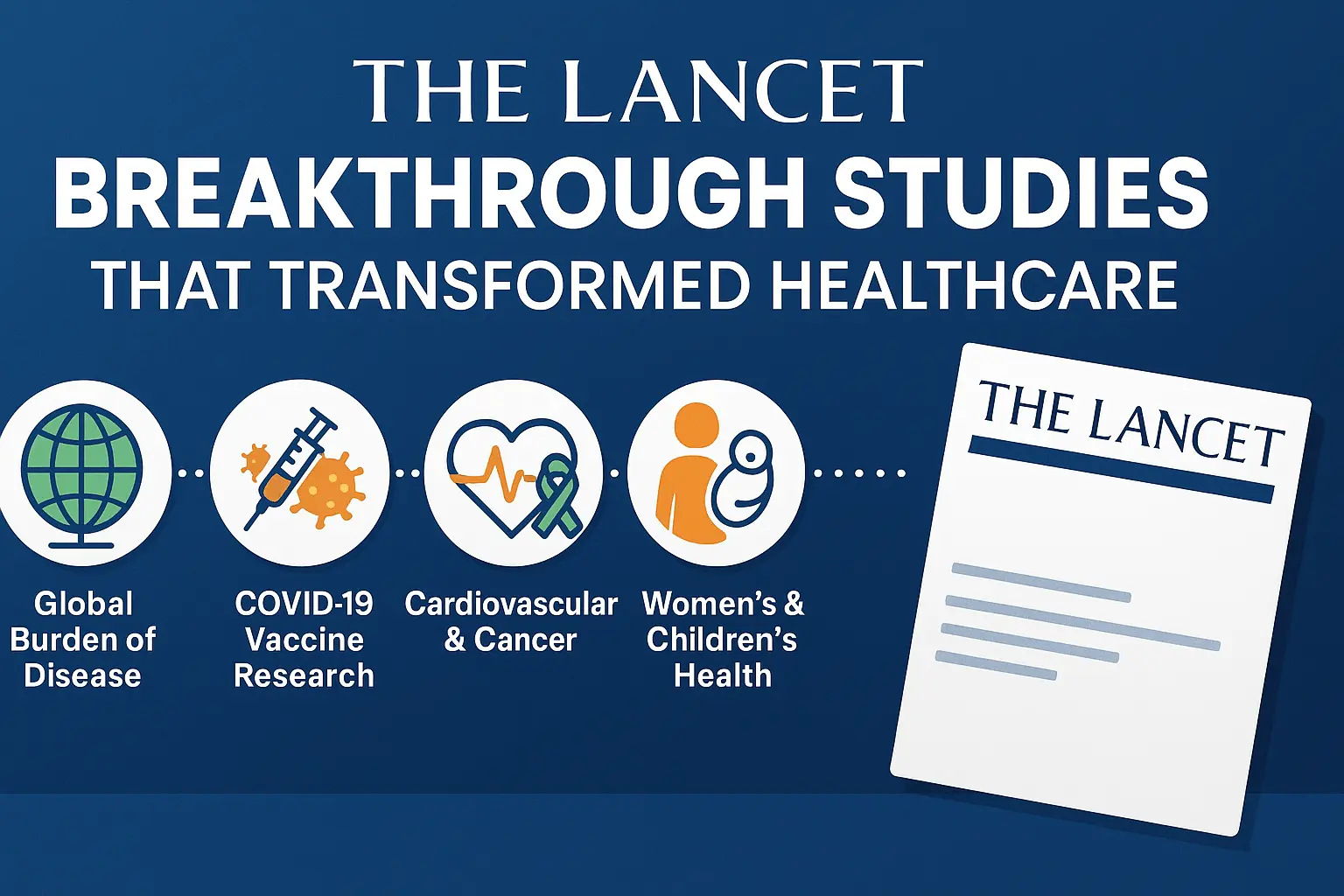
    Breakthrough Study 1: Global Burden of Disease Reports

    One of the most influential contributions from The Lancet has been the Global Burden of Disease (GBD) studies. First published in 1990, and regularly updated since, the GBD reports represent the most comprehensive effort to measure the world’s health challenges.

    The GBD evaluates diseases, injuries, and risk factors across countries and over time. Instead of focusing only on mortality, it introduced the concept of Disability-Adjusted Life Years (DALYs)—a measure that accounts for both premature death and years lived with disability. This metric fundamentally changed the way health systems prioritize conditions.

    For example, earlier global health strategies often emphasized infectious diseases. But the GBD highlighted the growing burden of non-communicable diseases (NCDs) like diabetes, cardiovascular disorders, and mental health conditions. This shifted attention and resources toward chronic diseases, leading to policy changes worldwide.

    The Lancet’s GBD reports remain a cornerstone for governments, NGOs, and institutions like the Bill & Melinda Gates Foundation in setting funding priorities. Without this groundbreaking series, global health would likely still underestimate the enormous impact of chronic illness.


    Breakthrough Study 2: The Lancet’s Role in COVID-19 Research

    The COVID-19 pandemic demonstrated the vital role medical journals play in times of crisis, and The Lancet was at the center of the global response.

    In February 2020, The Lancet published some of the earliest peer-reviewed studies on the novel coronavirus from Wuhan, China such as “A novel coronavirus outbreak of global health concern” and “Clinical features of patients infected with 2019 novel coronavirus in Wuhan, China“. These papers provided critical data on transmission, symptoms, and case fatality rates at a time when misinformation was rampant. As the pandemic progressed, The Lancet became a go-to source for reliable, evidence-based insights.

    It also published pivotal studies on COVID-19 vaccines, including trials of the Oxford–AstraZeneca vaccine, which later became one of the most widely used vaccines worldwide. These publications shaped not only scientific understanding but also public health decision-making at national and international levels.

    Of course, The Lancet was also at the center of controversy during COVID-19. A major study on hydroxychloroquine and COVID-19, published in 2020, was later retracted after questions arose about data integrity. While this sparked debate, it also highlighted the importance of transparency and accountability in medical publishing.

    Despite controversies, The Lancet’s COVID-19 studies remain some of the most cited and influential works of the pandemic, guiding healthcare providers, policymakers, and vaccine developers alike.


    Breakthrough Study 3: Landmark Cardiovascular and Cancer Trials

    Another area where The Lancet has left an indelible mark is in cardiovascular medicine and cancer research.

    In cardiology, The Lancet has published numerous landmark clinical trials that have shaped the treatment of hypertension, coronary artery disease, and heart failure. For example, major studies on the benefits of statins in lowering cholesterol and reducing cardiovascular risk have fundamentally altered prescribing practices around the world. Research on aspirin use in secondary prevention of heart attacks and strokes also found its way into global treatment guidelines thanks to The Lancet.

    In oncology, The Lancet has featured pivotal trials in chemotherapy, targeted therapy, and immunotherapy. By disseminating results from large, multicenter clinical trials, the journal has accelerated the adoption of life-saving treatments. These studies often represent the cutting edge of medical science, offering hope for patients facing some of the most difficult diseases.


    Breakthrough Study 4: Women’s and Children’s Health Initiatives

    Few areas of research have been as influenced by The Lancet as women’s and children’s health.

    The journal has published groundbreaking studies on maternal mortality, child malnutrition, and reproductive health. Its 2006 series on maternal, newborn, and child survival is often credited with influencing the United Nations Millennium Development Goals (MDGs). This research emphasized cost-effective interventions such as skilled birth attendance, breastfeeding promotion, and basic vaccination programs.

    Later series on child nutrition brought global attention to the issue of stunting and the long-term impact of early malnutrition on physical and cognitive development. These findings shaped not only health policies but also educational and social development strategies.

    By prioritizing these topics, The Lancet ensured that women’s and children’s health remained central to global health agendas.


    Breakthrough Study 5: Climate Change and Health Reports

    In recent years, The Lancet has emerged as a powerful voice linking climate change and human health.

    The Lancet Countdown on Health and Climate Change, published annually, tracks how environmental changes—rising temperatures, air pollution, extreme weather events—affect human well-being. These reports argue that climate change is not only an environmental crisis but also a public health emergency.

    The Countdown series has provided evidence that climate change exacerbates heat-related illness, worsens air quality, spreads infectious diseases, and threatens food security. By framing climate change in terms of health, The Lancet has successfully expanded the urgency of the debate, influencing policymakers to view it not only as an ecological issue but also as a human survival issue.


    The Lancet’s Role in Shaping Public Policy

    Beyond individual studies, The Lancet is unique in how often its findings translate directly into policy. Governments and international bodies frequently cite The Lancet when shaping health laws, vaccination programs, and funding strategies.

    For instance, The Lancet’s tobacco control series provided evidence that fueled stricter anti-smoking legislation across many countries. Similarly, its nutrition and obesity studies have guided policies on sugar taxes and food labeling.

    The journal’s ability to influence both the scientific community and political decision-makers underscores its exceptional role in global healthcare.


    Criticism and Controversies Around The Lancet

    While The Lancet has a long record of excellence, it has not been free from criticism.

    The most infamous case was the 1998 study linking the MMR vaccine to autism, which was later fully retracted and widely condemned as fraudulent. This single paper caused a massive drop in vaccination rates and fueled the anti-vaccine movement—demonstrating how even a prestigious journal can make mistakes with devastating consequences.

    During COVID-19, the hydroxychloroquine retraction raised questions about peer-review standards and the rush to publish during crises. Critics argue that The Lancet, like all journals, must balance speed with rigor, especially when the stakes are high.

    Nevertheless, by acknowledging and correcting these errors, The Lancet demonstrates the self-correcting nature of science. Transparency in handling controversies has helped it maintain trust and authority in the long term.


    Conclusion: Why The Lancet Remains the Gold Standard of Medical Research

    From the Global Burden of Disease studies to COVID-19 vaccine trials, from maternal health initiatives to climate change reports, The Lancet has repeatedly demonstrated its power to influence both science and society.

    Its publications not only provide cutting-edge medical insights but also drive policy decisions that affect millions of lives. While controversies remind us of the challenges of scientific publishing, they do not diminish the journal’s legacy as a cornerstone of global health.

    As new challenges emerge—from antimicrobial resistance to future pandemics—The Lancet will undoubtedly continue to serve as a beacon for evidence-based medicine. For healthcare professionals, policymakers, and the general public, following The Lancet means staying at the forefront of the medical advances that shape our future.

    About Publisher

    IR Research Publication is publisher, editorial, and profile building service provider. It was founded with the mission to support scientists, researchers, academicians, and students in advancing their careers and contributing to global scientific knowledge. IR Research Publication is committed to delivering high-quality, reliable, and professional editorial services alongside a credible and ethical publishing platform.

    If you like this article, then visit our Blog page for more such articles.
  • A Beginner’s Guide to Grants and Fundings for Early Career Researchers

    A Beginner’s Guide to Grants and Fundings for Early Career Researchers

    Introduction

    Securing funding is one of the biggest challenges for early career scientists. Whether you are a PhD student, postdoc, or newly appointed faculty member, access to financial support is crucial for driving your research forward. Yet, many young researchers feel lost when navigating the competitive world of grants. This beginner’s guide explores the essentials of fundings for early career researchers—where to find opportunities, how to apply, and what strategies can improve your chances of success.


    Why Fundings for Early Career Researchers Matters

    For young scientists, funding is more than just money—it is recognition of your potential as an independent researcher. Securing a grant helps you:

    • Launch pilot projects that can lead to high-impact publications.
    • Attend international conferences, boosting your visibility and collaborations.
    • Build a track record that makes you competitive for larger grants.
    • Gain independence from your supervisor’s funding and establish your own research identity.

    In short, fundings for early career researchers not only sustain your experiments but also shape long-term career trajectories.


    Types of Research Available Fundings for Early Career Researchers

    When exploring fundings for early career researchers, it’s helpful to know the different types of support you can apply for. Each serves a unique purpose in shaping your career:

    🔹 Institutional Funding

    • Many universities provide internal fellowships, seed funds, and start-up packages.
    • These awards are usually smaller but easier to obtain compared to national grants.
    • They help generate pilot data, which strengthens future external applications.
    • Examples: departmental travel awards, young investigator grants, or thesis support funds.
      (Check your university’s Office of Research or Sponsored Programs page for internal calls.)

    🔹 Government Grants

    Government grants often provide multi-year support, making them crucial fundings for early career researchers.

    🔹 Private Foundations and Nonprofits

    🔹 Industry and Non-Traditional Sources

    👉 Takeaway: By strategically combining institutional, government, foundation, and industry support, researchers can create a strong portfolio of fundings for early career researchers.

    Travel and Conference Grants & Fundings for Early Career Researchers

    These small fundings for early career researchers often lead to collaborations that spark larger projects.


    Where to Find Grant & Fundings for Early Career Researchers

    Even the most motivated researcher can struggle if they don’t know where to look. Luckily, multiple platforms and strategies exist to track fundings for early career researchers:

    🔹 United States Platforms

    • Grants.gov – Central hub for all federal funding opportunities.
    • NIH RePORTER – Explore funded projects and identify suitable NIH grants.
    • NSF FastLane / Research.gov – Search and apply for NSF-funded programs.
    • Professional societies like AHA also provide seed grants and fellowships.

    🔹 Europe and UK Platforms

    🔹 India and Asia-Pacific

    🔹 Practical Tips to Stay Updated

    • Sign up for email alerts from portals like Grants.gov or UKRI.
    • Follow agencies on LinkedIn/Twitter (e.g., @NIHGrants, @ERC_Research).
    • Ask mentors and peers—word of mouth often reveals lesser-known fundings for early career researchers.

    👉 Takeaway: Knowing where to look and setting up alerts ensures you never miss deadlines, keeping you ahead in the competitive race for fundings for early career researchers.


    How to Choose the Right Grant

    Not every opportunity will suit your career stage. To maximize success:

    • Ensure your research scope aligns with the funder’s mission.
    • Check eligibility carefully (citizenship, years post-PhD, area of research).
    • Compare the grant size and duration with your project’s needs.
    • Study past awardees to understand the funder’s preferences.

    A well-matched application increases your chances of securing fundings for early career researchers.


    Basics of a Strong Grant Application

    Winning grants requires more than good science—it’s about clear communication. Key elements include:

    • A focused, innovative research question.
    • Evidence of feasibility through preliminary data.
    • A compelling CV backed by publications or relevant experience.
    • Letters of recommendation from respected mentors.
    • A realistic and justified budget.

    The strongest fundings for early career researchers are awarded to those who can convince reviewers that their project is both important and achievable.


    Common Mistakes to Avoid

    Grant reviewers frequently cite the following reasons for rejection:

    • Objectives that are too vague or broad.
    • Projects that are overambitious with limited resources.
    • Failure to follow the funder’s guidelines.
    • Weak or unjustified budget requests.
    • Submitting applications at the last minute.

    Avoiding these pitfalls is essential to improve your chances of securing fundings for early career researchers.


    Resources and Support Systems

    Don’t navigate the grant process alone. Make use of:

    • University grant support offices that help with editing and submission.
    • Mentorship and peer review to refine your proposals.
    • Online courses and workshops dedicated to grant writing.
    • Professional societies like APS, AAPS, AACR, which often provide exclusive fellowships.

    These resources can significantly improve your chances of winning fundings for early career researchers.


    Conclusion

    Getting your first grant may feel intimidating, but persistence and preparation make all the difference. By starting small, learning from mentors, and strategically targeting opportunities, you can steadily build a funding portfolio that supports your research journey. Remember, every successful scientist began with their very first grant—so take the leap into the world of fundings for early career researchers today.

    About Publisher

    IR Research Publication is publisher, editorial, and profile building service provider. It was founded with the mission to support scientists, researchers, academicians, and students in advancing their careers and contributing to global scientific knowledge. IR Research Publication is committed to delivering high-quality, reliable, and professional editorial services alongside a credible and ethical publishing platform.

    If you like this article, then visit our Blog page for more such articles.

  • How to Use a Power Calculator for Research: A Beginner-Friendly Guide

    How to Use a Power Calculator for Research: A Beginner-Friendly Guide

    Introduction to Power Calculators in Research

    Designing a research study requires careful planning, especially when determining the right sample size. One of the most valuable tools for researchers is the power calculator. It helps ensure that your study has enough statistical strength to detect a real effect, if it exists. Learning how to use a power calculator can save time, resources, and improve the reliability of your results.

    What is a Power Calculator?

    A power calculator is a statistical tool that helps researchers estimate the probability of detecting an effect in a study, given certain parameters such as sample size, effect size, and significance level. In simple terms, it answers the question: “Is my study big enough to detect the effect I’m interested in?”

    Why Researchers Need to Understand Statistical Power

    Statistical power is the probability of avoiding a Type II error (failing to detect a true effect). If your study is underpowered, you risk wasting time and resources. With the help of a power calculator, you can design studies that are more reliable and publishable.

    Key Benefits of Using a Power Calculator in Research

    • Ensures adequate sample size planning
    • Increases confidence in study findings
    • Reduces the risk of false negatives
    • Improves chances of publication in high-impact journals

    Basics You Should Know Before Using a Power Calculator

    What is Statistical Power?

    Statistical power refers to the probability of correctly rejecting the null hypothesis when an actual effect exists. Most researchers aim for 80% or higher power, meaning there’s an 80% chance of detecting a true effect.

    The Role of Effect Size, Sample Size, and Significance Level

    • Effect Size: The magnitude of the difference or association you expect. Larger effects require smaller sample sizes.
    • Sample Size: The number of participants needed to achieve reliable results.
    • Significance Level (α): Usually set at 0.05, it represents the threshold for deciding whether an effect is statistically significant.

    Common Mistakes Researchers Make in Power Analysis

    • Guessing effect sizes without prior evidence
    • Using too small a sample size to save costs
    • Ignoring multiple comparisons when running several tests
    • Failing to perform a power calculation before data collection

    Step-by-Step Guide on How to Use a Power Calculator

    Here’s a structured process for researchers who want to learn how to use a power calculator:

    Step 1 – Define Your Research Question and Hypothesis

    Start by clearly outlining your hypothesis. For example, “Does Drug A reduce blood pressure compared to placebo?”

    Step 2 – Select the Type of Test

    Choose the statistical test appropriate for your study:

    • t-test (comparing two means)
    • ANOVA (comparing multiple means)
    • Chi-square (categorical data)
    • Regression analysis (predicting relationships)
    Understanding Statistical Tests in Biomedical Research: A Beginner’s Guide

    Learn in details about what Statistical Tests is appropriate for your study in our Beginner’s Guide

    Step 3 – Enter Effect Size and Significance Level

    Estimate the expected effect size based on previous studies or pilot data. Set your significance level (usually 0.05).

    Step 4 – Adjust Sample Size for Adequate Power

    Increase or decrease the sample size until your study reaches at least 80% power. Most power calculators will display this visually.

    Step 5 – Interpret the Results of the Power Calculator

    The output will show whether your planned study is sufficiently powered. If not, you may need to recruit more participants or refine your design.


    Choosing the Right Power Calculator Tool

    Free Online Power Calculators for Researchers

    Several free tools are available, such as ClinCalc, OpenEpi, and Sample Size Calculator.net. These are great for quick estimates.

    Software Options (G*Power, R, SPSS, SAS, etc.)

    • G*Power: Popular, free, and flexible for most tests.
    • R: Provides advanced customization through packages like pwr.
    • SPSS & SAS: Often used in professional research settings for large datasets.

    Which Power Calculator is Best for Your Research Needs?

    • Beginners: Online calculators or G*Power
    • Advanced users: R or Python for flexibility
    • Clinical studies: Specialized calculators tailored for trials

    Practical Examples of How to Use a Power Calculator

    Example 1 – Calculating Power for a Clinical Trial

    A researcher testing a new asthma treatment can use a power calculator to estimate how many participants are required to detect a meaningful improvement in lung function.

    Example 2 – Using a Power Calculator in Social Science Research

    A psychology study measuring the effect of mindfulness training on stress reduction might use G*Power to decide the number of participants needed for a t-test.

    Example 3 – Power Analysis in Laboratory Studies

    In biomedical research, power calculators help determine the number of cell or animal samples needed to observe significant differences in protein expression.


    FAQs About How to Use a Power Calculator

    Do I always need a power calculator for my study?

    Yes—unless you’re conducting exploratory research, a power calculator is essential for robust, reliable findings.

    How accurate are online power calculators?

    Most online tools provide accurate estimates, but advanced software like G*Power or R is recommended for complex designs.

    Can a power calculator be used for small sample studies?

    Yes, but be cautious. Small sample studies often lack statistical power, so results should be interpreted carefully.


    Conclusion

    Learning how to use a power calculator is an essential step in research design. By understanding statistical power, effect size, and sample size, you can plan more effective studies and improve your chances of meaningful, publishable results. Whether you are a beginner or an advanced researcher, using the right power calculator ensures your study is both efficient and reliable.

    About Publisher

    IR Research Publication is publisher, editorial, and profile building service provider. It was founded with the mission to support scientists, researchers, academicians, and students in advancing their careers and contributing to global scientific knowledge. IR Research Publication is committed to delivering high-quality, reliable, and professional editorial services alongside a credible and ethical publishing platform.

    If you like this article, then visit our Blog page for more such articles.

  • Understanding Statistical Tests in Biomedical Research: A Beginner’s Guide

    Understanding Statistical Tests in Biomedical Research: A Beginner’s Guide

    Introduction

    In biomedical research, accurate data interpretation is just as important as collecting data. Without proper statistical analysis, even the most promising findings may be misleading. That’s where statistical tests in biomedical research play a key role- they help determine whether results are meaningful, reproducible, and not due to random chance.

    This beginner-friendly guide walks you through the most common statistical tests used in biomedical studies, explains when to use each one, and provides tips to help you choose the right test for your data.

    Why Statistical Tests Are Important in Biomedical Research

    Statistical tests help researchers:

    • Validate findings by ensuring observed effects are not random.
    • Compare groups and determine whether differences are statistically significant.
    • Explore associations between different biomedical variables.
    • Predict outcomes based on collected data trends.
    • Enhance credibility of research, making it more likely to be published in reputable journals.

    Common Statistical Tests in Biomedical Research and Their Applications

    1. Parametric Tests

    (For normally distributed continuous data)

    Parametric tests assume that the data follows a normal distribution and that variances are equal across groups. They are more powerful than non-parametric tests when these assumptions are met.

    A. t-Test (Student’s t-Test)

    When to Use:

    • Comparing the means of two groups.
    • Data should be continuous and normally distributed.

    Types:

    1. Independent (Unpaired) t-Test
    • Compares two separate groups (e.g., treatment vs. control).
    • Example: Testing if a new drug reduces blood pressure compared to a placebo.
    1. Paired t-Test
    • Compares the same group at two different times (before/after treatment).
    • Example: Measuring blood glucose levels in diabetic patients before and after insulin therapy.

    Assumptions:

    • Normally distributed data.
    • Equal variances (if not, use Welch’s t-test).

    B. ANOVA (Analysis of Variance)

    When to Use:

    • Comparing means across three or more groups.

    Types:

    1. One-Way ANOVA
    • Tests one independent variable (e.g., comparing three different drug doses).
    • Example: Comparing the effectiveness of three antibiotics on bacterial growth.
    1. Two-Way ANOVA
    • Tests two independent variables (e.g., drug type and patient age).
    • Can detect interaction effects (e.g., does the drug work better in younger patients?).
    • Example: Studying how diet and exercise together affect weight loss.

    Post-Hoc Tests (if ANOVA is significant):

    • Tukey’s HSD (compares all pairs).
    • Bonferroni Correction (adjusts for multiple comparisons).

    Assumptions:

    • Normality.
    • Homogeneity of variances (Levene’s test).
    • Independent observations.

    C. Pearson Correlation

    When to Use:

    • Measures linear relationship between two continuous variables.
    • Example: Studying the link between body weight and cholesterol levels.

    Interpretation:

    • +1: Perfect positive correlation.
    • -1: Perfect negative correlation.
    • 0: No correlation.

    Assumptions:

    • Normally distributed data.
    • Linear relationship (check with a scatter plot).

    D. Regression Analysis

    When to Use:

    • Predicting an outcome based on one or more predictor variables.

    Types:

    1. Simple Linear Regression
    • One predictor variable.
    • Example: Predicting blood pressure based on salt intake.
    1. Multiple Linear Regression
    • Two or more predictors.
    • Example: Predicting heart disease risk using age, BMI, and smoking status.

    Assumptions:

    • Linear relationship.
    • No multicollinearity (predictors should not be too correlated).
    • Normally distributed residuals.

    2. Non-Parametric Tests

    (For non-normal or ordinal data)

    When data is skewed, has outliers, or is ordinal (ranked), non-parametric tests are more appropriate.

    A. Mann-Whitney U Test

    Alternative to: Independent t-test.
    When to Use:

    • Comparing two independent groups when data is not normal.
    • Example: Comparing pain scores between two treatment groups (measured on a Likert scale).

    B. Wilcoxon Signed-Rank Test

    Alternative to: Paired t-test.
    When to Use:

    • Comparing paired (before/after) measurements with non-normal data.
    • Example: Evaluating patient mobility before and after physiotherapy.

    C. Kruskal-Wallis Test

    Alternative to: One-Way ANOVA.
    When to Use:

    • Comparing three or more groups with non-normal data.
    • Example: Comparing patient satisfaction scores across three hospital wards.

    Post-Hoc Test: Dunn’s test.

    D. Spearman’s Rank Correlation

    Alternative to: Pearson correlation.
    When to Use:

    • Measures monotonic (not necessarily linear) relationships.
    • Works with ordinal or non-normal data.
    • Example: Correlation between stress levels and sleep quality (ranked scales).

    3. Categorical Data Tests

    (For nominal or ordinal variables)

    A. Chi-Square Test

    When to Use:

    • Testing associations between two categorical variables.
    • Example: Does smoking status (yes/no) relate to lung cancer (yes/no)?

    Types:

    1. Chi-Square Test of Independence
    • Examines if two variables are related.
    • Example: Is vaccine uptake associated with education level?
    1. Chi-Square Goodness-of-Fit Test
    • Checks if observed frequencies match expected frequencies.
    • Example: Does the distribution of blood types match the general population?

    Assumptions:

    • Expected frequencies ≥5 in each cell (if not, use Fisher’s Exact Test).

    B. Logistic Regression

    When to Use:

    • Predicting a binary outcome (e.g., disease present/absent).
    • Example: Predicting heart attack risk based on age, cholesterol, and smoking.

    Types:

    1. Binary Logistic Regression (yes/no outcomes).
    2. Multinomial Logistic Regression (more than two categories).

    How to Choose the Right Test?

    GoalData TypeTest
    Compare 2 groups (normal data)Continuoust-test
    Compare 3+ groups (normal data)ContinuousANOVA
    Compare 2 groups (non-normal)Ordinal/SkewedMann-Whitney U
    Compare paired data (non-normal)Ordinal/SkewedWilcoxon Signed-Rank
    Test association between categoriesCategoricalChi-Square
    Predict a continuous outcomeContinuous predictorsLinear Regression
    Predict a binary outcomeMixed predictorsLogistic Regression

    Common Mistakes to Avoid

    • Ignoring assumptions (e.g., using a t-test on skewed data).
    • Misinterpreting p-values (a significant result doesn’t always mean clinical importance).
    • Not correcting for multiple comparisons (increases false positives).
    • Using the wrong test (e.g., Pearson correlation for ranked data).

    Final Thoughts

    Choosing the right statistical test ensures valid, reproducible, and meaningful results. Always:
    ✔ Check data distribution (normal vs. non-normal).
    ✔ Match the test to your research question.
    ✔ Verify assumptions before running tests.

    By mastering these tests, you’ll enhance the credibility of your biomedical research and make stronger scientific contributions.

    Vist BMJ Statistics Notes for further reading.

    Conclusion

    Mastering statistical tests in biomedical research is an essential skill for any scientist. Choosing the right test ensures your findings are credible, publishable, and impactful. Whether you’re a new researcher or an experienced academic, applying the correct statistical approach strengthens the quality of your work and its contribution to the scientific community.

    About Publisher

    IR Research Publication is publisher, editorial, and profile building service provider. It was founded with the mission to support scientists, researchers, academicians, and students in advancing their careers and contributing to global scientific knowledge. IR Research Publication is committed to delivering high-quality, reliable, and professional editorial services alongside a credible and ethical publishing platform.

    If you like this article, then visit our Blog page for more such articles.

    Need help deciding? Drop your data type and research question in the comments! 🚀

  • The Ethical Use of AI in Writing Review Articles: A Guide for Researchers

    The Ethical Use of AI in Writing Review Articles: A Guide for Researchers

    The rise of artificial intelligence (AI) in academia is transforming the way research is conducted, analyzed, and communicated. Tools like ChatGPT, Scite.ai, and ResearchRabbit are increasingly being used by scholars to generate content, find literature, or structure scientific writing. However, while these tools can enhance productivity, it’s critical to understand the ethical use of AI, especially in writing review articles, where accuracy, integrity, and proper citations are essential.

    In this guide, we’ll explore how researchers can embrace AI technologies ethically to streamline the review writing process without compromising academic honesty.

    Why AI is Being Used for Review Writing

    AI tools can:

    • Summarize large volumes of research
    • Suggest structure and headings
    • Paraphrase technical language
    • Generate keyword suggestions
    • Assist with language editing and formatting

    However, AI should be treated as a research assistant, not a substitute for your critical thinking or originality.

    If you’re a researcher working on review writing, check out our editing and formatting services for human-led accuracy and publication readiness.

    Understanding the Ethical Use of AI

    The ethical use of AI in scientific writing centers on these key principles:

    1. Transparency

    Always disclose if AI tools were used. This includes using AI for literature search, paraphrasing, or grammar correction.

    2. Human Oversight

    AI is prone to “hallucinations” generating false or fabricated references. Every output must be reviewed, verified, and rewritten where needed by a human expert.

    3. Avoiding Plagiarism

    AI may generate content that closely mimics original texts. Always rewrite in your own words and use plagiarism detection tools before submission.

    4. No Auto-Generated Citations

    Never rely on AI to generate references. Cross-check with databases like PubMed, Google Scholar, or Scopus to ensure authenticity.

    5. Respecting Journal Guidelines

    Most reputable journals (like Nature or Science) have specific AI usage policies. For example, Nature’s editorial policy outlines that AI tools cannot be listed as authors.

    AI Tools That Support Ethical Research Writing

    Here are some helpful (and responsible) tools:

    ToolUseEthical Tips
    ChatGPTDrafting ideas, outlines, paraphrasingNever copy raw output; always edit
    Scite.aiCitation mapping and evidence checkingUse as a reference finder, not source validator
    ResearchRabbitLiterature discovery and visualizationHelps find related studies and build themes
    Grammarly / QuillbotGrammar, clarity, rewritingUse for polishing, not for generating original research

    🔗 Visit Scite.ai or ResearchRabbit to explore how they assist in ethical literature mapping.

    Step-by-Step Guide to Writing a Review Article with Ethical Use of AI

    1. Define the Research Scope Yourself
      Start with a clear topic or question and use AI only to assist, not decide, the direction.
    2. Use AI to Identify Relevant Themes
      Ask ChatGPT to suggest section headings based on your literature list, then verify them.
    3. Manually Conduct Literature Review
      Use databases like PubMed or Google Scholar. Never let AI fabricate references.
    4. Draft with Caution
      Use AI-generated content only as a starting point. Rewrite in your voice and cite real papers.
    5. Edit with Human Oversight
      Polish language and grammar using AI tools like Grammarly, but validate everything manually.
    6. Acknowledge AI Use If Required
      Some journals may ask if you used AI. Disclose it in the acknowledgments if applicable.

    Conclusion: Responsible Innovation is Key

    Using AI to write a review article can be incredibly efficient, but only when done responsibly. The ethical use of AI ensures that researchers maintain academic integrity, transparency, and quality in their work.

    Don’t let automation compromise your credibility. Treat AI as a tool not a ghostwriter.

    ✅ Key Takeaways:

    • Always review, rewrite, and fact-check AI-generated content.
    • Never fabricate citations or data.
    • Disclose AI use when required.
    • Use AI ethically to support—not replace—your scholarly contributions.

    About Publisher

    IR Research Publication is publisher, editorial, and profile building service provider. It was founded with the mission to support scientists, researchers, academicians, and students in advancing their careers and contributing to global scientific knowledge. IR Research Publication is committed to delivering high-quality, reliable, and professional editorial services alongside a credible and ethical publishing platform.

    If you like this article, then visit our Blog page for more such articles.

  • Why India Needs More High-Quality Scientific Journals?

    Why India Needs More High-Quality Scientific Journals?

    Introduction

    India has made remarkable strides in scientific research, with institutions like ISRO, CSIR, and IITs gaining global recognition. Yet, one critical gap remains—the scarcity of high-quality Scientific Journals based in India. While Indian researchers contribute significantly to international publications, the country lacks enough reputable homegrown journals. This not only limits our academic independence but also affects research accessibility and credibility.

    In this blog, we’ll explore why India needs more high-impact Scientific Journals, the challenges holding us back, and how boosting this ecosystem can benefit researchers, policymakers, and the economy.

    The Current State of Scientific Journals in India

    India ranks third globally in research output, yet most of this work gets published in foreign journals. While there are respected Indian journals like Current Science and Indian Journal of Medical Research, they are few compared to global giants like Nature and Science.

    Key Issues:

    1. Lack of High-Impact Journals – Many Indian Scientific Journals struggle with low citation rates and visibility.
    2. Dependence on Foreign Publications – Researchers often prefer international journals for prestige, even if their work is locally relevant.
    3. Predatory Journals – The rise of low-quality, pay-to-publish journals has damaged trust in Indian research.
    4. Limited Funding & Infrastructure – Running a top-tier journal requires robust peer-review systems, digital platforms, and editorial expertise.

    Why India Needs More High-Quality Scientific Journals

    1. Retaining Homegrown Research

    When Indian researchers publish abroad, their findings often end up behind paywalls, making them inaccessible to local scientists, students, and policymakers. Homegrown Scientific Journals can ensure knowledge circulates within India, benefiting education and industry.

    2. Boosting Academic Independence

    Relying on foreign journals means following their editorial biases and priorities. Indian journals can focus on regionally relevant topics—like tropical diseases, indigenous agriculture, or sustainable energy solutions—that global journals may overlook.

    3. Enhancing Research Credibility

    High-quality Scientific Journals with strict peer-review processes can combat predatory publishing and improve India’s research reputation. This will encourage more international collaborations and funding.

    4. Supporting Early-Career Researchers

    Publishing in top international journals is highly competitive. Indian journals with rigorous standards can provide a platform for young scientists to showcase their work without facing excessive rejection rates.

    5. Economic & Policy Benefits

    Strong journals can influence government policies by making research more accessible. For example, studies on climate change, public health, or tech innovations could directly shape India’s development strategies.

    Challenges in Building World-Class Scientific Journals

    Creating high-impact journals isn’t easy. Some key hurdles include:

    • Peer Review Quality – Maintaining rigorous, unbiased review processes is essential.
    • Funding & Sustainability – Many journals struggle with financial viability without government or institutional support.
    • Global Recognition – Getting indexed in databases like Scopus and Web of Science is crucial for visibility.
    • Digital Infrastructure – Modern publishing requires strong online platforms, open-access models, and AI tools for plagiarism checks.

    The Way Forward

    To strengthen India’s Scientific Journals, we need:
    ✅ Government & Institutional Support – More funding for journals under schemes like SERB or DST.
    ✅ Industry-Academia Partnerships – Collaboration with tech firms for better publishing platforms.
    ✅ Training for Editors & Reviewers – Workshops to improve peer-review standards.
    ✅ Open-Access Models – Making research freely available to maximize reach.

    Conclusion

    India’s scientific potential is immense, but without strong Scientific Journals, we risk losing control over our research narrative. By investing in high-quality, credible journals, we can retain knowledge, support local researchers, and elevate India’s position in global science.

    What do you think? Should India prioritize building more world-class journals? Share your thoughts in the comments!

    About Publisher

    IR Research Publication is publisher, editorial, and profile building service provider and assists the scholars with resume, curriculum vitae, cover letter, and statement of purpose building.

    If you like this article, then visit our Blog page for more such articles.

  • How to Write Abstract for Research Paper: A Step-by-Step Guide

    How to Write Abstract for Research Paper: A Step-by-Step Guide

    An abstract is a concise summary of your research paper. It provides readers with a quick overview of your study, its objectives, methodology, key findings, and significance. A well-crafted abstract can determine whether your paper captures attention or goes unnoticed. Here’s a step-by-step guide on how to write abstract for research paper.


    1. Understand the Purpose of an Abstract

    The abstract serves as:

    • A summary of your entire paper.
    • A tool for readers to decide if your work is relevant to their interest.
    • A brief presentation of your research question, methods, results, and conclusions.

    2. Know the Types of Abstracts

    • Descriptive Abstracts: Summarize the purpose, methods, and scope without providing results or conclusions.
    • Informative Abstracts: Include key findings, conclusions, and recommendations along with purpose and methods.

    For research papers, informative abstracts are usually preferred.


    3. Follow the Ideal Structure

    A typical abstract should cover:

    • Background/Introduction: What is the research about?
    • Objective/Aim: What problem does it address?
    • Methods: How was the research conducted?
    • Results: What did you find?
    • Conclusion: What is the significance of your findings?

    4. Write Concisely and Clearly

    • Use clear, direct language.
    • Stick to the word limit (usually 150–300 words).
    • Avoid jargon or technical terms unless necessary.
    • Don’t include citations or references.
    • Write in the past tense for completed work.

    5. Refine and Revise

    • Write the abstract after completing your paper.
    • Revise for clarity, conciseness, and coherence.
    • Get feedback from colleagues or mentors.

    6. Common Mistakes to Avoid

    • Including too much detail.
    • Being too vague or generic.
    • Using undefined abbreviations.
    • Writing the abstract before completing the research.

    Sample Abstract Example:

    Background: Asthma is a prevalent chronic respiratory condition with significant health impacts.

    Objective: This study aimed to explore the role of inflammatory pathways in asthma pathogenesis and evaluate novel therapeutic targets.

    Methods: A combination of in vitro assays, animal models, and clinical data analysis was used to investigate key inflammatory markers.

    Results: Our findings indicate that targeting the AhR pathway reduces airway inflammation and improves respiratory function.

    Conclusion: AhR modulation presents a promising therapeutic strategy for asthma management, warranting further clinical trials.


    Final Thoughts

    An impactful abstract is a gateway to your research. By summarizing your work effectively, you increase the chances of your paper being read, cited, and recognized. Take your time to craft a clear, concise, and informative abstract — it’s worth the effort.


    Want more research writing tips? Stay tuned for our weekly blogs on research skills and publishing advice!

    About Publisher

    IR Research Publication is publisher, editorial, and profile building service provider and assists the scholars with resume, curriculum vitae, cover letter, and statement of purpose building.

    If you like this article, then visit our Blog page for more such articles.