
Posted inBlog
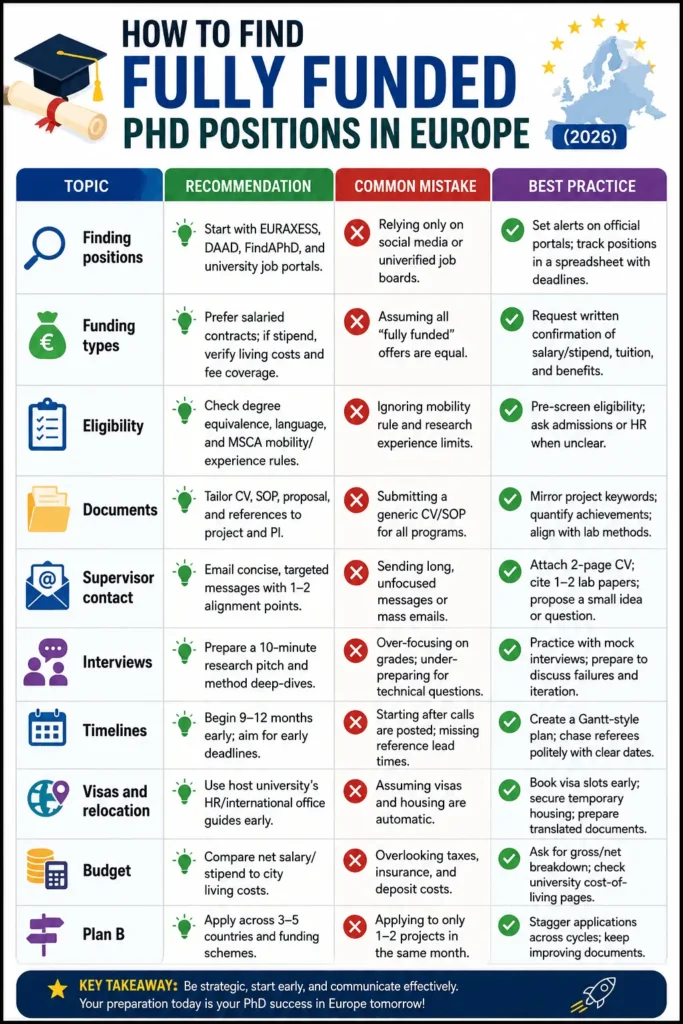
How to Find Fully Funded PhD Positions in Europe (2026)
Looking for fully funded PhD positions in Europe in 2026? This in-depth guide shows you exactly where to find competitive, salaried doctoral opportunities and stipends across the EU/EEA, UK, and Switzerland. You will learn how to use official portals like EURAXESS, DAAD, FindAPhD, and MSCA Doctoral Networks; understand country-specific funding models and salaries; and build a standout application with proven email templates, CV/SOP outlines, and research proposal tips. We cover eligibility rules, timelines, visas, common mistakes, and interview strategies used by top labs and graduate schools. Whether you are a master’s student, recent graduate, or early-career researcher, you’ll leave with a practical checklist, curated resources, and an action plan to secure your funded doctoral position.
