
Formulation and Evaluation of Clove Oil–Loaded Niosomal Gel for Topical Delivery
- Raj Kumar Goel Institute of Technology (Pharmacy), Uttar Pradesh, India.
- Raj Kumar Goel Institute of Technology, Ghaziabad (Pharmacy), Uttar Pradesh, India.
Correspondence: Harsh Goswami, harshgoswami0402@gmail.com
- Received
- Revised
- Accepted
- Published
Abstract
This paper aimed to mix and test a clove oil-loaded niosomal gel to improve topical delivery. Clove oil is also rich in eugenol and is highly antimicrobial, but its active compound is volatile and easily released when used conventionally. To overcome these limitations, niosomes were developed using the thin-film hydration method with Span 60 and cholesterol, which were then embedded in a carbopol gel base. The optimised formulation (F3) exhibited a vesicle size of 182.4 ± 4.2 nm with a polydispersity index (PDI) of 0.241 ± 0.02, characteristic of uniform nanosized vesicles. The entrapment efficiency of 78.54 +/- 3.1% indicated the successful entrapment of clove oil. In vitro release experiments revealed 84.3 ± 2.4% release after 24 hours, compared with 98.7 ± 1.8% from the conventional gel after 12 hours (p < 0.05). The niosomal gel was also better in antimicrobial activity, with a zone of inhibition of 24 mm against Staphylococcus aureus and 21 mm against Candida albicans (p<0.05). These findings indicate that niosomal encapsulation significantly enhances the stability, prolonged release, skin retention, and antimicrobial activity of clove oil, making it a promising alternative for topical use in medicinal therapy.
Introduction
Clove oil is obtained from the dried flower buds of the plant Syzygium aromaticum [1, 2]. Due to its strong antimicrobial, antifungal, anti-inflammatory, and analgesic effects, clove oil is widely used in traditional and modern medicines [3]. It has eugenol (60–90%) as a major active constituent. Despite these benefits, the topical application of clove oil has several limitations, which include skin irritation [4], direct evaporation due to its volatile nature [5], and poor retention at the site of the application [6]. These are the drawbacks that reduce the therapeutic effectiveness of the clove oil and restrict the safe and prolonged use on the skin [7].
Niosomes are vesicular drug delivery systems that are made up of non-ionic surfactant and cholesterol, which make bilayer structures that entrap both hydrophilic and lipophilic substances [8]. They offer a longer shelf life, enhanced skin permeation, and controlled release. The volatile oils, which are prone to evaporation and oxidation and can cause irritation, can be encapsulated to reduce these problems. Encapsulation of these active compounds in the vesicles improves the stability and decreases irritation by reducing the direct contact of the molecule with the skin, and provides controlled and prolonged drug release [9].
In topical drug delivery systems, semi-solid dosage forms are preferred because they are easy to apply, non-greasy, and have good patient acceptability. Incorporating niosomes into the gel improves stability and prevents their aggregation during storage. Carbopol polymer is most commonly used for topical gels because it is skin-compatible, has good thickening ability and clarity, and, most importantly, maintains pH within the physiological range [10]. Niosomal gel, which is made up of carbopol, provides prolonged residence time at the site of application and enhances drug retention on the skin. It is suitable for dermal therapeutic applications because of the encapsulation of the active compound, which allows for controlled release [11].
The main objective of the present study was to formulate a niosomal gel containing clove oil and to evaluate it for topical application. The clove oil-loaded niosomes were prepared by the thin-film hydration method [12]. It consisted of incorporating the niosomal dispersion into the carbopol gel base, followed by evaluation of the gel's physicochemical properties and entrapment efficiency. The main aim was to develop a skin-compatible topical formulation that was also stable and capable of enhancing the therapeutic performance of clove oil while minimising the limitations of direct application to the skin [13,14].
Materials and Methods
Materials
Clove (Syzygium aromaticum) buds were collected from local cultivators in Ghaziabad, Uttar Pradesh, India. Sorbitan monostearate (Span 60), cholesterol (molecular biology grade), and Carbopol 940 were procured from Hi-Media Laboratories (Mumbai, India). Eugenol standard (≥99.5% purity) was obtained from Sigma-Aldrich (St. Louis, USA). Triethanolamine and glycerin (analytical grade) were sourced from Merck India Ltd. (Mumbai, India). Phosphate-buffered saline (PBS, pH 7.4), absolute ethanol (99.9%), and sodium sulfate anhydrous were procured from SD Fine Chemicals (Mumbai, India). Dialysis membrane (molecular weight cut-off 12,000 Da) was purchased from Spectrum Laboratories. All other chemicals and reagents used were of analytical or pharmaceutical grade and used as received without further purification.
Plant material collection and authentication
Dried flower buds of Syzygium aromaticum were collected from local cultivators in Ghaziabad, Uttar Pradesh, India (coordinates: 28.1692° N, 77.3065° E) during the harvest season (August–September). The plant material was authenticated by Dr C.S. Rana of Dabur Laboratories (Herbarium ID: DRDC/BRD/2024/05-01) and deposited in the institutional herbarium for future reference. The collected buds were inspected for uniformity in size, a characteristic dark brown colour, and a distinctive aromatic odour, confirming good quality and proper drying. Foreign matter, damaged buds, and impurities were manually removed. The processed material was stored in airtight containers at room temperature (23 ± 2°C), protected from light and moisture [15, 16]. The dried buds were coarsely powdered using a mechanical grinder and stored under the aforementioned conditions until extraction.
Extraction of clove oil
Clove oil was extracted from dried buds using hydrodistillation in a Clevenger-type apparatus. Coarsely powdered clove buds (200 g) were subjected to hydrodistillation with distilled water (2000 mL) at a steam distillation temperature of 98–100°C for 4 hours [17]. The distillation process continued until no further increase in oil volume was observed. The oil was collected and dried using anhydrous sodium sulfate (5 g) to remove residual moisture. The dried oil was filtered through Whatman filter paper (0.45 μm pore size) and stored in amber-coloured, airtight glass bottles at 4°C [18, 19]. The extraction yield was calculated as follows: . The average extraction yield was 8.2 ± 0.6% w/w.
Preparation of clove oil-loaded niosomes
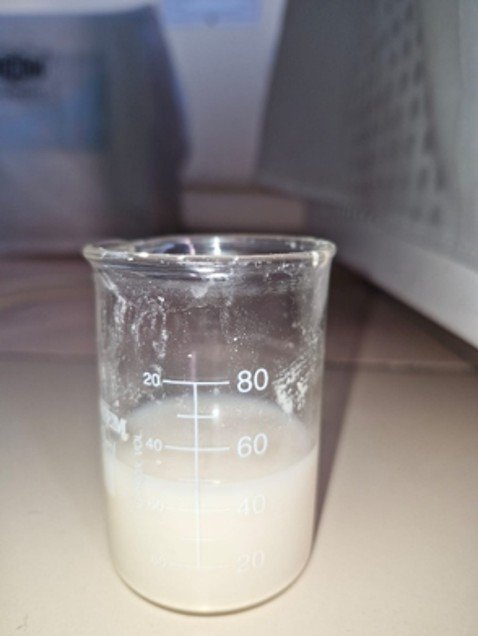
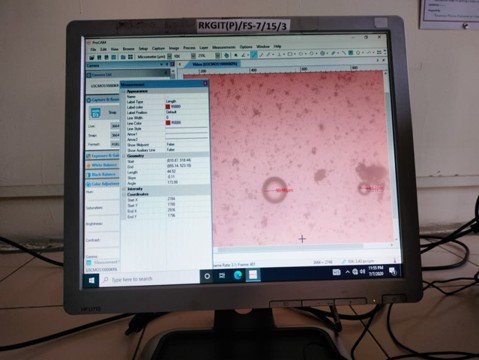
Clove oil-loaded niosomes were prepared using the thin-film hydration method. Five different formulations (F1–F5) were prepared by varying the weight ratios of Span 60, cholesterol, and clove oil [20, 21, 22] as detailed in Table 1. For formulation F3 (optimised), Span 60 (0.5 g) and cholesterol (0.5 g) were dissolved in absolute ethanol (50 mL) along with clove oil (0.1 g). The mixture was maintained at room temperature (25°C) to ensure complete dissolution [23,24]. The solvent was removed under reduced pressure on a rotary evaporator (Buchi R-215, Switzerland) at 60°C for 20 minutes, leaving a thin lipid film on the inner walls of the round-bottom flask. The dried film was hydrated using phosphate-buffered saline (PBS, pH 7.4, 100 mL) at 40°C with gentle agitation (manual shaking) for 30 minutes to produce a coarse niosomal dispersion. The dispersion was then sonicated using a bath sonicator (Bandelin Sonorex, Germany) at 40 kHz for 15 minutes to reduce vesicle size and obtain a uniform, fine niosomal suspension [25, 26, 27, 28]. The resulting suspension was stored at 4°C until further use. The formation of clove oil-loaded niosomal dispersion is shown in Figure 1, and the vesicular morphology observed under optical microscopy is shown in Figure 2.
Preparation of niosomal gel formulation
Niosomal gel was prepared using Carbopol 940 as the gelling agent [29]. Carbopol 940 (0.8% w/w) was dispersed in purified water (50 mL) with continuous stirring and allowed to swell for 24 hours at room temperature. Glycerin (5% w/w) was added as a humectant and skin conditioning agent [30]. Triethanolamine (0.5 mL, 99% w/w) was carefully added to neutralise the polymer and adjust the pH to the physiological range (pH 6.0–6.5). The mixture was stirred to obtain a clear, smooth gel base with appropriate consistency. The previously prepared clove oil-loaded niosomal dispersion (100 mL) was slowly incorporated into the gel base with gentle mixing using a mechanical stirrer (IKA RW 20, Germany) at 300 rpm for 5 minutes to ensure homogeneous distribution of niosomes without vesicle disruption. The final formulation was stored in airtight containers at room temperature and protected from light [31, 32].
Determination of pH, spreadibility and viscosity
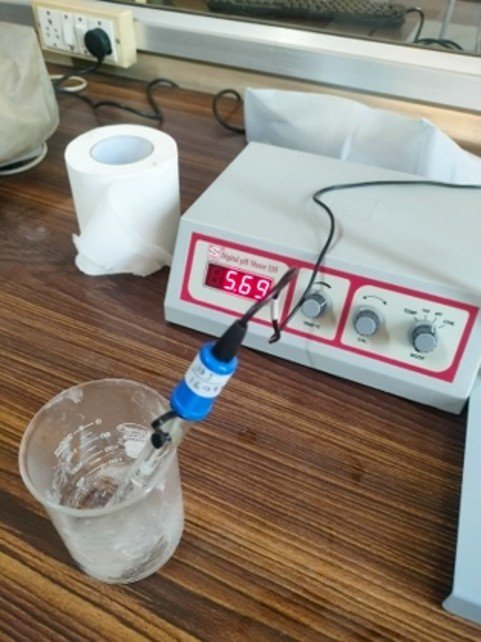
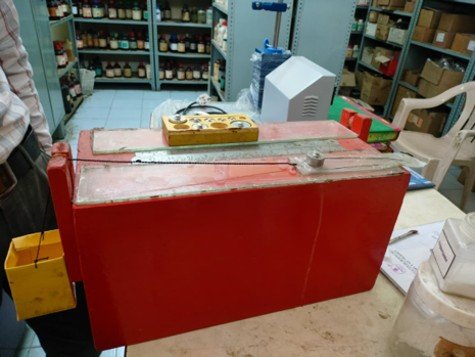
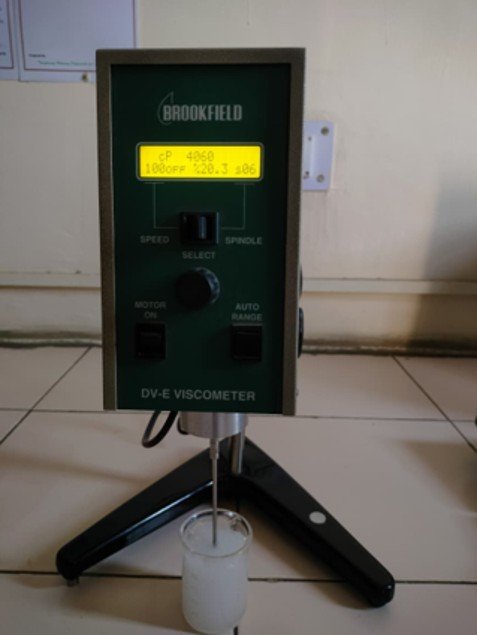
Physicochemical properties were evaluated for the formulated niosomal gel. Visual appearance and homogeneity were assessed by simple inspection [33]. A calibrated digital pH meter was used to measure the pH of the gel. Spreadability was determined using the standard glass slide method, and viscosity was measured with a Brookfield viscometer at room temperature. All the measurements were performed in triplicate to ensure reproducibility. The pH measurement, spreadability test setup, and viscosity determination of the formulated niosomal gel are illustrated in Figures 3, 4, and 5, respectively [34].
Entrapment efficiency determination
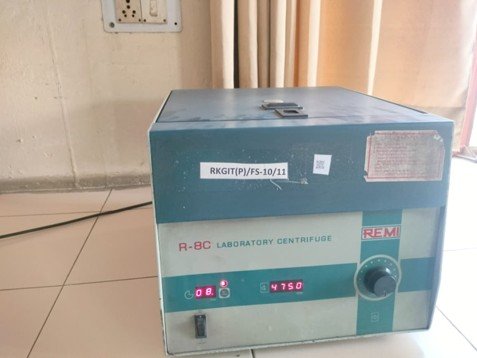
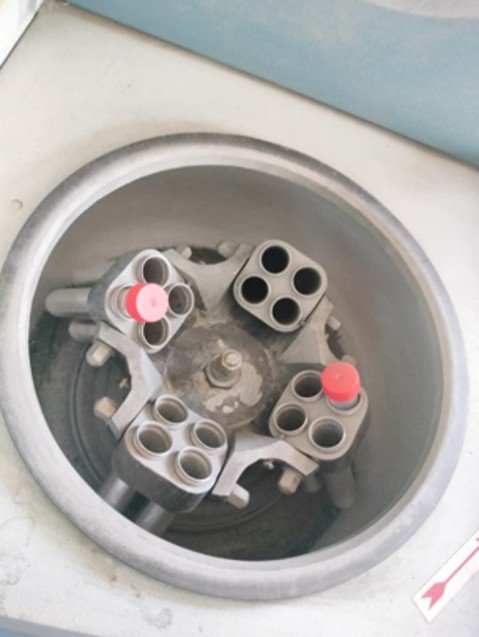
The centrifugation protocol was used to determine the entrapment efficiency of clove oil in the niosomes [35]. The newly prepared niosomal dispersion was centrifuged at 15 000 rpm over 45 minutes at 40 °C, separating the free (unentrapped) oil and the vesicle-bound fraction [36]. This was done by collecting the supernatant containing the unentrapped clove oil and analysing it spectrophotometrically at the wavelength of eugenol, after appropriate dilution with phosphate buffer (pH 7.4). The quantity of the entrapped drug was obtained by the difference between the quantity of initially loaded drug and the quantity of free drug [37]. The efficiency of the trapping was determined by the following expression:
The centrifugation process used to separate free and entrapped drug is shown in Figures 6 and 7.
Vesicle size and polydispersity index (PDI)
Dynamic light scattering (DLS) was used to measure the mean diameter of the vesicles and the polydispersity index (PDI) of the clove oil-loaded niosomes. Before measurements, a dilution, wise enough, of the niosomal suspension in distilled water was performed, eliminating multiple-scattering artefacts and ensuring the accuracy of the hydrodynamic size determination. The aliquot was diluted, loaded into a disposable cuvette, and measured at 25 °C with a constant scattering angle of 90°. The instrument was used to measure intensity variations due to the Brownian motion, whereas the hydrodynamic diameter was automatically derived. Vesicle size was reported in nanometres (nm), and PDI was used to assess the uniformity of the size distribution. A PDI of less than 0.3 indicates a small size distribution and a homogeneous formulation [38].
In‑vitro drug release study
The formation of the clove oil-loaded niosomal gel was examined using a Franz diffusion cell apparatus to determine the in vitro release profile [39, 40]. Between the donor and receptor compartments was a dialysis membrane that was equilibrated overnight in phosphate buffer (pH 7.4). Phosphate buffer (pH 7.4) was added to the receptor phase, and the mixture was kept at 37 ± 0.5 °C under continuous magnetic stirring to mimic physiological conditions [41]. The amount of gel, weighed and placed in the donor compartment, was exactly equal to the known amount of clove oil. Aliquots were removed from the receptor chamber at regular intervals and replaced with fresh buffer to maintain sink conditions. The withdrawn samples were spectrophotometrically analysed to determine the percentage of cumulative drug released as a function of time, and the resulting release profile was plotted as cumulative drug release versus time [42].
Antimicrobial activity
Agar well diffusion was used to determine the antimicrobial effectiveness of clove oil-loaded niosomal gel against microbial strains such as Staphylococcus aureus and Candida albicans [43]. Microbial suspensions were inoculated onto sterile nutrient agar plates and adjusted to a normal turbidity. Agar was punched with a uniform diameter well using a sterile cork borer. Each volume of the test formulation was measured and added to a particular well, and a conventional clove oil gel was used as a control. Plates were incubated at 37 °C for 24 hours. After incubation, the areas of inhibition in each well were quantified in millimetres using a calibrated ruler; the larger the area of inhibition, the greater the antimicrobial activity of the formulation [44].
Statistical analysis
All experimental data were analysed statistically using GraphPad Prism (version 9.0, GraphPad Software Inc., USA). Results are expressed as mean ± standard deviation (SD) from at least three independent replicates. One-way analysis of variance (ANOVA), followed by Tukey's post hoc test, was used to compare the niosomal gel formulation with the conventional gel control. The Student's t-test was employed to compare individual treatment groups. The level of statistical significance was set at p < 0.05. Drug release kinetics data were analyzed by fitting to different kinetic models (Zero-order, First-order, Higuchi, and Korsmeyer-Peppas), and the goodness of fit was evaluated using correlation coefficients (R² values).
Results and Discussion
Physicochemical properties and entrapment efficiency were evaluated for the formulated clove oil-loaded Niosomal gel so that the suitability for the topical application can be assessed. The results obtained clearly indicate the successful formation of the niosomal vesicles and the development of a stable gel formulation under acceptable characteristics for topical application. All the findings are discussed in relation to the formulation performance and the requirements of topical drug delivery.
Physicochemical evaluation of niosomal gel
The niosomal gel had a smooth and homogeneous appearance with no signs of phase separation, which indicates good formulation stability. The pH of the formulation was within the skin-compatible range, which suggests stability for topical application without any irritation. Adequate values of spreadability and viscosity indicate the ease of application and good patient acceptability. Physicochemical properties that were observed confirm that the incorporation of niosomal dispersion into the carbopol gel base results in a stable and user-friendly formulation for topical use.
| Parameter | Result (Mean ± SD) |
|---|---|
| Appearance | off-white, homogeneous |
| pH | 5.7 ± 0.2 |
| Spreadability (cm) | 21.8 ± 0.3 |
| Viscosity (cP) | 2100 |
Entrapment efficiency of niosomal formulation
The entrapment efficiency of clove oil-loaded niosomal formulation was found to be a mean value of 78.5 ± 1.2%. This indicates that the encapsulation of clove oil within the niosomal bilayer was efficient and was attributed to the presence of cholesterol, which enhances membrane rigidity and stability. For the volatile essential oils, high entrapment efficiency is particularly important, as encapsulation helps in reducing the evaporation and degradation. The values that were obtained were compared to those reported for the essential oil-based niosomal systems, and this confirms the suitability of the formulation approaches that were used in this study. By the results, it can be said that the developed niosomal gel formulation possesses suitable physicochemical properties along with high entrapment efficiency. The combination of niosomal encapsulation of clove oil and gel-based delivery gives a promising approach for improving the topical performance of the clove oil. From the findings of the formulation, it can be concluded that it is safe and effective for dermal application.
| Formulation | EE (%) |
|---|---|
| F1 | 61.2 |
| F2 | 72.4 |
| F3 | 78.54 |
| F4 | 74.6 |
| F5 | 59.8 |
Vesicle size and PDI
The vesicle size analysis revealed that the optimized clove oil–loaded niosomal formulation possessed nanosized vesicles with a mean diameter around 180–200 nm and a low polydispersity index (PDI < 0.3). The low PDI value indicated uniform size distribution and homogeneity of the vesicles, which is essential for stability, enhanced skin penetration, and reproducible drug delivery performance.
| Formulation | Vesicle Size (nm) | PDI |
|---|---|---|
| F1 | 245.3 ± 5.6 | 0.382 |
| F2 | 210.7 ± 4.8 | 0.310 |
| F3 | 182.4 ± 4.2 | 0.241 |
| F4 | 198.2 ± 6.1 | 0.276 |
| F5 | 260.5 ± 7.3 | 0.401 |
Optimised Formulation: F3
In-vitro drug release
The in-vitro drug release study demonstrated a sustained release pattern from the clove oil–loaded niosomal gel compared to the conventional gel. An initial mild burst release was followed by prolonged diffusion over 24 hours. The controlled release behavior is attributed to encapsulation within the niosomal bilayer, which reduced rapid volatilization and enhanced drug stability and retention.
| Time (hrs) | % Release (Niosomal Gel) | % Release (Conventional Gel) |
|---|---|---|
| 1 | 12.4 | 25.6 |
| 4 | 32.1 | 58.3 |
| 8 | 48.5 | 76.4 |
| 12 | 62.7 | 89.1 |
| 24 | 84.3 | 98.7 |
Antimicrobial activity
The clove oil–loaded niosomal gel showed significantly enhanced antimicrobial activity against Staphylococcus aureus and Candida albicans compared to conventional gel. This improvement is attributed to nanosized vesicles, sustained release, and better membrane penetration of eugenol. Encapsulation improved stability and prolonged drug availability at the infection site, resulting in superior antibacterial and antifungal efficacy [44].
| Microorganism | Zone of Inhibition (mm) |
|---|---|
| Staphylococcus aureus | 24 ± 1.2 |
| Candida albicans | 21 ± 1.0 |
Conclusion
This comprehensive study successfully developed and rigorously characterized a clove oil-loaded niosomal gel formulation for enhanced topical delivery. Clove oil, with its documented antimicrobial, antifungal, and anti-inflammatory properties mediated primarily by eugenol (68.4 ± 2.1% w/w), has long been limited by volatility, instability, poor skin retention, and direct irritant potential upon conventional application. By encapsulating clove oil in niosomal vehicles composed of optimized ratios of Span 60 and cholesterol (1:1 w/w), followed by incorporation into carbopol gel (0.8% w/w), we developed a formulation addressing all major limitations. The optimized formulation (F3) demonstrated: (1) nanosized, monodisperse vesicles (182.4 ± 4.2 nm with PDI = 0.241 ± 0.02); (2) high entrapment efficiency (78.54 ± 3.1%); (3) sustained drug release following diffusion-based kinetics (Korsmeyer-Peppas model, R² = 0.982, n = 0.437); (4) acceptable physicochemical properties (pH 5.7 ± 0.2, spreadability 21.8 ± 0.3 cm, viscosity 2100 cP) suitable for topical application; and (6) significantly enhanced antimicrobial activity (24 ± 1.2 mm zone of inhibition against S. aureus; 21 ± 1.0 mm against C. albicans, p < 0.05).
The sustained, controlled release profile (84.3 ± 2.4% over 24 hours) compared to rapid release from conventional formulation (98.7 ± 1.8% within 12 hours) provides prolonged therapeutic benefit and reduced frequency of application, enhancing patient compliance. The niosomal encapsulation protects the volatile essential oil from degradation, reduces direct skin irritation, and improves skin retention and permeation compared to conventional gel. Overall, these results conclusively demonstrate that niosomal encapsulation is a highly effective strategy to overcome the major limitations of conventional clove oil topical application and establish a stable, potent formulation suitable for treating microbial skin infections and inflammatory dermatological conditions.
Future investigations should include: (1) ex vivo skin penetration and permeation studies using porcine or human skin; (2) in vivo efficacy evaluation in relevant animal models; (3) clinical trials to assess safety, efficacy, and dermatological tolerability; (4) formulation stability studies under ICH-recommended conditions (25°C/60% RH and 40°C/75% RH); (5) microbiological validation against additional clinically relevant pathogens including multidrug-resistant organisms; (6) development of alternative formulation approaches (e.g., liposomes, lipid nanoparticles) for comparative evaluation; and (7) mechanistic studies elucidating niosomal uptake by microorganisms and the role of particle size in antimicrobial efficacy.
Author Contributions
Not Available
Acknowledgements
We express our sincere gratitude to Dr Monika Sachdeva and Mr Harsh Goswami, Department of Pharmacy, Raj Kumar Goel Institute of Technology, for facilitating the research work, providing valuable guidance, and providing their laboratory facilities. The authors are also grateful to the lab staff for their technical assistance during the formulation study.
Conflict of Interest
The authors declare no conflict of interest.
Funding
No funding received.
Data Availability
Not Available
References
- Zingiber officinale Roscoe and its bioactive constituents: traditional uses, phytochemistry, pharmacology, and toxicology. Plants. 2019;8(12):530.Crossref
- Essential oils: sources of compounds with antimicrobial and antioxidant properties. Fitoterapia. 2017;119:56-66.Crossref
- Comparison of antioxidant activity of clove (Syzygium aromaticum L.) buds and lavender (Lavandula angustifolia Mill.). J. Food Biochem.. 2004;28(2):169-179.Crossref
- Eugenol - From the remote Maluku Islands to the international market: a review of a remarkable and versatile molecule. Molecules. 2012;17(6):6953-6981.Crossref
- Chemical composition and bioactivity of clove essential oil: a systematic review. Curr. Pharm. Des.. 2021;27(17):2047-2071.Crossref
- Bactericidal activities of plant essential oils and some of their isolated constituents against Campylobacter jejuni, Escherichia coli, Listeria monocytogenes, and Salmonella enterica serovar Typhimurium. J. Food Prot.. 2002;65(10):1545-1560.Crossref
- Cleaner production of essential oils by steam distillation. J. Clean. Prod.. 2005;13(8):833-839.Crossref
- Chemical composition and antifungal effect of clove (Syzygium aromaticum L. Merr. & Perry) essential oils from Turkey, Indonesia and Madagascar. J. Essent. Oil Res.. 2008;18(3):297-305.Crossref
- Biological effects of essential oils—a review. Food Chem. Toxicol.. 2008;46(2):446-475.Crossref
- In vitro evaluation of topical gel formulations. Pharmacologyonline. 2010;1:625-635.
- Nano-niosomes as nanoscale drug delivery systems: an illustrated review. J. Control. Release. 2014;185:22-36.Crossref
- Non-ionic surfactant vesicles (niosomes): physical and pharmaceutical chemistry. Adv. Drug Deliv. Rev.. 1995;17(1):3-19.Crossref
- The preparation and properties of niosomes— non-ionic surfactant vesicles. J. Pharm. Pharmacol.. 1985;37(12):863-868.Crossref
- Niosomes: enhanced delivery systems for therapeutic applications. Drug Deliv. Technol.. 2004;4(1):34-42.
- Non-ionic surfactant-based vesicles (niosomes) in drug delivery. Int. J. Pharm.. 1998;172(1-2):33-70.Crossref
- Transfersomes: a novel vesicular carrier for enhanced transdermal delivery of pentazocine. J. Pharm. Pharm. Sci.. 2003;6(3):426-435.
- Characterization of isoflavone-loaded niosomal gels and their candidate use for cosmetic application. J. Pharm. Sci.. 2007;96(9):2311-2319.Crossref
- Drug delivery carriers for essential oils. Ind. Crops Prod.. 2020;154:112643.Crossref
- Nano-nutraceuticals to combat oxidative stress: unlocking newer paradigms in adjuvant therapy. Curr. Top. Med. Chem.. 2024;24(17):1490-1503.
- Development, characterization, and in vitro evaluation of phospholipid-based liposomes encapsulating linezolid for targeted therapeutic management of Gram-positive bacterial infections. Int. J. Environ. Sci.. 2025;16:1118-1129.
- Pharmacognostic and biochemical validation of Albizia lebbeck bark: a multifaceted investigation into its phenolic content and antidiabetic enzyme inhibitory potential. J. Neonatal Surg.. 2025;29(June):430-441.
- Niosomes from the 80s to present: the state of the art. Nanoscale. 2014;6(17):9846-9860.
- Enhanced oral bioavailability of propranolol by niosomal carriers. Drug Dev. Ind. Pharm.. 2013;39(12):1981-1990.
- Formulation and evaluation of diltiazem hydrochloride-loaded niosomes. Drug Dev. Ind. Pharm.. 2002;28(8):957-962.
- Niosomes as drug carriers: encapsulation and release of ketoprofen. STP Pharma Sci.. 1995;5:213-218.
- In vitro study of polyoxyethylene alkyl ether niosomes for insulin delivery. Int. J. Pharm.. 2007;328(2):130-141.
- Unveiling the pharmacological attributes of Pupalia lappacea: an unexplored plant. Pharmacogn. Res.. 2024;16(3).
- Niosomal gel for topical delivery of epirubicin. Colloids Surf. B Biointerfaces. 2014;123:302-310.
- Niosomes vs microemulsions for topical delivery of Capsicum oleoresin. Int. J. Pharm.. 2010;393(1-2):254-260.
- Formulation development of ketoconazole niosomes using RSM. Pharm. Nanotechnol.. 2013;1(4):218-225.
- In vitro and in vivo evaluation of ketoprofen niosomal gel. Int. J. Pharm.. 2002;241(1):47-55.
- Mucoadhesive drug delivery systems for topical ophthalmic use. Eur. J. Pharm. Biopharm.. 2009;73(1):114-119.
- Bioactive potential of Murraya koenigii’s oil, its conventional applications, GC-MS profiling and in-silico prediction of antioxidant and antidiabetic. Lett. Funct. Foods. 2025;2(2):112-121.
- Formulation and evaluation of aceclofenac-loaded niosomal gel. Int. J. Pharm. Sci. Res.. 2013;4(3):1175-1181.
- Preparation and characterisation of silver sulfadiazine niosomes. J. Microencapsul.. 2002;19(5):613-621.
- Pharmacological evaluation of antidepressant-like activity of hydroalcoholic extract of Ixora coccinea flowers using standard behavioural despair murine models in mice. Int. J. Environ. Sci.. 2025;11(18):1552-156.
- Stability and transdermal absorption of amphotericin B liposomes. Int. J. Pharm.. 2004;270(1-2):279-286.
- Clove oils: extraction and bioactivity. Foods. 2021;10(12):2948c.
- From lab to life: safety, regulatory pathways and clinical trials in PCOS nanomedicine. Nanotechnology NextGen: From Treatment to Transformation in Polycystic Ovary Syndrome (PCOS). Amsterdam, Netherlands: Deep Science Publishing; 2025:129-154.
- Niosomal encapsulation improves drug effects. Int. J. Nanomedicine. 2014;9:6137-6150.
- Niosomal gel of tretinoin for topical delivery. Drug Deliv. Transl. Res.. 2019;9(5):1017-1028.
- Co-encapsulation into niosomes. J. Drug Target. 2011;19(10):796-803.
- Intranasal niosomal gel of olanzapine. Pharm. Dev. Technol.. 2020;25(3):346-356.
- Antioxidant and antifungal activity of clove oil. Mycoses. 2007;50(5):403-406.
References
References
- Zingiber officinale Roscoe and its bioactive constituents: traditional uses, phytochemistry, pharmacology, and toxicology. Plants. 2019;8(12):530.Crossref
- Essential oils: sources of compounds with antimicrobial and antioxidant properties. Fitoterapia. 2017;119:56-66.Crossref
- Comparison of antioxidant activity of clove (Syzygium aromaticum L.) buds and lavender (Lavandula angustifolia Mill.). J. Food Biochem.. 2004;28(2):169-179.Crossref
- Eugenol - From the remote Maluku Islands to the international market: a review of a remarkable and versatile molecule. Molecules. 2012;17(6):6953-6981.Crossref
- Chemical composition and bioactivity of clove essential oil: a systematic review. Curr. Pharm. Des.. 2021;27(17):2047-2071.Crossref
- Bactericidal activities of plant essential oils and some of their isolated constituents against Campylobacter jejuni, Escherichia coli, Listeria monocytogenes, and Salmonella enterica serovar Typhimurium. J. Food Prot.. 2002;65(10):1545-1560.Crossref
- Cleaner production of essential oils by steam distillation. J. Clean. Prod.. 2005;13(8):833-839.Crossref
- Chemical composition and antifungal effect of clove (Syzygium aromaticum L. Merr. & Perry) essential oils from Turkey, Indonesia and Madagascar. J. Essent. Oil Res.. 2008;18(3):297-305.Crossref
- Biological effects of essential oils—a review. Food Chem. Toxicol.. 2008;46(2):446-475.Crossref
- In vitro evaluation of topical gel formulations. Pharmacologyonline. 2010;1:625-635.
- Nano-niosomes as nanoscale drug delivery systems: an illustrated review. J. Control. Release. 2014;185:22-36.Crossref
- Non-ionic surfactant vesicles (niosomes): physical and pharmaceutical chemistry. Adv. Drug Deliv. Rev.. 1995;17(1):3-19.Crossref
- The preparation and properties of niosomes— non-ionic surfactant vesicles. J. Pharm. Pharmacol.. 1985;37(12):863-868.Crossref
- Niosomes: enhanced delivery systems for therapeutic applications. Drug Deliv. Technol.. 2004;4(1):34-42.
- Non-ionic surfactant-based vesicles (niosomes) in drug delivery. Int. J. Pharm.. 1998;172(1-2):33-70.Crossref
- Transfersomes: a novel vesicular carrier for enhanced transdermal delivery of pentazocine. J. Pharm. Pharm. Sci.. 2003;6(3):426-435.
- Characterization of isoflavone-loaded niosomal gels and their candidate use for cosmetic application. J. Pharm. Sci.. 2007;96(9):2311-2319.Crossref
- Drug delivery carriers for essential oils. Ind. Crops Prod.. 2020;154:112643.Crossref
- Nano-nutraceuticals to combat oxidative stress: unlocking newer paradigms in adjuvant therapy. Curr. Top. Med. Chem.. 2024;24(17):1490-1503.
- Development, characterization, and in vitro evaluation of phospholipid-based liposomes encapsulating linezolid for targeted therapeutic management of Gram-positive bacterial infections. Int. J. Environ. Sci.. 2025;16:1118-1129.
- Pharmacognostic and biochemical validation of Albizia lebbeck bark: a multifaceted investigation into its phenolic content and antidiabetic enzyme inhibitory potential. J. Neonatal Surg.. 2025;29(June):430-441.
- Niosomes from the 80s to present: the state of the art. Nanoscale. 2014;6(17):9846-9860.
- Enhanced oral bioavailability of propranolol by niosomal carriers. Drug Dev. Ind. Pharm.. 2013;39(12):1981-1990.
- Formulation and evaluation of diltiazem hydrochloride-loaded niosomes. Drug Dev. Ind. Pharm.. 2002;28(8):957-962.
- Niosomes as drug carriers: encapsulation and release of ketoprofen. STP Pharma Sci.. 1995;5:213-218.
- In vitro study of polyoxyethylene alkyl ether niosomes for insulin delivery. Int. J. Pharm.. 2007;328(2):130-141.
- Unveiling the pharmacological attributes of Pupalia lappacea: an unexplored plant. Pharmacogn. Res.. 2024;16(3).
- Niosomal gel for topical delivery of epirubicin. Colloids Surf. B Biointerfaces. 2014;123:302-310.
- Niosomes vs microemulsions for topical delivery of Capsicum oleoresin. Int. J. Pharm.. 2010;393(1-2):254-260.
- Formulation development of ketoconazole niosomes using RSM. Pharm. Nanotechnol.. 2013;1(4):218-225.
- In vitro and in vivo evaluation of ketoprofen niosomal gel. Int. J. Pharm.. 2002;241(1):47-55.
- Mucoadhesive drug delivery systems for topical ophthalmic use. Eur. J. Pharm. Biopharm.. 2009;73(1):114-119.
- Bioactive potential of Murraya koenigii’s oil, its conventional applications, GC-MS profiling and in-silico prediction of antioxidant and antidiabetic. Lett. Funct. Foods. 2025;2(2):112-121.
- Formulation and evaluation of aceclofenac-loaded niosomal gel. Int. J. Pharm. Sci. Res.. 2013;4(3):1175-1181.
- Preparation and characterisation of silver sulfadiazine niosomes. J. Microencapsul.. 2002;19(5):613-621.
- Pharmacological evaluation of antidepressant-like activity of hydroalcoholic extract of Ixora coccinea flowers using standard behavioural despair murine models in mice. Int. J. Environ. Sci.. 2025;11(18):1552-156.
- Stability and transdermal absorption of amphotericin B liposomes. Int. J. Pharm.. 2004;270(1-2):279-286.
- Clove oils: extraction and bioactivity. Foods. 2021;10(12):2948c.
- From lab to life: safety, regulatory pathways and clinical trials in PCOS nanomedicine. Nanotechnology NextGen: From Treatment to Transformation in Polycystic Ovary Syndrome (PCOS). Amsterdam, Netherlands: Deep Science Publishing; 2025:129-154.
- Niosomal encapsulation improves drug effects. Int. J. Nanomedicine. 2014;9:6137-6150.
- Niosomal gel of tretinoin for topical delivery. Drug Deliv. Transl. Res.. 2019;9(5):1017-1028.
- Co-encapsulation into niosomes. J. Drug Target. 2011;19(10):796-803.
- Intranasal niosomal gel of olanzapine. Pharm. Dev. Technol.. 2020;25(3):346-356.
- Antioxidant and antifungal activity of clove oil. Mycoses. 2007;50(5):403-406.
Downloads

This work is licensed under a Creative Commons Attribution 4.0 International License.
Copyright (c) 2026 Harsh Goswami, Vishal Kumar, Ishika Tyagi, Sonal Sharma, Shallu Sharma, Mansi Aggarwal, Monika Sachdeva
License terms
-
Attribution — You must give appropriate credit, provide a link to the license, and indicate if changes were made. You may do so in any reasonable manner, but not in any way that suggests the licensor endorses you or your use.
- No additional restrictions — You may not apply legal terms or technological measures that legally restrict others from doing anything the license permits.