
Keratinolytic Fungi for Biodegradation of Chicken feathers: Isolation, Characterization and Enzyme Analysis
- Institute of Bioscience & Technology, MGM University, Chh. Sambhajinagar, Maharashtra, India
- Institute of Bioscience & Technology, MGM University, Chh. Sambhajinagar, Maharashtra, India; Department of Bioinformatics, Bir Tikendrajit University, Imphal, Manipur, India
Correspondence: Aman Tiple, amantiple97@gmail.com
- Received
- Revised
- Accepted
- Published
Abstract
Chicken feathers are the main byproduct of Poultry Industry producing million tonnes of waste annually. Untreated feather waste harbours a range of pathogenic bacteria emitting pollutants like nitrous oxide, ammonia, and hydrogen sulphide, posing a risk to both the environment and human health, hence must be biodegraded microbially. The Keratinolytic fungi were isolated from feathers using serial dilution. The keratinase activity was screened by gauging the growth on Mineral Minimal media with added feather powder. Submerged fermentation and spectrophotometry were used to analyze enzyme activity, indicating Keratinolytic potential. One-way ANOVA was used to validate the results statistically. Four fungal isolates were successfully isolated, showing growth surge up to 3.96× on feather supplemented minimal media. All isolates showed highest Enzyme activity on the 5th Day with KF Isolates 4 & 2 showing 9.79 ± 0.37 U/mL & 8.71 ± 0.41 respectively. Statistical analysis also supported the fungi’s Keratinolytic potential. The results of this study highlighted the potential of fungal isolates for eco-friendly biodegradation of Poultry waste.
Introduction
Feathers are an important byproduct in the poultry industry, accounting for 5-7% of the body weight of chickens. It is predicted that around several million tons of feathers could be generated yearly by the chicken industry worldwide (1). Annual worldwide production of chicken feathers is projected to be approximately 18,500 million tonnes, with India producing 3500 tonnes alone. The progressive increase in the use of chicken meat is having a severe impact on the environment because waste from chicken birds, notably feathers, is not being treated properly. In contrast, feathers progressively degrade in nature, creating sulphurous compounds that damage the ecology (2). Although feathers can be used in a variety of applications, a considerable number of them are nevertheless discharged into the environment without sufficient treatment. Because of their tenacity, feathers have become a major source of pollution. Untreated feather waste can harbour a variety of pathogenic microbes and release pollutants such as nitrous oxide, ammonia, and hydrogen sulfide, posing a threat to both the environment and human health (3).
The majority of the feathers are disposed of, burned, buried, or used as insulation. Around the world, land filling and incineration are the primary conventional techniques for disposing of feathers. Physical techniques including forced hydrolysis and puffing, as well as certain traditional techniques like degradation by chemical hydrolysis utilizing acid/alkali, were also used. However, these techniques have drawbacks because they use a lot of energy and produce a lot of environmentally harmful chemicals. Additionally, the process resulted in the production of non-nutritive amino acids such lysinoalanine and lanthionine, which destroyed important amino acids like lysine, methionine, and tryptophan (4).
The keratin protein is the main component of poultry feathers, which is a member of the sclera protein group. After cellulose and chitin, feather keratin is the third most prevalent polymer in nature, with a molecular weight of roughly 10 kDa. Fish, reptiles, birds, and mammals all contain it. It is a fibrous protein that is present in the skin, hair, wool, feathers, beaks, nails, and other external structural elements of animals. Because keratins contain disulfide bonds, hydrogen bonds, salt linkages, and cross linkages in their structure, they are insoluble in water, weak acids, and organic solvents. They are also resistant to the action of typical proteolytic enzymes like trypsin or pepsin (5).
Biodegradation is a reliable method of disposing of garbage that contains keratin. The adverse effects on the environment are lessened when green catalysts are used. Applying microbes and enzymes is less expensive than current feather-treatment techniques and does not result in resource loss. Additionally, it doesn't harm the environment and yields a variety of materials that can be utilized in other industrial sectors like agricultural, pharmaceuticals animal, feed and few other. As a result, this strategy is essential for the shift to a circular economy, which is required for sustainable development (6). Actinomycetes, bacteria and fungi are the three microbiological domains that have been shown to exhibit Keratinolytic activity. Because of the sustainable conditions of the valorization process, the options provided by keratinases may result in the production of goods that are both economical and ecologically benign while maintaining great integrity (7). Among these three the Keratinolytic fungi have gained the particular attention in biodegradation.
Over the past few years, the exploration of dual potential of Keratinolytic fungi; regarding waste management along with enhancing agricultural productivity has been the focus of research. Keratinolytic microorganisms, which have antifungal and plant growth-promoting properties, may provide several economic and environmental benefits over chemical-based control methods from an Agro-biochemical perspective. Certain fungal species uses hair debris as a substrate for submerged fermentation, which allows it to simultaneously create proteases, keratinases, laminarases, and chitinases. Additionally, some have several antifungal properties and generate plant growth regulators like indoleacetic acid (IAA), one of the most physiologically active auxins, stimulating the growth of plant roots and overall structures (8).
By secreting keratinase enzymes, kertinolytic fungi have the biochemical apparatus necessary to break down into smaller peptides and amino acids, which microbes, and plants can use further. In order, to address pollution and waste disposal issues, this process is essential for transforming waste into forms that can be incorporated into the soil ecosystem. A study found that Keratinolytic fungi provide an environmentally friendly and sustainable way to manage keratinous waste (9).
Because of the high disulphide cross-linkage and low enzymatic accessibility of keratinized substrates, these are considered among the few most recalcitrant bio-polymers. A distinct physiological specification is exhibited by Keratinolytic fungi enabling them for effective colonization and biodegradation of these keratinized substrates. The pronounced metabolic targeting on amino acids, peptides and proteins as the key sources for carbon and nitrogen is the focus of this specialization, which frequently overrides the readily available carbohydrates utilization. Excess release of nitrogen in form of ammonia and sustained deamination activity leading to the continuous alkalization of extracellular milieu is the result of this metabolic bias. Hence the pH elevation due to excess nitrogen release is not just the metabolic byproduct but also a physiological acclimatization promoting partial denaturation and swelling of keratin, which facilitates the enzymatic attack. Particularly in-spite of their ability to create the highly alkaline microenvironment, the Keratinolytic fungi also maintains the optimum growth in neutral environment which reflects their alkali-tolerant instead of true alkaliphilic nature. Oxygen availability is also a key factor affecting the keratin degradation. L-amino acid oxidases catalyse the oxygen dependant oxidative deamination reactions. Targeted protein metabolism, ammonia-mediated pH regulation and oxygen-modulated catabolism are not only coordinated physiological responses but a consolidated strategy maximizing nutrient procurement from keratin along with sustain fungal growth under nutrient limited conditions (10-12)
The biodegradation of keratinized substrates by Keratinolytic fungi is distinctly sequential steps of physical colonization, chemical reduction as well as enzymatic hydrolysis which demonstrates their adaptation to the utmost recalcitrance by the native keratin. Keratin resists to these processes with its highly dense network of disulphide bonds, hydrogen bonds and hydrophobic interactions, restricting the enzymatic accessibility initially (13). The intimate hyphal attachment and perforation of keratin surface marks the beginning of fungal biodegradation. This is often accompanied by development of corroding mycelium increasing substrate contact and mechanical destabilization (14). The reductive breakage of disulphide bridges through sulphitolysis or disulphide-reductase-like reaction is the fundamental biochemical step. This is mediated by the thiol compounds or the fungal sulphites, loosening the keratin superstructure and making peptide backbones exposed & vulnerable (15). This reduction step process works synergistically while secreting extracellular Keratinolytic enzymes. These enzymes include endo-proteases exo-proteases and oligo-peptidases. These enzymes successively hydrolyze the denatured proteins into soluble peptides and amino acids (16). The Keratinolytic fungi mineralizes sulphur and nitrogen present in keratin as the keratinolysis proceeds. This leads to ammonium & sulphate ions accumulation and continuous alkalization of the medium. These conditions are recognized to amplify keratinase efficiency and sustain fungal metabolism (17). Hence, biodegradation of keratin via Keratinolytic fungi is the highly synchronized process where reductive chemistry, enzymatic synergy and metabolic feedback collaboratively facilitate efficient degradation of persistent keratinized waste into bioavailable nutrients.
Materials and Methods
Sample collection
The chicken feather waste samples were collected from Baramati Agro Limited, Chh. Sambhajinagar, Maharashtra. These chicken feather waste samples were used for Keratinolytic analysis.
Isolation of keratinolytic fungi
Isolation of Keratinolytic fungi (KF) was accomplished using the serial dilution plate method. For fungal growth development, potato dextrose agar (PDA) was used. One gram of decaying feather soil sample was transferred in 10 ml of sterilized distilled water and mixed properly. Serial dilution will made up to 10-7. Then 0.1 ml of the diluted samples of different dilutions were inoculated in the PDA plates individually. The Petri plates will be rotated clockwise and anticlockwise to spread the sample uniformly. Plates will incubate at 37°C mimicking the poultry body temperature for relevant keratin isolation for 5 to 7 days in an inverted position. The fungal isolates further were sub cultured on PDA medium to obtain pure culture (18,19).
Characterization of keratinolytic fungi
During identification, the following characteristics were taken into account.
- Morphology (colour and consistency) of the colony
- Microscopic features (hyphae, spores, size, shape, appearance, arrangement, organization, and conidial ontogeny of micro and macro conidia).
A drop of lactophenol cotton blue was put to the surface of a microscope slide after a tiny piece of transparent adhesive tape was touched to the suspected colony's surface. The organization and shape of the spores were investigated under a microscope (20).
Keratinase activity
Keratinase activity was evaluated by qualitative method with ball-milled feathers powder as enzymatic substrate. Chicken feathers were disinfected with 70% (v/v) ethylic alcohol, rinsed with sterile distilled water, dry overnight at 50 C, and grind into fine powder. The fungal isolates were inoculated on agar Petri plates on the following culture media:
- Mineral minimal medium (MM) containing KH2PO4 (0.1 g); CaCl2 (0.01 g); FeSO4·7H2O (0.1 g), ZnSO4·7H2O (0.005 g), pH = 7.5; (g L-1)
- MM medium supplemented with feathers powder
Fungal mycelia fragments of 5 mm were incubated on agar media for 5-10 days, at 26°C. Fungal growth was evaluated after 5 and 10 days. Observation was carried out. Growth on MM with supplement of feather powder indicate keratinase activity (21, 22).
Enzyme production
Fungi that showed high activity on protein-containing agar plates were cultivated in 100 mL liquid media with 6.7% wort, 2.0% glucose, and 0.1% peptone at 5.5 pH in 750 mL shaker flasks at 37°C for screening reflects ambient soil conditions where isolates originate and 200 rpm for 2 days to accumulate biomass. After that, 3% (v/v) of the accumulated biomass was introduced to 100 mL of modified Czapek media having composition of NaNO3 (3 g/L), K2HPO4 (1 g/L), MgSO4·7H2O (0.5 g/L), KCl (0.5 g/L), FeSO4·7H2O (0.01 g/L), feather powder (10 g/L) at pH 5.5 containing varying amounts of keratin for submerged screening (23). Cultures were incubated at 37°C across light and dark conditions, with constant shaking at 200 rpm for 7 days. A volume of 1 mL supernatant samples was taken immediately after the inoculation and from the 2nd to the 7th days of fermentation for enzyme activity assays (24).
Enzyme activity assay
The modified Anson-Hagihara method was used for measuring Keratinolytic activity. The Keratinolytic activity of the cultures were measured with enzymatic reaction mixture containing 400 µL of the 1% keratin substrate suspension and 200 µL of the extracted crude enzyme sample in 0.5 M Tris-HCl buffer solution having pH of 8.2 (25). For the assessment of proteolytic substrate specificity, the chromogenic substrates (CPS) i.e. N-Succinyl-Ala-Ala-Pro-Phe p-nitroanilide (Suc-AAPF-pNA) (S7388) was added to reaction mixture. The reaction time of the mixture was elongated for 30 minutes (26). The incubation of the reaction mixture was done in a thermal shaker for 10 minutes with 600 rpm at 37ºC. The reaction was terminated by the introduction of 200 µL of 50% (w/v) Acetic acid. Centrifugation of all the samples was done for 5 minutes at 14,000 rpm. The spectrophotometer was set at the wavelength of 405 nm to measure the absorbance of the supernatants. Controls were included to confirm the accuracy of the assay and remove non enzymatic interference. A reaction blank with no enzyme extract but consisting of substrate and buffer was used to correct for spontaneous substrate hydrolysis. A negative control was further included containing heat-denatured enzyme extract (boiled at 100°C for 10 minutes) to verify that any changes in absorbance could be solely ascribed to enzymatic reaction. All absorbance readings were corrected by subtracting the corresponding blank values before calculating enzyme activity.
Enzyme activity was calculated using the Beer–Lambert law based on the molar extinction coefficient of p-nitroaniline (ε = 9.6 mM⁻¹cm⁻¹) at 405 nm. The change in absorbance was converted into µmol of product formed per minute under assay conditions. Therefore, enzyme units were derived mathematically without the need for an external calibration curve (25, 27).
The Pearson+ Enzyme Activity Calculator was used to calculate the Keratinase Enzyme activity. The standard formula for Keratinase Enzyme assay was used (28):
Where,
- ∆A : Change in Absorbance
- V : Total Volume of the Assay (1 mL)
- ∈ : Molar Extinction Coefficient, (Constant) 9.6 mM-1cm-1 for Tris HCl buffer
- t : Reaction Interval (30 min)
- Ve : Volume of the Enzyme (0.2 mL)
All experiments were conducted in triplicate, using three independent biological replicates (separate fungal cultures grown under identical conditions). During spectrophotometric measurement, each biological replicate was analyzed in triplicate (technical replicates). Data are reported as mean ± standard deviation (SD).
Statistical analysis
Here Let us consider that our null Hypothesis (H0) is that there is no significant difference in mean keratinase activity among the four fungal isolates. All the experimental results were recorded as “Values ± Standard Deviation (SD)”. All the Enzyme Dynamics parameters were compared to each other with the help of with Kruskal–Wallis H test while considering Significance level (α) as 0.05. The Kruskal–Wallis H test Calculator by Statistics Kingdom was used for the Statistical Analysis (29). To confirm the accuracy of results, the entire experiment was performed twice independently.
Results and Discussion
Isolation of keratinolytic fungi
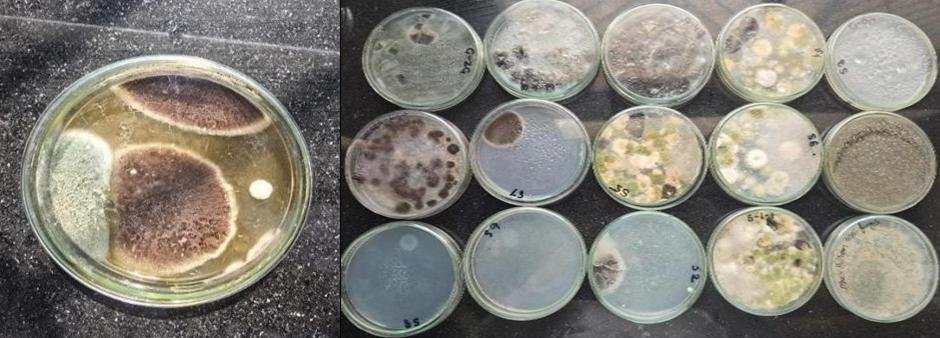
The cultures were purified by successively subculturing these isolates. 16 distinct fungal morphotypes were extracted from Potato Dextrose Agar as the medium After the incubation for 7 days at 37°C, colouring was observed to be white to yellow, orange, greenish, bluish and black; and colony texture were velvety, cottony, and leathery; were all found to vary across these isolates. Four fungal colonies, showing significant growth were selected and refined. Figures 1 and 2. gives an overview of these isolates, their provenance, and the observed coloration.
Microscopic and morphological characterization
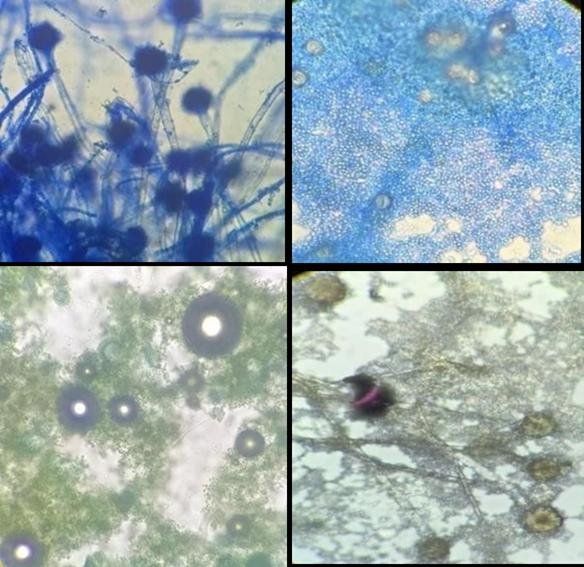
Sporangia of Rhizopus spp., which is non-septate filamentous fungi having globose sporangia and long sporangiophores (characteristic of Zygomycetes). The picture depicts Rhizopus species, which is non-septate (aseptate) mould and a filamentous fungus of the Zygomycetes class. This fungus has long and thread-like hyphae which are multinucleated because they do not have cross walls which made the cytoplasm move freely between them and these mycelium structures. Rhizopus is distinguished by their rounded sporangia filled with many spores which are located at the ends of long stems (or sporangiophores). Upon maturation, these sporangia liberate reproductive and dispersal units termed sporangiospores. Aseptate hyphae, spherical sporangia and long sporangiophores are characteristic features in Rhizopus, as is the case in fungi Zygomycetes.
Keratinase activity of keratinolytic fungi
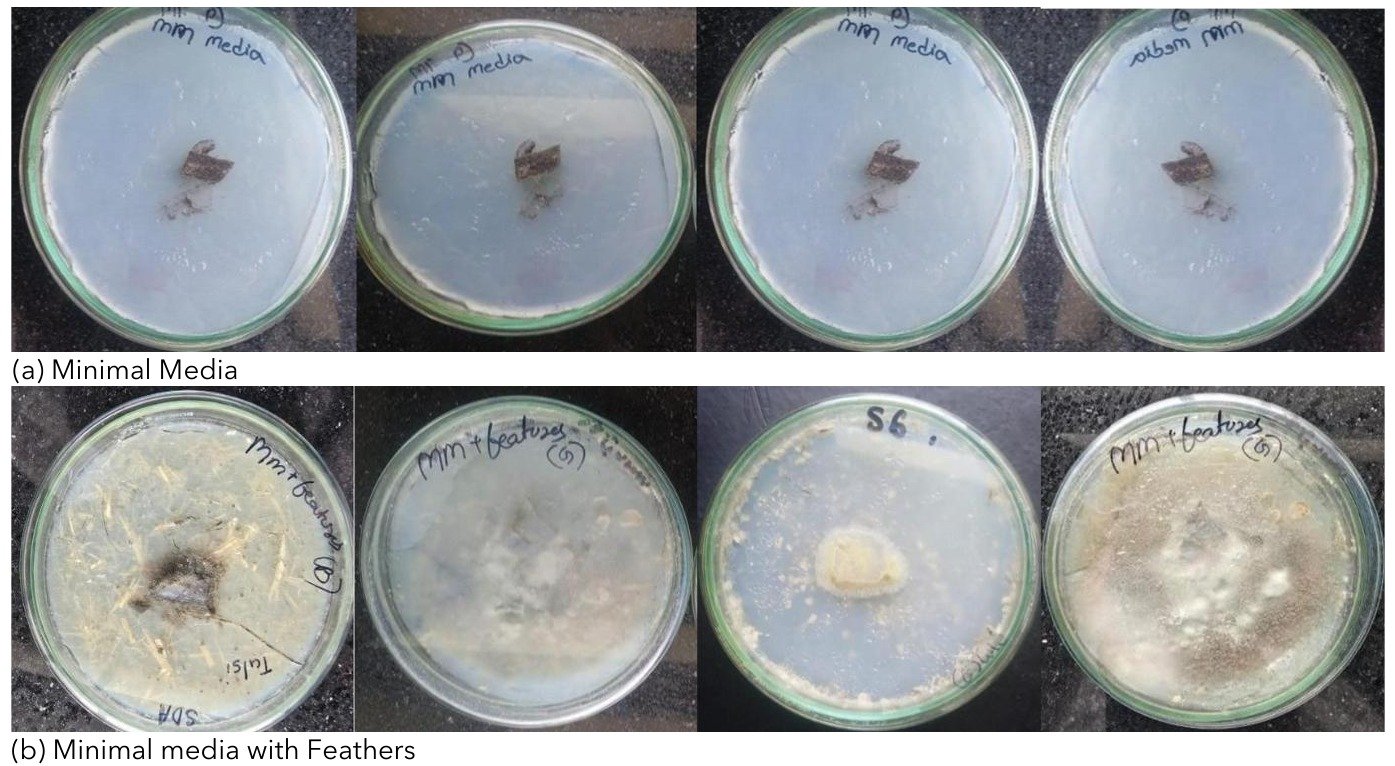
Qualitative test of keratinase activity was performed through the comparative cultivation of fungal isolates on two cultures media, minimal medium, minimal medium with keratin substrate as carbon and energy source. Less growth of fungal isolates was observed on minimal medium and with supplement of keratin show more growth.
Four fungal isolates from the soil sample could grow on medium containing chicken feather powder as the source of nitrogen and carbon, which indicates the ability of each isolate to degrade against keratin chicken feathers.
These four isolates were all Keratinolytic in minimal medium (MM) plus feather powder. Comparative cultivation experiments revealed that fungal growth was significantly increased on MM+ feather powder compared to MM (Fig 3). Table 2 shows the Growth of inhibition zones measurements on minimal media and minimal media amended with feather powder. The Fold increase of the growth in minimal media supplemented with feather powder was calculated by dividing it by Growth on minimal media without feather supplementation.
Enzyme production
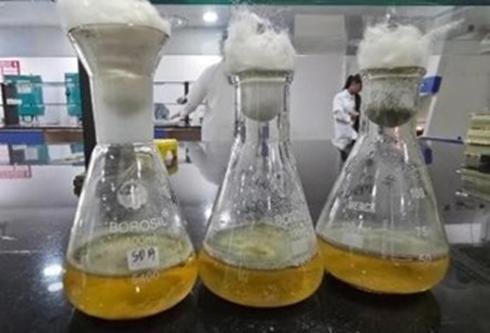
Visible mycelial growth was observed after the successful cultivation of fungal strains when observed within. Upon transfer to the modified Czapek-Dox media containing different keratin sources, enzyme production commenced after a short lag phase. Keratinase activity was first detected on the second day and increased progressively with incubation time in all cultures. The activity reached its maximum between the 5th and 6th day of incubation, depending on the substrate type. Visual observation of the cultures supported these results, as flasks containing feather keratin exhibited higher turbidity and clearer zones of substrate degradation compared to other treatments. These findings indicate that the type of keratin source strongly influences the dynamics of enzyme synthesis and that the optimal harvest period for maximum keratinase yield is around the 5th day of incubation under the given conditions.
| Fungal isolate | Growth | Front view | Mycelium | Conidium |
|---|---|---|---|---|
| KF isolate 1 | Fast | Black | Branched | Aseptate |
| KF isolate 2 | Moderate | Green | Unbranched | Septate |
| KF isolate 3 | Moderate | White | Unbranched | Septate |
| KF isolate 4 | Moderate | Brown | Unbranched | Aseptate |
Enzyme activity assay and production dynamics
An enzyme activity assay is a procedure that measures the catalytic capability of an enzyme to convert a substrate into product in a particular sample. Enzymatic activity indicates the concentration, purity and catalytic yield in a biological or industrial sample. The enzyme activity was spectrophotometrically measured at 80 nm in the present study because aromatic amino acids and peptide bonds absorb ultraviolet light there.
| KF Isolate | Growth on Minimal Media | Growth on Minimal media with feather powder | Fold Increase |
|---|---|---|---|
| KF Isolate 1 | 11 ± 0.7 | 33 ± 1.4 | 3.11 × |
| KF Isolate 2 | 13 ± 1.2 | 52 ± 4.4 | 3.96 × |
| KF Isolate 3 | 12 ± 1.1 | 38 ± 3.5 | 3.22 × |
| KF isolate 4 | 10 ± 0.9 | 34 ± 3.1 | 3.45 × |
The rise in absorbance is related to the production of soluble peptide fragments or amino acids, which are free from substrate hydrolysis by the enzyme (keratin protein substrates). The substrate solution, enzyme extract and buffer system to preserve a suitable pH is commonly combined in the mixture of the reaction. 0.1 M 50 %(w/v) Acetic Acid was introduced as the precipitating agent to terminate the reaction after incubation at the defined temperature of 37ºC and the defined period of 30 minutes. The absorbance of supernatant was measured via UV-Visible spectrophotometer. Each isolate displayed a unique kinetic profile, which was elucidated from daily measurements of the enzyme activity over the 7-day period of submerged fermentation in modified Czapek-Dox media (Table 3, Figure 4).
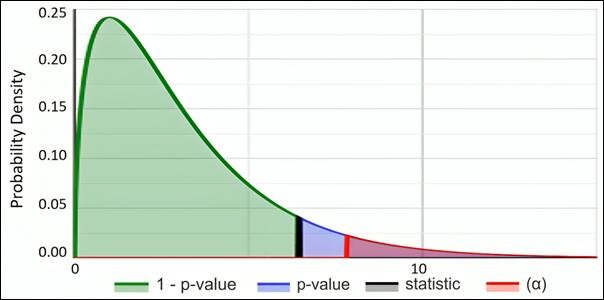
As our null Hypothesis (H0) is there is no significant difference in mean keratinase activity among the four fungal isolates. The statistical analysis was done using The Kruskal-Wallis H test, considering Significance level (α) as 0.05. The Kruskal-Wallis test showed there is a non-significant difference in the dependent variable between these different groups, χ2(3) = 6.45, p = 0.092 along with the mean rank scores of 21.57 (KF1), 24.29 (KF2), 20.5 (KF3), and 13.43 (KF4) respectively. Since, p-value is greater than α (0.05), then H0 cannot reject.
This assumes the mean ranks of all groups to be equal. These mean ranks difference not statistically significant. A non-significance result cannot prove that H0 is true, it only means that the null hypothesis cannot be rejected. Any given group is equally likely to contain highest value when selecting a value from each of the groups. The p-value is 0.0917 ( P(x≤6.449) = 0.908 ), which means that the probability of type I error, rejecting with H0 being correct, is too high: 0.0917 (9.17%). The higher the p value the more it supports H0. The Test statistic H equals to 6.449, which is in the region of acceptance at 95%: (0, 7.815). The effect size η2 observed is medium, 0.11. The fold increase was determined by dividing Enzyme Activity of Day5 by Enzyme Activity of Day 1 This suggests that the effect size of difference between mean is medium. Thus, we can conclude that there is no significant difference between the mean ranks of any two pairs.
| Day | KF Isolate 1 | KF Isolate 2 | KF Isolate 3 | KF Isolate 4 | Mean ± Std Dev, |
|---|---|---|---|---|---|
| 0th | 0 | 0 | 0 | 0 | 0 |
| 1st | 0.10 ± 0.02 | 0.13 ± 0.02 | 0.08 ± 0.01 | 0.16 ± 0.03 | 0.29 ± 0.02 |
| 2nd | 0.57 ± 0.05 | 0.89 ± 0.06 | 0.44 ± 0.06 | 2.79 ± 0.07 | 1.10 ± 0.24 |
| 3rd | 1.33 ± 0.11 | 2.31 ± 0.13 | 1.32 ± 0.07 | 3.38 ± 0.15 | 2.08 ± 0.11 |
| 4th | 3.71 ± 0.17 | 5.51 ± 0.21 | 2.73 ± 0.21 | 4.57 ± 0.32 | 4.13 ± 0.22 |
| 5th | 5.91 ± 0.23 | 8.71 ± 0.41 | 5.75 ± 0.20 | 9.79 ± 0.37 | 7.54 ± 0.30 |
| 6th | 5.12 ± 0.21 | 7.61 ± 0.39 | 4.87 ± 0.13 | 8.37 ± 0.41 | 6.49 ± 0.28 |
| 7th | 3.18 ± 0.21 | 6.12 ± 0.31 | 5.38 ± 0.21 | 6.01 ± 0.19 | 5.17 ± 0.23 |
| Factors | KF Isolate 1 | KF Isolate 2 | KF Isolate 3 | KF Isolate 4 |
|---|---|---|---|---|
| Highest Enzyme Activity | 5.91 ± 0.23 | 8.71 ± 0.41 | 5.75 ± 0.20 | 9.79 ± 0.37 |
| Day of highest Enzyme Activity Shown | 5 | 5 | 5 | 5 |
| Enzyme Activity Mean (Day 1 to 7) | 2.84 ± 0.14 | 4.46 ± 0.21 | 2.93 ± 0.12 | 5.01 ± 0.22 |
| Fold Increase (from 1st Day to 5th) | 59.1× | 67× | 71.87× | 61.18× |
| Skewness | 0.617 | 0.589 | 0.864 | 1.275 |
| Skewness Shape | Potentially Symmetrical (pval=0.437) | Potentially Symmetrical (pval=0.458) | Potentially Symmetrical ( pval=0.276) | Asymmetrical, right/positive (pval=0.028) |
| Excess kurtosis | -1.688 | -1.803 | -0.95 | 0.0945 |
| Tails Shape | Potentially Mesokurtic, normal like tails (pval=0.288) | Potentially Mesokurtic, normal like tails (pval=0.256) | Potentially Mesokurtic, normal like tails (pval=0.55) | Potentially Mesokurtic, normal like tails (pval=0.933) |
| Median: | 1.5 | 2.31 | 1.5 | 0.44 |
| Sample size (n): | 7 | 7 | 7 | 15 |
| Rank sum (R) | 151 | 170 | 143.5 | 201.5 |
| R2/n: | 3257.286 | 4128.571 | 2941.75 | 2706.817 |
The gradual increase in Enzyme activity of all KF isolate samples was recorded spectrophotometrically. All isolates expressed maximum enzyme activity on day 5. Among the four KF isolates, KF isolate 4 showed the maximum peak activity of 9.79 ± .37 U/mL, followed by KF isolate 2, with 8.71 ± .41 U/mL. In contrast with peak activities of 5.91 ± 0.23 U/mL and 5.75 ± 0.20 U/mL, KF isolates 1 and 3 exhibited lower peak activities, respectively. Such high values would imply these samples contained a greater proportion of active enzyme or that when incubated the conditions were more conducive to synthesis and secretion of enzyme. By contrast, the first two samples had highly lower absorbance readings, which represented that there was less enzyme being produced by the strain or less concentration of enzyme in the medium. This may be due to the shorter incubation time, limitation of nutrients or less suitable condition for enzyme production. This progressive increase of enzyme activity from first to last sample indicate either the source of the enzyme (most likely microorganisms) produced or secreted more enzyme as time progressed. This trend may also be a result of adaptation of the organism towards the substrate, which resulted in greater metabolic activity and an increased yield of enzymes in the later stage. In general, the results indicate that the enzyme production reaches a maximum in the 2nd and 4th samples.
Discussion
This study managed to isolate four Keratinolytic fungi among the ten that have been isolated so far by using chicken feather waste from the Chh. Sambhajinagar, Maharashtra in India. Each isolate showed strong keratinase activity differentiated by increased growth on keratin supplemented minimal medium than non-supplemented controls. The morphological and microscopic observation of Keratinolytic fungi isolates (30, 31), revealed that isolates were classified within the Zygomycetes class (genus Rhizopus spp.) with non-septate hyphae and globose sporangia (32).
The analysis showed that KF isolates 2 and 4 are the High-yield keratinase isolates, with maximum activities of 8.71 ± 0.41 U/mL and 9.81 ± 0.28 U/mL, respectively. These values are similar or higher than previously keratinase activities reported from environmental isolates (33, 34). This approximately 50–65-fold increase in enzyme activity from day 1 to day 5 indicates robust substrate-induced expression of Keratinolytic enzymes. In modified Czapek-Dox medium, all isolates showed their peak enzyme activity on day 5 of submerged fermentation at 37 °C. These results confirmed previous studies that day 5 is the best harvest period for obtaining the highest keratinase production (9, 35).
The subsequent decrease in enzyme activity (days 6–7) most likely represents exhaustion of a substrate, product inhibition or autolysis of the enzyme, consistent with typical kinetics of batch fermentation. Incubation day and enzyme activity during the exponential phase are strongly positively linear correlated (r = 0.78–0.86, p < 0.05) suggesting that kinetics of enzyme production could be predicted and may allow optimization of scale-up for industrial applications (36).
The Keratinolytic ability showed by these isolates can be regarded as a good alternative for poultry industry waste valorization. The process, which converts 3,500 tonnes of chicken feather waste generated annually in India into value-added products such as amino acid supplements, biofertilizers and feed additives, could potentially be applied through enzymatic biodegradation (9, 37). Enzymatic methods save energy and decrease environmental impacts on surrounding ecosystems by also providing the amino acids required for the growth of microorganisms, important amino acids/compounds are more always reserved in developmental characteristic compared with traditional chemical or thermal processes (2).
The high yields of effective enzyme production in modified Czapek-Dox medium indicate the possibility of inexpensive fermentation methods employing agricultural waste as nutrient sources. In this regard, future work should focus on solid-state fermentation and media optimization with the use of feather waste itself as substrate and nutrient source (38).
This study examines the isolation and characterization of Keratinolytic ability. Fungal identities could be conclusively confirmed by molecular identification, for which Internal Transcribed Spacer (ITS) sequencing is a standard methodology. Although presented in the abstract, plant growth-promoting properties were not experimentally determined and are an independent area of investigation. Furthermore, this pilot study did not include enzyme purification and keratinase isoform characterization.
Conclusion
We successfully isolated four fungal isolates with high levels of keratinase production from chicken feather waste samples in Maharashtra (India). Isolates 2 and 4 proved to be the best high-yield keratinase isolates, with corresponding maximal enzyme activities of 8.83 and 9.81 U/mL at the end of day 5 of submerged fermentation. Statistical analysis of the enzyme production among isolates confirmed that there were no significant differences were (p = 0.0917).
Our results prove the biotechnological opportunity to valorize poultry industry waste using endemic Keratinolytic fungi. The high-yield enzymes in modified Czapek-Dox medium and high substrate specificity for chicken feather keratin imply possible potential in circular bioeconomy models. Additional research using molecular identification of the strains, enzyme purification and characterization as well as metabolic engineering to optimize fermentation parameters will enhance translation toward industrial scale bioremediation and waste valorization targets in support of sustainable development goals.
Author Contributions
Conceptualization: A.M. and V.C.; methodology: R.B., S.W., and V.C.; formal analysis: A.M.; investigation: A.M., V.C., R.B.; resources: A.T.; data curation: V.C.; statistical analysis: A.T.; writing—original draft preparation: A.T. and R.B.; writing—review and editing: A.T. and S.W. All authors have read and agreed to the published version of the manuscript.
Acknowledgements
We acknowledge MGM Institute of Bioscience and Technology for allowing and helping us to complete this study.
Conflict of Interest
The authors declare no conflict of interest.
Funding
The authors received no financial support for the research, authorship, and/or publication of this article.
Data Availability
The article includes the original data presented in this study. Further inquiries can be directed to the corresponding author(s).
References
- Progress in microbial degradation of feather waste. Front Microbiol. 2019;10:2717.
- Potential role of keratinase in the environmental remediation. Mater Today Proc. 2023.
- Feather degradation by keratinolytic bacteria and biofertilizing potential for sustainable agricultural production. J Basic Microbiol. 2019;59(1):4-13.
- Chicken feather waste hydrolysate as a superior biofertilizer in agroindustry. Curr Microbiol. 2021;78(6):2212-30.
- Biodegradation of poultry feather waste by keratinase producing Bacillus cereus strain isolated from poultry farms waste disposal site. Case Stud Chem Environ Eng. 2021;4:100114.
- Biodegradation of keratin-rich husbandry waste as a path to sustainable agriculture. Sustainability. 2021;13(16):8691.
- Microbial keratinolysis: eco-friendly valorisation of keratinous waste into functional peptides. Microorganisms. 2025;13(10):2270.
- Plant growth promotion activity of keratinolytic fungi growing on a recalcitrant waste known as “hair waste.”. Biotechnol Res Int. 2015;2015:1-10.
- Microbial keratinases: enzymes with promising biotechnological applications. Food Technol Biotechnol. 2018;56(3):312-28.
- The physiology of keratinophilic fungi. Rev Iberoam Micol. 2000;17:78-79.
- Evaluation of keratinolytic activity by keratinophilic fungi in Jaipur, India. Am J Appl Sci. 2017;14(7):678-81.
- Mycological and some physiological studies of keratinophilic and other moulds associated with sheep wool. Microbiol Res. 1997;152(2):181-8.
- Biodegradation of keratin waste: theory and practical aspects. Waste Manag. 2011;31(8):1689-701.
- Biodegradation of feather waste keratin by a keratinolytic soil fungus of the genus Chrysosporium and statistical optimization of feather mass loss. World J Microbiol Biotechnol. 2017;33(1):13.
- Microbial decomposition of keratin in nature—a new hypothesis of industrial relevance. Appl Microbiol Biotechnol. 2016;100(5):2083-96.
- Comprehensive insights into microbial keratinases and their implication in various biotechnological and industrial sectors: a review. Int J Biol Macromol. 2020;154:567-83.
- Microbial keratinase: next generation green catalyst and prospective applications. Front Microbiol. 2020;11:580164.
- Fungal germplasm for drug discovery and industrial applications. Handb Ind Mycol. 2004:142-85.
- Isolation and identification of keratinophilic fungi from poultry farm waste. J Pure Appl Microbiol. 2023;4(1):437-9.
- Isolation and identification of pathogenic fungi from diabetic patients in Diyala. Biochem Cell Arch. 2018;18(1):959-66.
- Development of a keratinase activity assay using recombinant chicken feather keratin substrates. PLoS One. 2017;12(2):e0172712.
- Production of keratinases using chicken feathers as substrate by a novel multifunctional strain of Pseudomonas stutzeri and its dehairing application. Biocatal Agric Biotechnol. 2014;3(2):167-74.
- Keratinolytic properties of Aspergillus clavatus promising for biodegradation. Int J Environ Res Public Health. 2022;19(21):13939.
- β-Galactosidase-producing isolates in mucoromycota: screening, enzyme production, and applications for functional oligosaccharide synthesis. J Fungi. 2021;7(3):229.
- Fibrinolytic and collagenolytic activity of extracellular proteinases of Aspergillus ochraceus and Aspergillus ustus. Mosc Univ Biol Sci Bull. 2016;71(1):62-6.
- Enzyme substrates toolbox: a signalogenic guide – part 1: chromogenic substrates. Biosynth Handbook. 2021.
- Enzymes. Medical Biochemistry. Elsevier; 2017:153-75.
- Enzyme activity calculator: enzyme units, rate & specific activity. Pearson+. .
- Kruskal-Wallis test calculator with post-hoc Dunn’s test multiple comparisons. .
- Antagonistic potential of halophilic fungi from Lonar Lake against soil-borne plant pathogens. Scholars Acad J Biosci. 2026;14(1):93-102.
- Antibacterial effect of Salvadora persica extract on Staphylococcus aureus isolated from gingivitis patients. Biol Sci. 2025;5(3).
- Studies on keratinase producing fungi isolated from poultry waste and their enzymatic activity. J Microbiol Res. 2013;3(4):148-51.
- Comparative analysis of keratinase production by Curvularia lunata and Chrysosporium tropicum under varying environmental conditions. J Entomol Zool Stud. 2024;12(3):259-63.
- Discovery of two Chrysosporium species with keratinolytic activity from field soil in Korea. Mycobiology. 2018;46(3):260-8.
- Insight into the keratinase enzymes from microbial origins and their applications. Biosci Biotechnol Res Commun. 2021;14(1):31-6.
- Current understanding of feather keratin and keratinase and their applications in biotechnology. Biochem Res Int. 2025;2025:6619273.
- Enzymes as catalysts in industrial biocatalysis: advances in engineering, applications, and sustainable integration. Catalysts. 2025;15(9):891.
- Development of semi-solid state fermentation of keratinase and optimization of process by cheaper and alternative agricultural wastes. Eur J Biotechnol Biosci. 2016;4:1-4.
References
References
- Progress in microbial degradation of feather waste. Front Microbiol. 2019;10:2717.
- Potential role of keratinase in the environmental remediation. Mater Today Proc. 2023.
- Feather degradation by keratinolytic bacteria and biofertilizing potential for sustainable agricultural production. J Basic Microbiol. 2019;59(1):4-13.
- Chicken feather waste hydrolysate as a superior biofertilizer in agroindustry. Curr Microbiol. 2021;78(6):2212-30.
- Biodegradation of poultry feather waste by keratinase producing Bacillus cereus strain isolated from poultry farms waste disposal site. Case Stud Chem Environ Eng. 2021;4:100114.
- Biodegradation of keratin-rich husbandry waste as a path to sustainable agriculture. Sustainability. 2021;13(16):8691.
- Microbial keratinolysis: eco-friendly valorisation of keratinous waste into functional peptides. Microorganisms. 2025;13(10):2270.
- Plant growth promotion activity of keratinolytic fungi growing on a recalcitrant waste known as “hair waste.”. Biotechnol Res Int. 2015;2015:1-10.
- Microbial keratinases: enzymes with promising biotechnological applications. Food Technol Biotechnol. 2018;56(3):312-28.
- The physiology of keratinophilic fungi. Rev Iberoam Micol. 2000;17:78-79.
- Evaluation of keratinolytic activity by keratinophilic fungi in Jaipur, India. Am J Appl Sci. 2017;14(7):678-81.
- Mycological and some physiological studies of keratinophilic and other moulds associated with sheep wool. Microbiol Res. 1997;152(2):181-8.
- Biodegradation of keratin waste: theory and practical aspects. Waste Manag. 2011;31(8):1689-701.
- Biodegradation of feather waste keratin by a keratinolytic soil fungus of the genus Chrysosporium and statistical optimization of feather mass loss. World J Microbiol Biotechnol. 2017;33(1):13.
- Microbial decomposition of keratin in nature—a new hypothesis of industrial relevance. Appl Microbiol Biotechnol. 2016;100(5):2083-96.
- Comprehensive insights into microbial keratinases and their implication in various biotechnological and industrial sectors: a review. Int J Biol Macromol. 2020;154:567-83.
- Microbial keratinase: next generation green catalyst and prospective applications. Front Microbiol. 2020;11:580164.
- Fungal germplasm for drug discovery and industrial applications. Handb Ind Mycol. 2004:142-85.
- Isolation and identification of keratinophilic fungi from poultry farm waste. J Pure Appl Microbiol. 2023;4(1):437-9.
- Isolation and identification of pathogenic fungi from diabetic patients in Diyala. Biochem Cell Arch. 2018;18(1):959-66.
- Development of a keratinase activity assay using recombinant chicken feather keratin substrates. PLoS One. 2017;12(2):e0172712.
- Production of keratinases using chicken feathers as substrate by a novel multifunctional strain of Pseudomonas stutzeri and its dehairing application. Biocatal Agric Biotechnol. 2014;3(2):167-74.
- Keratinolytic properties of Aspergillus clavatus promising for biodegradation. Int J Environ Res Public Health. 2022;19(21):13939.
- β-Galactosidase-producing isolates in mucoromycota: screening, enzyme production, and applications for functional oligosaccharide synthesis. J Fungi. 2021;7(3):229.
- Fibrinolytic and collagenolytic activity of extracellular proteinases of Aspergillus ochraceus and Aspergillus ustus. Mosc Univ Biol Sci Bull. 2016;71(1):62-6.
- Enzyme substrates toolbox: a signalogenic guide – part 1: chromogenic substrates. Biosynth Handbook. 2021.
- Enzymes. Medical Biochemistry. Elsevier; 2017:153-75.
- Enzyme activity calculator: enzyme units, rate & specific activity. Pearson+. .
- Kruskal-Wallis test calculator with post-hoc Dunn’s test multiple comparisons. .
- Antagonistic potential of halophilic fungi from Lonar Lake against soil-borne plant pathogens. Scholars Acad J Biosci. 2026;14(1):93-102.
- Antibacterial effect of Salvadora persica extract on Staphylococcus aureus isolated from gingivitis patients. Biol Sci. 2025;5(3).
- Studies on keratinase producing fungi isolated from poultry waste and their enzymatic activity. J Microbiol Res. 2013;3(4):148-51.
- Comparative analysis of keratinase production by Curvularia lunata and Chrysosporium tropicum under varying environmental conditions. J Entomol Zool Stud. 2024;12(3):259-63.
- Discovery of two Chrysosporium species with keratinolytic activity from field soil in Korea. Mycobiology. 2018;46(3):260-8.
- Insight into the keratinase enzymes from microbial origins and their applications. Biosci Biotechnol Res Commun. 2021;14(1):31-6.
- Current understanding of feather keratin and keratinase and their applications in biotechnology. Biochem Res Int. 2025;2025:6619273.
- Enzymes as catalysts in industrial biocatalysis: advances in engineering, applications, and sustainable integration. Catalysts. 2025;15(9):891.
- Development of semi-solid state fermentation of keratinase and optimization of process by cheaper and alternative agricultural wastes. Eur J Biotechnol Biosci. 2016;4:1-4.
Downloads

This work is licensed under a Creative Commons Attribution 4.0 International License.
Copyright (c) 2026 Akanksha Mishra, Vaibhavi Cheketkar, Renuka Bhoyar, Shiwani Kawade, Aman Tiple
License terms
-
Attribution — You must give appropriate credit, provide a link to the license, and indicate if changes were made. You may do so in any reasonable manner, but not in any way that suggests the licensor endorses you or your use.
- No additional restrictions — You may not apply legal terms or technological measures that legally restrict others from doing anything the license permits.