
Assessment of the Nutritional Composition and Condition Factor of Wild and Cultured African Catfish (Clarias gariepinus)
Department of Fisheries and Aquaculture, Faculty of Renewable Natural Resources, Federal University Dutsin-Ma Katsina State, PMB 5001, Nigeria.
Correspondence: Idris Abdulhakeem Abdulhakeem, idrisabdulhakeem@yahoo.com
- Received
- Revised
- Accepted
- Published
Abstract
This study compared the condition factor and nutrient composition of two sexes of the African catfish (Clarias gariepinus) from the wild and cultured sources in Zobe Dam and Ni’ima Farm, respectively, in Dutsin-Ma, Katsina State, Nigeria. For this, 20 wild and 20 cultured, with equal sex representation (total n=40). The condition factor (K) of the wild fish was statistically higher (males: 1.71 ± 0.03; females: 1.69 ± 0.04) than the cultured fish (males: 1.52 ± 0.05; females: 1.56 ± 0.02). This shows that the wild fish had better overall well-being and energy reserves than the cultured ones. The proximate analysis was conducted (for dry matter, crude protein, crude fibre, lipid, ash, and nitrogen-free extract), and there were no significant differences in most of the parameters of the sources and sexes except the ash content of the cultured fish, which was higher, and the wild fish possessed higher lipid and nitrogen-free extract. The male fishes showed slightly higher crude protein and lipids than the females. In conclusion, it was observed that the cultured and wild C. gariepinus fish had similar nutritional value, although the cultured fish had better minerals and the wild fish had more lipid from natural foraging. These findings will provide the basis for sustainable development of feed formulation, processing and management to enhance the quality of the cultured fish as well as assist the aquaculture sector of Dutsin-Ma, Katsina State, Nigeria, amid growing protein demand.
Introduction
Fish is one of the potential sources of animal protein and other micronutrients in the Africa and globally, which dictate the nutritional quality of various societies (1). However, the nutrient profile analysis of one fish species may be significantly different across species, seasons, and environmental conditions, which determines the overall nutritive value that a fish species imparts to a consumer (2). The African catfish (Clarias gariepinus) is one of the widely distributed and commercially important fishes in Nigerian inland water bodies. C. gariepinus is primarily a freshwater species, which is very tolerant of a wide range of environmental factors, such as hypoxic conditions, high turbidity, and temperature (8°C to 35°C), with an optimal growth being observed between 28°C and 30°C (3). It is highly regarded in its palatable taste and economic cost, and it supports subsistence and commercial fisheries, becoming the most prevalent in the production of aquaculture nationally (4). The species may grow a total length of 170 cm and weigh around 60 kg, and reported lifespans of the species are up to 15 years (5). The Total length (TL) of wild adults is usually 90cm-150cm, and the farmed ones reach marketable size of 1-1.5kg in 6-12 months of good management regimes (6).
Proximate composition (moisture, lipid, protein, and ash content) along with the carbohydrate content as the difference determines the dietary value of the species (7). This composition is affected by many intrinsic and extrinsic factors such as size, sexual maturity, temperature, salinity, physical activity, ration size, feeding frequency, starvation interspersed intervals, types, and quantity of dietary constituents (8). Although the protein and ash concentration changes are relatively less fluctuated when compared to lipid contents, they are highly determined by the species and genetics and body size (8,9). Furthermore, proximate composition can be disturbed by environmental stressors and water quality, impacting nutrient accrual and fish overall health (10).
The condition factor of fish is a key biological indicator, which provides information on the health of individual and populations, and is a central tool to conserve and manage natural resources (11). It serves as a proxy of the physiological state of the species, which has an impact on the growth, reproduction, and survival pathways (12). Traditionally, the condition factor has been used as an indicator of growth vigor and feeding intensity (13); loss of it has been associated with incremental length gains (14) and it regulates the reproductive cycles of fish populations (15). This factor, in terms of functionality, combines the signs of energy reserves and their ability to withstand environmental challenges, including pollution or water with poor quality (16). Besides, when comparing condition factor across either habitats or time series, one can detect ecological degradation or resource limitation (17). In aquaculture, the state of persistently high condition factors among stock cohorts indicates effective feeding regimes and general welfare, thus improving the survival and yield performance (18). A high-condition factor of fish in aquaculture practice can be used to signify effective feeding regimes and healthy well-being in general, which could lead to improved survival and yield scores (18).
The aim of the study was to compare the proximate nitrogen and condition factor of male and female Clarias gariepinus in a captured and cultured sample with each other in order to give the knowledge about the management of sustainable aquaculture, feed formulation and fish processing methods.
Despite several comparative studies on proximate composition and condition factor of Clarias gariepinus in other regions of Nigeria and Africa, there remains a notable gap in data specific to Dutsin-Ma, Katsina state. This study provides the comparative assessment of nutritional composition and condition factor between wild (Zobe Dam) and cultured (Ni’ima Farm) Clarias gariepinus populations in Katsina State, contributing baseline data to support local sustainable aquaculture development, feed formulation, and regional fisheries management.
Materials and Methods
Sample collection
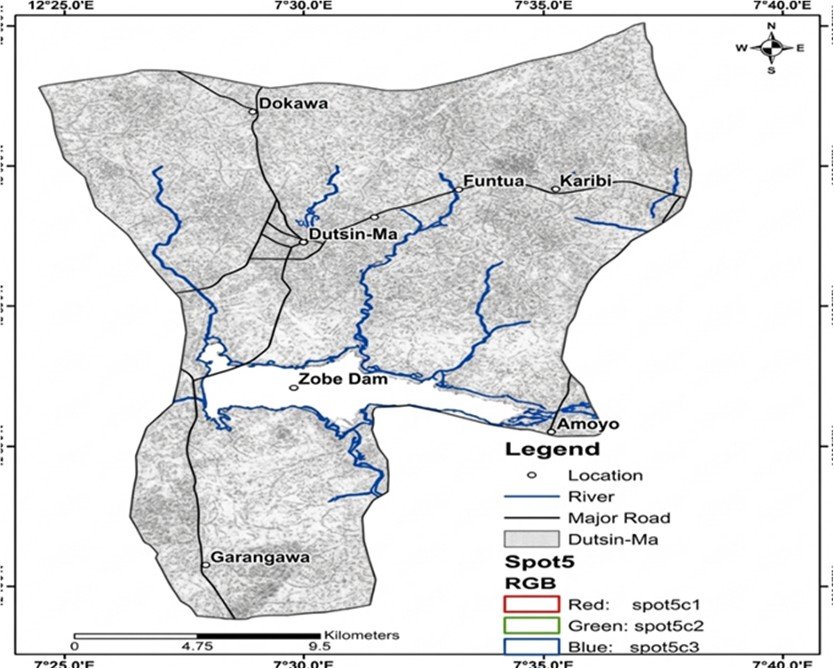
Forty samples of Clarias gariepinus were collected in Zobe Dam (Figure 1) and Ni’ima fish farm which is situated along Dutsi-ma/Kankara road, Katsina state, Nigeria. The sample consisted of twenty captured and twenty cultured specimens consisting of ten males and ten females respectively. The sample size of 40 fish (20 wild and 20 cultured, with equal sex representation) was selected based on feasibility within available resources and laboratory capacity, while ensuring adequate representation of both sexes and sources for detecting meaningful differences in condition factor and proximate parameters, consistent with similar comparative fish nutrition studies. Samples were collected during the dry season (April) to minimize seasonal variability in nutritional profiles. The cultured fish at Ni’ima Farm were reared in concrete ponds under intensive conditions, fed commercial pelleted feed (35-40% crude protein) twice daily to apparent satiation, with water quality maintained at temperature 27-30°C, dissolved oxygen >4 mg/L, and pH 6.8-7.5. All sampled fish were adults of marketable size (≈120–200 g), 8–12 months old for cultured specimens.
Length-weight measurement of fishes
The length and weight of the forty fish samples were measured right before chilling the samples with ice. Measurement of length was carried out on a measuring board whereas weight was measured by use of sensitive weighing balance. The acquired length and weight data was used to determine the condition factor using the Fulton index equation obtained by Htun-Han (1978) (19), which is as follows:
Where W= Weight of the Fishes
L= Length of the fishes
K= Condition Factor
Preparation of fish sample
The fish were individually measured and weighed, then gutted, washed, and stored on ice. For proximate analysis, equal portions of edible muscle tissue from the 10 males and 10 females per source were pooled to form composite samples (one composite per source: captured and cultured), oven-dried at 105°C to constant weight, ground to fine powder, and analyzed following AOAC (2012) procedures. Pooling was performed due to limited tissue quantity per individual fish and to obtain representative average values for each source group, a common approach in fish proximate studies when individual variability is not the primary focus.
Proximate Analysis
Determination of dry matter, ash, lipid, crude protein, and other nutritional parameters were carried out in the biochemistry laboratory of the federal university Dutsin-Ma by following the AOAC standard procedures of 2012 (20).
Statistical analysis
Data were presented as means ± standard error. Prior to analysis, normality (Shapiro-Wilk test) and homogeneity of variance (Levene’s test) were checked. Independent samples t-tests were used to compare means between captured and cultured groups and between males and females for condition factor and each proximate parameter. All analyses were performed using SPSS version 22 at a significance level of p < 0.05.
Results
The findings of the statistical analysis are interpreted and presented in the tables below.
Condition factor
Male
Table 1 indicates length, weight, and condition factor of both the captured and cultured male Clarias gariepinus. There was no significant difference (p > 0.05) in the mean length of captured and cultured fishes. The weight of fishes captured was higher than the cultured fishes, although it was not found significant. Nevertheless, condition factor was significantly higher (p < 0.05) in captured fishes compared to cultured fishes which means that male individuals had better overall well-being in the wild environment.
Female
Table 2 shows the average length, weight and condition factor of the female of Clarias gariepinus of captured and cultured sources. There was no significant difference (p > 0.05) in the mean length between captured and cultured fishes. The same situation applied to the mean weight because it was found to be greater in captured fishes than in cultured fishes, although the difference was not statistically significant. The condition factor, though, was found to be significantly higher (p < 0.05) in captured females than in cultured females indicating that wild females had better body condition relative to their length as compared to the cultured females.
Proximate Composition (Sources)
Table 3 shows that the statistically significant increase (p < 0.05) in the ash content as an indicator of mineral deposition was more pronounced in cultured Clarias gariepinus compared to the captured ones. There was a slight difference in dry matter captured fish and cultured fish but did not exhibit any statistical significance. The average proportion of crude protein was found to be higher in the cultured samples compared to the wild ones but the difference was not significant. Crude fiber values were marginally higher in cultured fishes than in captured fishes. Wild fish had more oil (fat) contents than cultured fish, but not significantly. Nitrogen-free extract (NFE) was higher in captured fish than in cultured fish, but the difference was not statistically significant (p > 0.05). In general, the proximate profiles showed nutritional similarity between the two sources, with the major significant difference being the higher ash content in cultured fish.
Proximate Composition (Sex)
Table 4 shows the proximate parameters of male and female Clarias gariepinus. The measured parameters did not show statistically significant differences (p 0.05) between sexes. Dry matter was slightly higher in females than in males. The crude protein showed slightly higher value in males than in females. The females had more crude fibre compared to males. Males had slightly higher oil content and females had slightly lower oil content. The ash content was similar, with slightly higher values in females than in males. Nitrogen-free extract was also slightly higher in females compared to males. These minor variations confirm a smaller sex difference in the nutrient distribution, and no statistically significant difference in the general proximate composition of males and females.
| Parameters | Captured | Cultured |
|---|---|---|
| Length(cm) | 30.34±1.74a | 30.44±0.95a |
| Weight(g) | 201.80±29.50a | 144.40±5.02a |
| Condition Factor (K) | 1.71±0.03a | 1.52±0.05b |
Note: values are expressed as mean ± SE (standard error)
Means with different superscript across rows are significantly different (p<0.05).
| Parameters | Captured | Cultured |
|---|---|---|
| Length (cm) | 29.44±1.51a | 27.50±0.92a |
| Weight(g) | 179.80±23.87a | 119.20±15.18a |
| Condition Factor (K) | 1.69±0.04a | 1.56±0.02b |
Note: values are expressed as mean ± SE (standard error)
Means with different superscript across rows are significantly different (p<0.05).
| Parameters | Captured | Cultured |
|---|---|---|
| D.M | 96.46±1.98a | 95.55±0.15a |
| CP | 55.57±0.99a | 61.60±3.72a |
| CF | 0.77±0.77a | 0.87±0.19a |
| OIL | 3.79±0.22a | 2.70±0.035a |
| ASH | 16.41±0.29b | 23.16±0.47a |
| NFE | 23.47±1.82a | 11.67±3.02a |
Note: values are expressed as mean ± SE (standard error)
Means with different superscript across rows are significantly different (p<0.05).
Key: D.M= Dry matter, Ash= ash content, Oil= Oil content, CP = crude protein content, CF= Crude Fiber, NFE= Nitrogen Free extract
| Parameters | Male | Female |
|---|---|---|
| D.M | 94.95±0.47a | 97.07±1.37a |
| CP | 59.95±5.37a | 57.22±0.66a |
| CF | 0.34±0.34a | 1.30±0.24a |
| OIL | 3.34±0.67a | 3.16±0.42a |
| ASH | 19.41±3.29a | 20.16±3.47a |
| NFE | 16.97±8.32a | 18.17±3.48a |
Note: values are expressed as mean ± SE (standard error)
Means with different superscript across rows are significantly different (p<0.05).
Key: D.M= Dry matter, Ash= ash content, Oil= Oil content, CP = crude protein content, CF= Crude Fiber, NFE= Nitrogen Free extract.
Discussion
In Condition factor, using an established measure of the relationship between the body weight and the length, the condition factor (K), is used to indicate the well-being of the fish. The results showed that the different environments (wild and culture) of study were suitable for Clarias gariepinus growth, as condition factor values exceeded 1 in both sources. Wild fish showed much higher values of both males (1.71 ± 0.03) and females (1.69 ± 0.04) than their cultured counterparts (1.52 ± 0.05 and 1.56 ± 0.02, respectively). This indicates greater robustness, energy reserves (e.g., lipid storage), and overall physiological health in wild habitats, likely due to diverse natural foraging, reduced stocking density, and lower chronic stressors compared to intensive farming conditions (e.g., potential overcrowding, uniform feeds, or water quality fluctuations). These reserves enhance survival during periods of food scarcity or environmental stress, which is advantageous for wild populations but highlights a potential limitation in cultured systems where growth may prioritize rapid weight gain over balanced condition. This is in line with Oyebola et al. (2022) (21), which presented condition factors between 0.72 and 1.02 in mixed-strain populations of C. gariepinus from Benin Republic (West Africa), and explained the variation by environmental factors and possible introgression effects. Likewise, Ojelade et al. (2022) (22) found that the condition factor of C. gariepinus was higher in the environmentally enriched cultured (substratum-enriched tanks with high K values) than in the wild, suggesting that the most favorable aquaculture environment led to better physiological welfare, though wild habitats in the present study appeared more favorable overall. The quality of the feed, age, natural foraging in the wild and formulated feeds in the culture, and stressors in the habitat may be different (21). Recent literature shows that there are little or no regular sex differences in C. gariepinus condition factor, and environmental factors commonly dominate sexual dimorphism (23).
In proximate composition, the relationship between captured (wild) and cultured Clarias gariepinus in terms of proximate composition revealed nutritional similarity. There was no significant difference in the most of the parameters, except the ash content, as the cultured fish was significantly higher compared to the captured fish. This higher ash level likely results from mineral enrichment in commercial feeds or pond water, improving the bioavailability of essential minerals (e.g., Ca, Mg, K, Na) and supporting better bone development and metabolic health in farmed fish. The results agree with the conclusions of Hammed et al. (2022) (24) who reported similar differences in proximate composition between wild and cultured C. gariepinus with higher moisture level and variable protein and fat content despite the range of protein percentages are 38.61 to 50.03% across species and samples. Additionally, Oghenochuko et al. (2022) (25) noted greater crude protein (54.98%) and ether extract (34.17%) in the wild samples as compared to their cultured counterparts, which could be due to natural and controlled feeding conditions. On the other hand, other studies have also indicated better protein ratio in cultured fishes due to the balanced formulated food but the increased ash in our cultured group is associated with the mineral fortification effects (24).
Statistically, no significant differences were found between sexes in proximate parameters. The males also had slightly higher crude protein and oil than females, though females had slightly higher dry matter, crude fiber, ash, and nitrogen-free extract. Such low differences provide evidence of small sex-based nutrient allocation in C. gariepinus, which could be due to reproductive demands in females which do not significantly influence the muscle structure in this sample. This agrees with Sobczak et al. (2022) (26) who found no sex-effect on the majority of biometric traits in C. gariepinus hybrids, though females were sometimes found to have a higher fillet weight and protein/fat content. Namaga et al. (2020) found that juvenile female C. gariepinus had a higher crude protein in female than male in captured samples, although sex differences were not consistent. Recent findings indicate that environmental and dietary factors often dominate over sex in proximate profiles for this species (26).
Conclusion
This study shows that the cultured fish had more ash content, likely from mineral-enriched feeds, while the wild fish had more lipid and nitrogen-free extract from natural foraging. The condition factor of the wild fish was high, which implies an overall well-being and energy reservation in the natural habitats. The male fish had slight advantages in protein and lipids over the females. In practice, these results support comparable nutritional value between sources, supporting sustainable use of both in food systems. To maximize cultured catfish production, feed formulation should be aimed at lipid and mineral balance, and management practices (e.g., enrichment) could improve condition factor, growth efficiency, and overall aquaculture viability in Dutsin-Ma, Katsina State, Nigeria.
Author Contributions
UJ and IAA conceived and designed the research study. IAA conducted the experiment and wrote the paper. ABD and UJ analyzed and interpreted the data. All authors contributed to the manuscript revisions and approved the final version of the manuscript.
Acknowledgements
My sincere appreciation goes to Umaru Joel PhD and A.B Dauda PhD for their supports, guidance and instructions during this research. I am really grateful for their efforts towards the success of this research.
Conflict of Interest
No potential conflict of interest was reported by the author(s).
Funding
This research was done with no external financial support. All activities were funded through institutional resources and the authors' own contributions.
Data Availability
Data are not available.
Ethics Approval
No formal ethics approval was required for this study involving an unregulated food fish species; however, all handling followed institutional guidelines for humane treatment of aquatic animals in research.
References
- A comparative study of chemical composition, the level of fatty acids, amino acids and mineral elements between two types of catfish (Bagrus and Muraena) found in the upper Tigris River. J. King Saud Univ. Sci.. 2024;36(11):103535.
- Basic and functional nutrients in the muscles of fish: A review. Crit. Rev. Food Sci. Nutr.. 2020;60(12):1941-1950.
- Nutritional requirements and effect of culture conditions on the performance of the African catfish (Clarias gariepinus): A review. Cogent Food Agric.. 2024;10(1):2302642.
- Addressing catfish (Clarias spp.) supply gap in Nigeria: A perspective on strategies for sustainable aquaculture growth. Sustainability. 2025;17(21):9645.
- Clarias gariepinus (Burchell, 1822). FishBase. 2025.
- Effect of monoculture and polyculture systems stocking density on chemical compositions and metabolizable energy of Nile tilapia (Oreochromis niloticus) and African catfish (Clarias gariepinus) fingerlings reared in concreted ponds. Int. J. Fish. Aquat. Stud.. 2025;13(5):24-29.
- Proximate composition and nutritional attributes of ready-to-cook catfish products. Foods. 2021;10(11):2716.
- Development and evaluation of Nile tilapia (Oreochromis niloticus) body composition models. Aquaculture. 2023;564:739039.
- Nutritional profile of wild, pond-, gher- and cage-cultured tilapia in Bangladesh. Heliyon. 2021;7(5):e06968.
- The effect of environmental stressors on growth in fish and its endocrine control. Front. Endocrinol. (Lausanne). 2023;14:1109461.
- Exploring the morphological dynamics of Nile tilapia (Oreochromis niloticus Linn. 1758) in Victoria Nile as depicted from geometric morphometrics. BMC Zool.. 2023;8:28.
- Assessment of length-weight relationship and condition factor of Nile tilapia (Oreochromis niloticus) in cage and open waters in Winam Gulf of Lake Victoria, Kenya. Int. J. Environ. Sci. Nat. Resour.. 2019;22(3):556088.
- Length-weight relationship and condition factor of Nile tilapia (Oreochromis niloticus) fed diets supplemented with guava and star gooseberry leaf extract. F1000Research. 2024;13:540.
- Biometry, condition factors and length-weight relationships of sixteen fish species in Iwopin freshwater ecotype of Lekki Lagoon, Ogun State, Southwest Nigeria. Heliyon. 2020;6(1):e02957.
- Biometric relationships and condition factor of Nile tilapia (Oreochromis niloticus) grown in concrete ponds with groundwater. Aquac. Int.. 2025;33:200.
- Length-weight relationship, condition factor and sex ratio of fish fauna in Badagry Creek, Lagos, Nigeria. Int. J. Mar. Sci.. 2016;6(24):1-8.
- Weight–length relationship analysis revealing the impacts of multiple factors on body shape of fish in China. Fishes. 2023;8(5):269.
- Length and weight relationship, condition factor, and morphometric characteristics of eleven freshwater fish species in Koto Panjang Reservoir, Indonesia. Int. J. Zool.. 2024;2024:9927705.
- The reproductive biology of the dab Limanda limanda (L.) in the North Sea: Gonadosomatic index, hepatosomatic index and condition factor. J. Fish Biol.. 1978;13(1):351-377.
- Official Methods of Analysis, 18th ed.. AOAC International: Gaithersburg, MD, USA. 2012.
- Length-weight relationship and condition factor revealed possibility of mix strains in Clarias gariepinus population of Oueme Valley, Benin Republic (West Africa). Reg. Stud. Mar. Sci.. 2022;50:102009.
- Environmental enrichment improves the growth rate, behaviour and welfare of Clarias gariepinus cultured in tanks. Front. Vet. Sci.. 2022;9:980364.
- Comparative assessment of morphometric characteristics of wild and cultured Clarias gariepinus in Nigeria. FUDMA J. Sci.. 2025;9(5):28-33.
- Comparative assessment of mineral, proximate and amino acids composition of wild and cultured Oreochromis niloticus and Clarias gariepinus. Afr. J. Agric. Food Sci.. 2022;5(2):32-40.
- Antioxidant activity and chemical composition of Clarias gariepinus from nature and captivity. J. Niger. Soc. Exp. Biol.. 2022;22(1):1-10.
- Does production of Clarias gariepinus × Heterobranchus longifilis hybrids influence quality attributes of fillets?. Foods. 2022;11(14):2074.
References
References
- A comparative study of chemical composition, the level of fatty acids, amino acids and mineral elements between two types of catfish (Bagrus and Muraena) found in the upper Tigris River. J. King Saud Univ. Sci.. 2024;36(11):103535.
- Basic and functional nutrients in the muscles of fish: A review. Crit. Rev. Food Sci. Nutr.. 2020;60(12):1941-1950.
- Nutritional requirements and effect of culture conditions on the performance of the African catfish (Clarias gariepinus): A review. Cogent Food Agric.. 2024;10(1):2302642.
- Addressing catfish (Clarias spp.) supply gap in Nigeria: A perspective on strategies for sustainable aquaculture growth. Sustainability. 2025;17(21):9645.
- Clarias gariepinus (Burchell, 1822). FishBase. 2025.
- Effect of monoculture and polyculture systems stocking density on chemical compositions and metabolizable energy of Nile tilapia (Oreochromis niloticus) and African catfish (Clarias gariepinus) fingerlings reared in concreted ponds. Int. J. Fish. Aquat. Stud.. 2025;13(5):24-29.
- Proximate composition and nutritional attributes of ready-to-cook catfish products. Foods. 2021;10(11):2716.
- Development and evaluation of Nile tilapia (Oreochromis niloticus) body composition models. Aquaculture. 2023;564:739039.
- Nutritional profile of wild, pond-, gher- and cage-cultured tilapia in Bangladesh. Heliyon. 2021;7(5):e06968.
- The effect of environmental stressors on growth in fish and its endocrine control. Front. Endocrinol. (Lausanne). 2023;14:1109461.
- Exploring the morphological dynamics of Nile tilapia (Oreochromis niloticus Linn. 1758) in Victoria Nile as depicted from geometric morphometrics. BMC Zool.. 2023;8:28.
- Assessment of length-weight relationship and condition factor of Nile tilapia (Oreochromis niloticus) in cage and open waters in Winam Gulf of Lake Victoria, Kenya. Int. J. Environ. Sci. Nat. Resour.. 2019;22(3):556088.
- Length-weight relationship and condition factor of Nile tilapia (Oreochromis niloticus) fed diets supplemented with guava and star gooseberry leaf extract. F1000Research. 2024;13:540.
- Biometry, condition factors and length-weight relationships of sixteen fish species in Iwopin freshwater ecotype of Lekki Lagoon, Ogun State, Southwest Nigeria. Heliyon. 2020;6(1):e02957.
- Biometric relationships and condition factor of Nile tilapia (Oreochromis niloticus) grown in concrete ponds with groundwater. Aquac. Int.. 2025;33:200.
- Length-weight relationship, condition factor and sex ratio of fish fauna in Badagry Creek, Lagos, Nigeria. Int. J. Mar. Sci.. 2016;6(24):1-8.
- Weight–length relationship analysis revealing the impacts of multiple factors on body shape of fish in China. Fishes. 2023;8(5):269.
- Length and weight relationship, condition factor, and morphometric characteristics of eleven freshwater fish species in Koto Panjang Reservoir, Indonesia. Int. J. Zool.. 2024;2024:9927705.
- The reproductive biology of the dab Limanda limanda (L.) in the North Sea: Gonadosomatic index, hepatosomatic index and condition factor. J. Fish Biol.. 1978;13(1):351-377.
- Official Methods of Analysis, 18th ed.. AOAC International: Gaithersburg, MD, USA. 2012.
- Length-weight relationship and condition factor revealed possibility of mix strains in Clarias gariepinus population of Oueme Valley, Benin Republic (West Africa). Reg. Stud. Mar. Sci.. 2022;50:102009.
- Environmental enrichment improves the growth rate, behaviour and welfare of Clarias gariepinus cultured in tanks. Front. Vet. Sci.. 2022;9:980364.
- Comparative assessment of morphometric characteristics of wild and cultured Clarias gariepinus in Nigeria. FUDMA J. Sci.. 2025;9(5):28-33.
- Comparative assessment of mineral, proximate and amino acids composition of wild and cultured Oreochromis niloticus and Clarias gariepinus. Afr. J. Agric. Food Sci.. 2022;5(2):32-40.
- Antioxidant activity and chemical composition of Clarias gariepinus from nature and captivity. J. Niger. Soc. Exp. Biol.. 2022;22(1):1-10.
- Does production of Clarias gariepinus × Heterobranchus longifilis hybrids influence quality attributes of fillets?. Foods. 2022;11(14):2074.
Downloads

This work is licensed under a Creative Commons Attribution 4.0 International License.
Copyright (c) 2026 Idris Abdulhakeem Abdulhakeem, Joel Umaru, Akeem Babatunde Dauda
License terms
-
Attribution — You must give appropriate credit, provide a link to the license, and indicate if changes were made. You may do so in any reasonable manner, but not in any way that suggests the licensor endorses you or your use.
- No additional restrictions — You may not apply legal terms or technological measures that legally restrict others from doing anything the license permits.