
Polymer-Based Topical Drug Delivery: Advances in Skin Penetration and Targeted Therapy
Department of Pharmaceutical Science and Technology, Madan Mohan Malaviya University of Technology, Gorakhpur, Uttar Pradesh, India.
Correspondence: Mansi Upadhyay, upadhyaymansi002@gmail.com
- Received
- Revised
- Accepted
- Published
Abstract
Topical drug delivery systems have advanced significantly with the incorporation of polymer-based formulations, providing better patient compliance, controlled drug release, and increased therapeutic efficacy. Lipid-polymer hybrid nanoparticles (LPNPs) are particularly highlighted for site-specific delivery of multiple medications, owing to their structural advantages and controlled-release capabilities. The multifunctional role of polymers in stabilizing therapeutic proteins and enhancing skin penetration is explored, along with innovations such as pH-sensitive, temperature-sensitive, and biodegradable polymer systems. Emerging technologies like 3D printing are also discussed for their potential to revolutionize personalized topical therapies. Applications in dermatology, wound healing, and cosmetics underscore the versatility of polymeric systems. Numerous polymeric systems, including hydrogels, emulgels, nanogels, polymeric nanoparticles, microspheres, and film-forming systems, are highly effective at improving drug localization, enhancing skin retention, and achieving controlled release. The comparative analysis of these systems indicates that nanoparticles or nanogels will provide superior tissue penetration and targeted delivery, while hydrogels or emulgels will provide increased patient compliance and a prolonged duration of action at the site of topical administration. Challenges associated with scaling up manufacturing processes, polymer-related toxicity, regulatory approval, and long-term stability will continue to restrict the translation of these technologies to clinical use. Safety concerns, particularly toxicity and long-term bioaccumulation of certain polymer systems, are critically examined.
Introduction
A polymer-based topical drug delivery system is a class of formulations in which natural or synthetic polymers serve as carriers to deliver therapeutic agents directly to the skin or mucosal surfaces for localized or systemic effects (1). These systems are widely studied within the field of Pharmaceutics because they offer improved control over drug release, enhanced stability, and better patient compliance compared to conventional topical formulations such as creams and ointments. Polymers such as cellulose derivatives, chitosan, carbopol, and poloxamers play a critical role by forming matrices, gels, films, or nanoparticles that can encapsulate drugs and modulate their diffusion across the stratum corneum, the skin's primary barrier, as shown in Figure 1 (2). The ability of polymers to alter physicochemical properties such as viscosity, bioadhesion, and permeability makes them particularly valuable for overcoming limitations associated with poor drug solubility and limited skin penetration. Polymer-based systems are designed to achieve controlled and sustained drug release, which minimizes dosing frequency and reduces systemic side effects. Mechanistically, drug release from polymer matrices may occur via diffusion, swelling, erosion, or a combination of these processes, all governed by principles such as Fick's laws of diffusion (3). Advances in polymer science have led to the development of novel delivery platforms, including hydrogels, microspheres, nanofibers, and transdermal patches. For instance, hydrophilic polymers like hydroxypropyl methylcellulose (HPMC) form gels that provide sustained release, while biodegradable polymers such as polylactic-co-glycolic acid (PLGA) enable controlled degradation and drug release over time. Stimuli-responsive polymers sensitive to pH, temperature, or enzymes are gaining attention for their ability to release drugs in a targeted and controlled manner in response to physiological conditions (4, 5).
The advantages of polymer-based topical systems include enhanced drug stability, improved therapeutic efficacy, reduced irritation, and targeted delivery to specific skin layers. They are particularly useful in the treatment of dermatological conditions such as acne, psoriasis, and fungal infections, as well as in wound healing and in the transdermal delivery of systemic drugs such as hormones and analgesics. However, challenges remain, including variability in skin permeability, potential for polymer toxicity or irritation, and difficulties in large-scale manufacturing. While numerous literature reviews have provided overviews of many topical delivery methods (e.g., hydrogels, nanoemulsions, and transdermal patches), there is relatively little research comparing multiple forms of polymeric topical delivery. In addition, most of the literature lacks a critical synthesis of recent advances (e.g., biodegradable polymers, responsive carriers, formulation development using artificial intelligence, and advanced manufacturing). Therefore, the purpose of this review is to provide a comprehensive summary of major polymeric topical drug delivery systems and to critically evaluate their advantages, disadvantages, challenges to their translation into clinical practice, and future directions. Ongoing research focuses on optimizing polymer composition, improving penetration enhancers, and integrating nanotechnology to enhance further drug bioavailability and targeting efficiency (6).
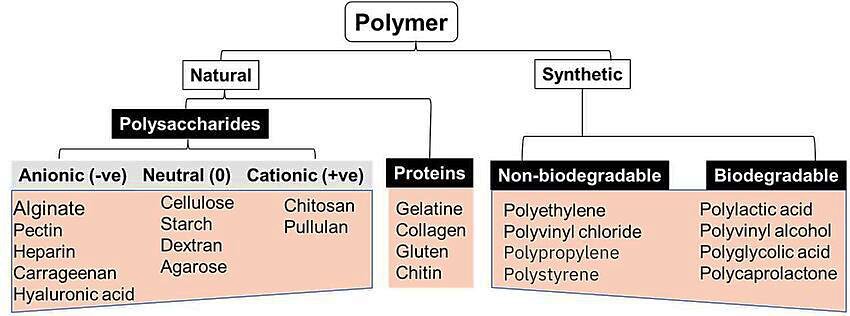
Types of Polymer-Based Topical Formulations
Hydrogel
Three-dimensional, cross-linked networks of water-soluble polymers make up hydrogels (7). Hydrogels can be made from nearly any water-soluble polymer with a wide variety of bulk physical properties and chemical contents. Additionally, hydrogels can be produced in various physical forms, including films, coatings, microparticles, and nanoparticles, as depicted in Figure 2. Hydrogels degrade and gradually release drugs once absorbed by the body. Because the polymers used to create hydrogels are nontoxic, nonreactive, and suitable for use in pharmaceutical preparations, hydrogels have a long history of good safety. Excellent outcomes were obtained from the fabrication, characterization, and in vitro and in vivo safety profiles of carboxymethyl chitosan and polyvinyl alcohol hydrogels for the delivery of oxaliplatin. Hydrogel-based patches are becoming increasingly popular due to their unique features. Hydrogels, which are primarily composed of hydrophilic polymers, have a significant water-holding capacity of 10-20% of their dry weight and can reach thousands of times their dry weight, making them ideal candidates for controlled drug delivery systems. Hydrogels are an appropriate dosage form for topical usage because of their significant water content, which contributes to skin flexibility and moisturization (8). As a result, hydrogels are widely used in both clinical and experimental medicine for a range of applications, including cellular immobilization, tissue engineering and regenerative medicine, diagnostics, biomolecule or cell separation, and barrier materials to regulate biological adhesions (9).
Several polymers frequently used in hydrogel compositions include cellulose, hemicellulose, starch, agar, alginates, psyllium, chitin, vulcanized rubber, Nylon (synthetic fiber), PVA, polyethylene, and synthetic rubber (10). Hydrogels are three-dimensional networks of hydrophilic polymers that can hold and absorb a lot of water without losing their structural integrity. Because of their superior biocompatibility, high water content, non-greasy nature, ease of application, and ability to provide controlled drug release, they have gained prominence as topical drug delivery methods (11). Drugs can be administered through the skin with ease, and hydrogels are an ideal vehicle for delivering medications directly to the site of action. Their high-water content enhances patient comfort, keeps skin hydrated, and provides a cooling, calming effect. This moist environment is especially helpful for dermatological problems and wound healing (12). Compared to ointments and creams, hydrogels have superior spreadability, are non-staining, and are simple to remove from the skin. Additionally, they have bioadhesive properties that enhance therapeutic efficacy by prolonging residence time at the site of application. The ability of hydrogels to regulate and sustain drug release is another significant benefit. The medicine is integrated into the porous polymeric network, which serves as a reservoir, allowing for a long-term, progressive release. This improves patient compliance, reduces dosing frequency, and decreases side effects. Hydrogels can also encapsulate a variety of medicinal substances and are biocompatible and biodegradable. They are flexible carriers for topical and transdermal drug delivery because their swelling behavior, porosity, and drug-release properties can be altered by varying the polymer composition and degree of cross-linking (13).
Emulgels
Emulsions of the water-in-oil or oil-in-water types that are gelled by combining with a gelling agent (8) are known as emulgels. The emulsion also serves as a controlled-release medication-delivery device, allowing drug particles trapped in the internal phase to pass through the external phase and gradually permeate the skin. Through the interior layers, which serve as a drug reservoir, the medication is carefully delivered to the skin's outer layer. Thanks to a cross-linked network, the gel can trap tiny drug particles and release them in a controlled manner. Due to its mucoadhesive nature (9). It extends the duration of pharmaceutical contact with the skin. Because it has the characteristics of both gel and emulsions, it serves as a dual control (10). Therapeutic efficacy in emulgels depends on various factors, such as polymeric gelling agents (types), stability of the emulsion, size & distribution of the droplets, and drug and polymer interactions. Recent advances focus on using bioadhesive and stimuli-responsive polymers to increase skin adherence and control drug delivery rates (14).
They are greaseless, readily spreadable, easily removable, emollient, non-staining, water-soluble, have a prolonged shelf life, are bio-friendly, and have translucent, aesthetically pleasing qualities, making them an excellent choice for dermatological applications. There are essentially three ways that molecules can enter the skin: via sebaceous follicles, sweat ducts, or intact stratum corneum. They also have several advantages, such as enhanced patient compliance, site-specific drug administration, avoidance of first-pass metabolism and gastrointestinal incompatibility, and suitability for self-medication. They enable controlled drug release, facilitate simple cessation of therapy, and are useful for medications with short biological half-lives and narrow therapeutic windows (15).
Conventional topical preparations such as ointments, creams, and lotions have various drawbacks, including stickiness, greasiness, poor spreadability, the need for rubbing during application, and instability. Gels are favored because they are non-greasy, transparent, easy to spread, and have higher patient acceptance. The inability of gels to efficiently integrate hydrophobic (water-insoluble) medications is a significant drawback.
To solve this issue, the emulgel system was created. An emulgel is a mixture of an emulsion and a gel in which the medicine is added to an emulsion before being combined with a gel base. This makes it possible to administer medications through the skin that are both hydrophilic and hydrophobic. Emulgels, which offer better drug loading, increased stability, higher skin penetration, controlled drug release, simplicity of application, and increased patient compliance, thereby combine the benefits of emulsions with gels. Emulgels are therefore regarded as an efficient topical drug delivery system for a variety of pharmaceutical and cosmetic products (16,17).
Polymers used in emulgels include Carbopol (Carbomer 934, 940, 941), Sodium Carboxymethyl Cellulose (NaCMC), and Poloxamer 407 (Pluronic F127). As gelling agents, these polymers impart the emulgel formulation with viscosity, stability, spreadability, and controlled drug release (18).
Nanoparticles and Nanogels
Gels containing nanoparticles primarily serve as transport scaffolds for drug delivery, but they can be modified to include different ligands that enable targeted drug delivery and release (19). Nanogels are highly crosslinked scaffolds of nano-hydrogels made of either copolymerized or nonionic or ionic monomers (20). Nanoparticles made from polymers (or "polymeric nanoparticles") and nanogels are emerging as advanced systems for topical drug delivery. Polymeric nanoparticles and nanogels have superior characteristics because of their small particle size, high surface area, and ability to enhance drug penetration through the outermost layer of skin (the stratum corneum). Nanogels are polymeric networks crosslinked in three dimensions, allowing them to hold large amounts of water while encapsulating therapeutic agents. In contrast to conventional hydrogels, nanogels offer improved skin permeation, greater stability, and greater control over drug-release kinetics. Examples of the polymers that have been studied most extensively include chitosan, PLGA, PEG, polyacrylic acid, and hyaluronic acid (21). Recent studies have shown that nanogels have great promise for wound healing, antimicrobial therapy, inflammation treatment, and targeted delivery of dermatological products. In addition to these benefits, polymeric nanocarriers present challenges, including large-scale manufacturing, batch-to-batch consistency, regulatory approval, and long-term safety concerns. Additionally, many polymers used in nanoparticle formulations are not biodegradable and, as such, their excessive accumulation can cause chronic toxicity, thereby requiring careful consideration of which polymer to use and extensive toxicological testing before final product development (22).
Lipid-Polymer Hybrid Nanoparticles (LNPs)
Lipid-Polymer Hybrid Nanoparticles (LPNPs) combine the advantages of both polymer and lipid-based nanoparticles regarding structural, biocompatibility, and loading efficiency of drugs. Usually, LPNPs consist of a polymeric core surrounded by a lipid shell, which can enhance encapsulation efficiency, control drug release, and improve penetration through the skin. LPNPs have been studied for topical delivery of antifungal agents, anti-inflammatory medications, corticosteroids, and anticancer drugs. Compared with traditional nanoparticles, LPNPs exhibit greater ability to retain drugs within the layers of the skin, thereby reducing the risk of systemic exposure. However, the manufacturing complexity, scalability issues, and regulatory hurdles are preventing their widespread commercialization.
Microparticles and Microspheres
Common components of multi-particulate drug delivery systems, microparticles, microspheres, and microcapsules offer several benefits based on their structural and functional capabilities, and their use is appropriate for convenient and tolerable drug administration via multiple routes (23). They can be added to a variety of pharmaceutical dosage forms, including liquids (solutions, suspensions, and even parenteral), semisolids (gels, creams, and pastes), and solids (capsules, tablets, and sachets), depending on the formulation. Microcarriers have an advantage over nanoparticles in that they act locally, since they cannot pass through the interstitium beyond the 100 nm size limit that the lymph transports. Liquids can be treated as solids in the form of dried microparticles, and potentially hazardous materials can be transported in capsules (24). From a technological perspective, microencapsulation offers several benefits: microparticles are designed to shield the core from the environment; they can also mask an unpleasant taste; they can preserve volatiles or cell viability; they can separate incompatible substances; they can shield the body from side effects; and they can optimize, prolong, or target a drug's effect. The polymer excipient shields the active pharmaceutical ingredient (API) from the body's irritative or mucosa-damaging effects or from the environment (oxidation, temperature, pH) given in Table 1.
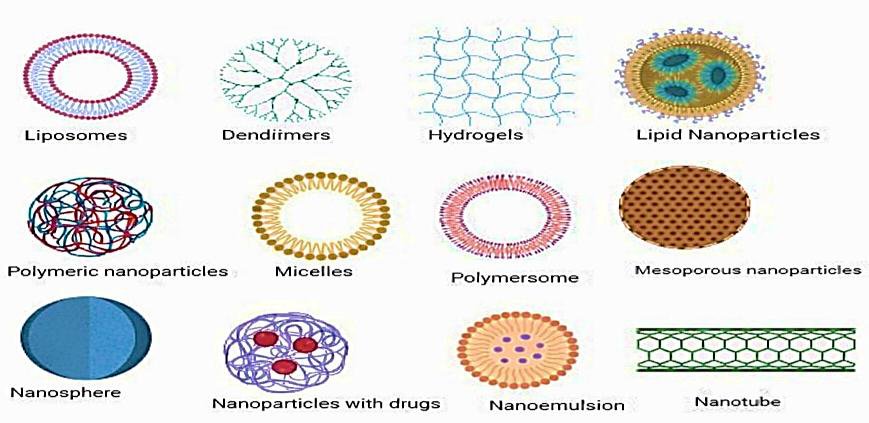
Polymeric Films
Forming systems (FFS) are appealing, alternative topical formulations in dermatology and common components of multiparticulate drug delivery systems, microparticles, microspheres, and microcapsules offer several benefits based on their structural and functional capabilities, and their use is appropriate for convenient and tolerable drug administration via multiple routes (25, 26). When the solvent evaporates, FFS that have been applied directly to the skin form thin, translucent films. In order to control the release of the drug substance, the substance is dissolved in the film-forming vehicle and incorporated into the film that forms on the skin of the drug substance to the skin reservoir It is crucial to maintain full skin contact throughout the application process (27).
| S. N. | Disease | Drug/Molecule | Formulation type | Reference |
|---|---|---|---|---|
| 1 | Atopic dermatitis | Betamethasone dipropionate | Nanostructured lipid carrier | (28) |
| 2 | Ocular disease | Cyclosporine A | Emulgel | (29) |
| 3 | Psoriasis | Calcipotriol | Emulgel | (30) |
| 4 | Fungal infection | Terbinafine hydrochloride | Emulgel | (31) |
| 5 | Wound healing | Curcumin | Collegen - HPMC nanogel | (32) |
| 6 | Wound healing | Silver sulfadiazine | Alginate-coated chitosan nanogel | (33) |
| 7 | Viral and fungal cutaneous manifestations | Acyclovir and ketoconazole | Emulgel | (34) |
Skin Absorption Pathways
Drug absorption via topical administration is primarily governed by the skin's structure and barrier function. The main barrier to drug penetration through skin is the stratum corneum. Drug molecules will penetrate the skin via transcellular, intercellular, or appendageal routes, depending on their molecular weight, lipophilicity, and other physicochemical properties. Polymeric carriers improve drug transport by increasing drug residence time, enhancing solubility, altering partition behavior, and controlling release (35).
The skin's barrier properties severely hamper medication penetration. Understanding how chemicals move through the skin will enable the development of strategies to improve medication distribution. One-third of the blood circulation occurs in an adult's skin, which has an average surface area of about 2 m2. For every square centimeter of skin, there are about 200–250 sweat glands and 10–70 hair follicles (36). The medication can be released from a transdermal drug delivery system using zero-order (or pseudo-zero-order), first-order, or both kinetics, thereby sustaining the desired drug level for an extended period. Depending on the drug's physicochemical characteristics, it may be absorbed by a variety of skin channels. Drugs that are hydrophilic or lipophilic are absorbed through distinct pathways. The skin's stratum corneum prevents drug absorption, but multiple absorption pathways facilitate entry into the body and transport to the bloodstream (37). The following are some different ways that drugs can be absorbed:
A. Trans follicular route
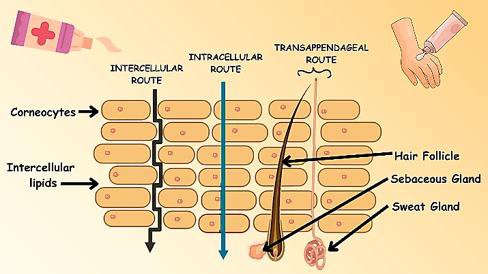
The fastest route for a medication to enter the systemic circulation is the transfollicular pathway, which provides a large surface area for drug diffusion. Ducts that open to the skin's surface are found in hair follicles, oil glands, sweat glands, and pores. These ducts provide a continuous conduit for the transport of pharmaceuticals across the stratum corneum; however, a variety of factors, including the quantity and composition of gland secretions shown in Figure 2, influence drug movement along this pathway. However, because it only accounts for 0.1% of the skin's total surface area, the trans appendageal route contributes very little (38).
B. Intercellular route
In the intercellular pathway, the medication diffuses across the continuous lipid matrix that separates the cells. To cross the alternating lipid and aqueous domains, the drug must partition into the lipid bilayer and diffuse to the inner side. The convoluted nature of the corneocytes is responsible for this route's barrier feature. This method is primarily appropriate for uncharged lipophilic medicines because it has been discovered that water must travel 50 times further (39).
C. Transcellular route
It is the most popular route for many different kinds of medications. The medicine travels through the cell's matrix, or cytoplasm, along the transcellular route. This method works well for hydrophilic medicines. The medication travels via the stratum corneum's corneocytes. Highly hydrated keratin provides hydrophilic medications with an aqueous route of administration. To get the medication through the cell matrix, several partitioning and diffusion processes are required (40). It is generally acknowledged that the transepidermal pathway is the most common route of skin penetration and that, under sink conditions, the rate-limiting phase that determines the total permeant flow is diffusion across the stratum corneum. The permeant moves from the epidermis to the dermis and hypodermis via the intracellular and/or extracellular spaces via the transepidermal route. The chemical may act intercellularly or transcellularly (41).
These pathways' proportional contributions will change based on the formulation and the permeant's physicochemical characteristics. Numerous investigations have demonstrated that, at steady state, the trans-epidermal pathway surpasses the appendageal system, which quickly but briefly dominates (42).
Role of polymers in enhancing penetrations
The successive functional layers that comprise the skin's structure are the stratum corneum (SC), viable epidermis (VE), dermis (DE), and hypodermis. The SC layer, which consists of corneocytes embedded in an extracellular matrix rich in lipids, is the primary component of the skin barrier shown in Figure 3. In the absence of physical intervention, the SC layer prevents all but a small number of molecules with a partition coefficient of 1 or 2 from penetrating. Consequently, to enhance transdermal medication penetration of the majority of drug molecules with partition coefficients outside of the ideal range, a successful transdermal drug delivery (TDD) system must circumvent the skin barrier function (43).
To improve skin penetration, topical formulations have made considerable use of chemical penetration enhancers (CPEs). Generally speaking, CPEs modify skin barrier functions by physically disrupting SC lipid bilayers, which facilitates drug absorption into the skin's deeper layers. Because they have been connected to lipid extraction and protein denaturation in the SC, several CPEs show a strong direct correlation between potency and irritation (44). Therefore, research into a different way to enhance topical medication is necessary due to the toxicities linked to CPE delivery. Liposomes, micelles, and deformable vesicles are examples of advanced colloidal formulations that have been developed to improve the solubility and skin penetration while also reducing skin irritation. Similar to liposomal formulations, new nanomaterial designs for TDD seek to mitigate the toxicities associated with CPE without compromising delivery effectiveness. Among these designs, polymeric nanomaterials usually present a special chance as highly modular delivery platforms that enable different functional modifications to improve TDD. Through a variety of different processes, polymeric formulations with controlled size and structure provide enhanced functionality and regulated drug release (45, 46). Biocompatible and biodegradable polymers have been extensively studied for TDD and other drug delivery applications. Polylactic acid (PLA), polyglycolic acid (PGA), poly-lactic-co-glycolic acid (PLGA), and poly(3-caprolactone) (PCL) are the most frequently researched biodegradable polyesters. Animals, plants, and organisms all include large amounts of polymers with high molecular weight and repeating units as basic structure, such as proteins, polypeptides, chitin, alginic acid, starch, and agar. Polymers are a crucial component of matrix drug delivery systems because they offer thickness, uniformity, volume, and multifunctional stability (47, 48). They also improve drug solubility, encourage drug release, and boost patient compliance and biological compatibility. As a chemical permeation enhancer (PE), polymers can directly increase the medication's transdermal absorption in the TDDS. They can also be utilised in microneedles and nanosystems to aid in drug absorption (49, 50).
Different polymers increase skin penetration by differing means. While chitosan temporarily opens tight junctions and increases mucoadhesion, PLGA enables controlled release and extended contact time, and dendritic polymers enhance the solubility and transport of poorly soluble drugs. Excessive penetration enhancement can lead to increased skin irritation and systemic absorption; thus, there must be a careful consideration between efficacy and safety (51).
Mechanism of Polymeric PEs that Enhances Permeation
PEs primarily alter the drug's characteristics and the skin's integrity, which increases the drug's permeability and accumulation through the skin (52). Increased drug solubility and thermodynamic activity to boost drug accumulation in the skin are the primary ways that PEs affect drug properties:
Drug solubility
The stratum corneum (SC), viable epidermis (VE), dermis (DE), and hypodermis are the sequential functional layers that make up the structure of the skin. The main part of the skin barrier is the SC layer, which is made up of corneocytes embedded in a lipid-rich extracellular matrix. The SC layer stops all but a few molecules with a perfect partition coefficient—usually between 1 and 3— from penetrating in the absence of physical action. Therefore, to improve the penetration of transdermal medications. By making lipophilic compounds more soluble in water, dendritic polymers improve skin penetration (53).
Drug thermodynamic activity
The drug's thermodynamic activity in the formulation can be increased or optimised by using PEs to cause a thermodynamically active reaction. It is possible to maximise the drug's penetration and deposition into the skin while it is at its maximum thermodynamic activity (54). The medicine can more easily penetrate the skin when the skin barrier's integrity is reduced. The highly ordered organisation of intercellular lipid bilayers is disrupted by PEs' interaction with lipid alkyl chains, which lowers SC's diffusion resistance to medicinal molecules shown in Figure 4.
PEs can be applied topically, added to formulations, bind keratin filaments, and kill keratinocytes. Nonionic surfactants have the potential to lower the SC lipid matrix's barrier function to active substances, improve the fluidity of barrier lipids, and define the intercellular domains of the SC lipid matrix (55, 56).
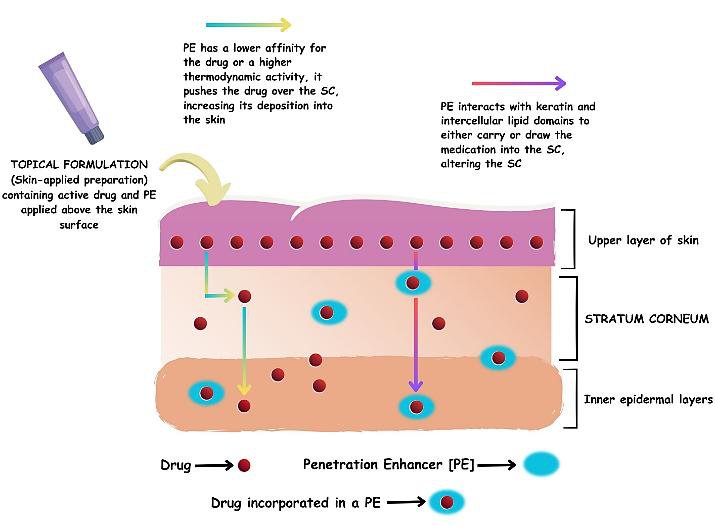
Certain PEs may interact with polar head groups when the agent penetrates the skin via the intercellular route, altering ionic forces and hydrogen bonding. As a result, the polar head-group packing order in the aqueous region can be affected. This disruption increases the volume of water between lipid layers and fluidizes the lipid region, allowing polar PEs to diffuse into the aqueous region (57).
When cationic polymers are employed as PEs, the medicine can enter the skin deeply because the positively charged cationic polymer's surface interacts with the negatively charged skin surface through electrostatic attraction, creating large skin pores (58). Polymer designs sometimes necessitate sophisticated synthesis strategies, complex characterization, and ineffective drug loading, necessitating additional research into their handling and complex modes of action (59).
Toxicological and Safety Considerations of Polymeric Topical Systems
Although these polymeric drug delivery systems have been widely used, they raise safety concerns, including local irritation, immunogenicity, cytotoxicity, and chronic bioaccumulation. Natural polymers (such as chitosan, alginate, and hyaluronic acid) have excellent biocompatibility and biodegradability. Synthetic polymers (such as PLGA or PCL) are also considered safe because they degrade into metabolizable compounds. However, some non-biodegradable polymers tend to accumulate in tissues after prolonged exposure. In vitro cytotoxicity studies and in vivo assessments of skin irritation should be integral to the protocols for the preclinical evaluation of polymer-based drug delivery systems. Future research should focus on developing biodegradable and bioresponsive polymers with a known, acceptable safety profile.
Future Perspectives
PEs are a key tactic for resolving TDDS's intrinsic shortcomings. The future of transdermal medication delivery is moving toward intelligent and customized systems that go beyond existing PE approaches. First off, customized TDDS will enable the creation of precise dosage schedules based on each person's unique skin characteristics, metabolic profiles, and genetic data. Second, by digitally screening for the best drug-PE pairings, machine learning-based formulation optimization can significantly shorten development times by leveraging studies of intricate composition-structure-activity correlations. Machine learning is used in TDDS formulation to anticipate transdermal behavior and enhance formulations by utilizing data on skin permeability and drug characteristics. By simulating their interaction with the SC, increasing penetration, and lowering variability, AI helps choose PEs.
Drug distribution and release are further predicted by AI-powered simulations, thereby reducing reliance on experiments and promoting customized transdermal delivery. Future research will focus on AI-driven formulation optimization, predictive modeling of permeation, and the development of personalized topical therapies. For example, machine learning algorithms have been useful in predicting skin permeation coefficients and optimizing the combinations of polymers and drugs used in transdermal systems. In addition, integrating wearable biosensors with transdermal patches will enable real-time monitoring and feedback-controlled drug delivery. Patient-specific dosage forms with unique geometries and drug-release profiles are becoming possible with the availability of 3D printing technology. Progress continues in the development of biodegradable polymers, nanocomposite systems, and smart, stimulus-responsive materials, which will likely expedite the clinical translation of next-generation topical drug delivery systems.
Conclusion
Topical drug delivery systems based on polymers have improved dramatically over the last two decades, moving from traditional types like hydrogels and emulgels to advanced forms of delivery, such as nanoparticles, nanogels, and hybrid lipid-polymer particles. Polymeric nanoparticles, nanogels, and hybrid lipid-polymer nanoparticle systems are among the most promising technologies for addressing the limitations of standard skin barriers and improving patient care. Worldwide concerns about toxicity, mass-production feasibility, quality consistency, and regulatory approval have made it very challenging to commercialize these new delivery technologies. In addition, the future development of new smart polymers, advanced artificial intelligence-expertise formulation design, and new smart drug delivery systems using wearable devices should accelerate the creation of safer, more effective, and more personalized topical therapies.
Abbreviations
API: Active Pharmaceutical Ingredient; AI: Artificial Intelligence; CPEs: Chemical Penetration Enhancers; DE: Dermis; FFS: Film Forming Systems; HPMC: Hydroxypropyl Methylcellulose; LPNPs: Lipid-Polymer Hybrid Nanoparticles; MNs: Microneedles, PCL: Poly (3-caprolactone); Pes: Penetration Enhancers; PGA: Polyglycolic Acid; PLA: Polylactic Acid; PLGA: Poly (lactic-co-glycolic acid); SC: Stratum Corneum; TDD: Transdermal Drug Delivery; TDDS: Transdermal Drug Delivery System; VE: Viable Epidermis.
Author Contributions
All authors made contributions to the conception and design of the study.
Acknowledgements
The authors gratefully acknowledge Madan Mohan Malaviya University of Technology and Mahayogi Gorakhnath University, Gorakhpur, for their valuable support and collaboration in facilitating this work for inclusion in the conference proceedings. The authors sincerely appreciate the academic environment, resources, and institutional cooperation provided by both organizations, which contributed significantly to the successful completion of this study.
Conflict of Interest
The authors have declared no conflicts of interest.
Funding
This research received no external funding.
Ethics Approval
Not Applicable.
References
- Polymeric nanoparticles-based topical delivery systems for the treatment of dermatological diseases. Wiley Interdiscip Rev Nanomed Nanobiotechnol. 2013;5:205-18.
- Controlled drug delivery systems: Current status and future directions. Molecules. 2021;26:5905.
- Biofunctional excipients: Their emerging role in overcoming the inherent poor biopharmaceutical characteristics of drugs. Pharmaceutics. 2025;17:598.
- Synthetic biodegradable polymers for tissue engineering and drug delivery. Curr Opin Solid State Mater Sci. 1998;3:246-51.
- Polymer-based hydrogels applied in drug delivery: An overview. Gels. 2023;9:523.
- Lipid-based drug delivery systems: Concepts and recent advances in transdermal applications. Nanomaterials (Basel). 2025;15:1326.
- Cross-linked hydrogel for pharmaceutical applications: A review. Adv Pharm Bull. 2017;7:515-30.
- Biomedical applications of functional hydrogels: Innovative developments, relevant clinical trials and advanced products. Biomaterials. 2025;312:122718.
- Applications of bioengineered polymer in the field of nano-based drug delivery. ACS Omega. 2024;9:81-96.
- An overview of hydrogels and their role in transdermal drug delivery. Int J Polym Mater Polym Biomater. 2021;70:574-84.
- Emerging role of hydrogels in drug delivery systems, tissue engineering and wound management. Pharmaceutics. 2021;13:357.
- Overview of hydrogels and the use of hyaluronic acid-based hydrogels in pharmaceutical transdermal delivery systems and topical cosmetic skin applications. Cosmetics. 2025;12:265.
- Biomedical applications of hydrogels in drug delivery system: An update. J Drug Deliv Sci Technol. 2021;66:102914.
- Emulgels: Promising carrier systems for food ingredients and drugs. Polymers (Basel). 2023;15:2302.
- Emulgel: A new approach for enhanced topical drug delivery. Int J Curr Pharm Res. 2017;9:15-20.
- Emulgel: Magnifying the application of topical drug delivery. Indian J Pharm Biol Res. 2017;5:25-33.
- Emulgel approach to formulation development: A review. Biosci Biotechnol Res Asia. 2021;18:459-65.
- Preclinical characterisation of NSAIDs in ultradeformable carriers or conventional topical gels. Int J Pharm. 2008;360:29-39.
- Nano-formulations in disease therapy: Designs, advances, challenges, and future directions. J Nanobiotechnol. 2025;23:396.
- Blood brain barrier and nanotechnology for neurodegenerative disorders. Bioactive Compounds Targeting Neurodegenerative Disorders. Sharjah: Bentham Science Publishers; 2025:77-93.
- Hydrogels and nanogels: Effectiveness in dermal applications. Beilstein J Nanotechnol. 2025;16:1216-33.
- Nanophytomedicines as therapeutic agents for Parkinson's disease. ACS Omega. 2023;8:42045-61.
- Microparticles, microspheres, and microcapsules for advanced drug delivery. Sci Pharm. 2019;87:20.
- Microparticles in the development and improvement of pharmaceutical formulations: An analysis of in vitro and in vivo studies. Int J Mol Sci. 2023;24:5441.
- Penetration profile of microspheres in follicular targeting of terminal hair follicles. J Invest Dermatol. 2004;123:168-76.
- Film-forming systems for dermal drug delivery. Pharmaceutics. 2021;13:932.
- Film-forming sprays for topical drug delivery: A review of current developments and future perspectives. Int J Pharm Sci. 2025;3:1154-63.
- Development of a topical ointment of betamethasone dipropionate loaded nanostructured lipid carrier. Asian J Pharm Sci. 2016;11:248-54.
- Formulation and evaluation of cyclosporin A emulgel for ocular delivery. Drug Deliv. 2015;22:911-7.
- Calcipotriol delivery into the skin as emulgel for effective permeation. Saudi Pharm J. 2014;22:591-9.
- Formulation, development and in-vitro evaluation of terbinafine hydrochloride emulgel for topical fungal infection. Int J Pharm Sci Rev Res. 2013;21:168-73.
- Curcumin loaded fish scale collagen-HPMC nanogel for wound healing application: Ex-vivo and in-vivo evaluation. Int J Polym Mater Polym Biomater. 2019;68:165-74.
- Alginate coated chitosan nanogel for the controlled topical delivery of silver sulfadiazine. Carbohydr Polym. 2017;177:194-202.
- Topical delivery of acyclovir and ketoconazole. Drug Deliv. 2016;23:641-51.
- Skin structure, physiology, and pathology in topical and transdermal drug delivery. Pharmaceutics. 2024;16:1403.
- An introduction to drug disposition: The basic principles of absorption, distribution, metabolism, and excretion. Toxicol Pathol. 1995;23:102-14.
- Transdermal drug delivery: Innovative pharmaceutical developments based on disruption of the barrier properties of the stratum corneum. Pharmaceutics. 2015;7:438-70.
- Controlled drug delivery systems: Advancements and recent patents. Int J Pharm Sci Nanotechnol. 2025;18:7879-94.
- Photodynamic therapy for skin cancer: How to enhance drug penetration?. J Photochem Photobiol B. 2019;197:111544.
- Transdermal drug delivery system: A comprehensive review of innovative strategies, applications, and regulatory perspectives. OpenNano. 2025;24:100245.
- Skin drug delivery using lipid vesicles: A starting guideline for their development. J Control Release. 2023;355:624-54.
- Mechanism of percutaneous adsorption. I. Routes of penetration and the influence of solubility. J Invest Dermatol. 1965;45:334-46.
- Recent advances in transdermal drug delivery. Arch Pharm Res. 2010;33:339-51.
- Penetration enhancement of topical formulations. Pharmaceutics. 2018;10:51.
- Liposomes: Structure, composition, types, and clinical applications. Heliyon. 2022;8:e09394.
- Drug delivery systems: Entering the mainstream. Science. 2004;303:1818-22.
- The influence of surfactant on PLGA microsphere glass transition and water sorption: Remodeling the surface morphology to attenuate the burst release. Pharm Res. 2006;23:1295-305.
- Poly(lactic-co-glycolic acid) as biodegradable controlled drug delivery carrier. Polymers (Basel). 2011;3:1377-97.
- Nanotechnology based approaches for enhancing oral bioavailability of poorly water soluble antihypertensive drugs. Scientifica (Cairo). 2016;2016:8525679.
- Transdermal drug delivery systems: A focused review of the physical methods of permeation enhancement. Adv Pharm Bull. 2024;14:67-85.
- Polymers for drug delivery systems. Annu Rev Chem Biomol Eng. 2010;1:149-73.
- Molecular perspective of efficiency and safety problems of chemical enhancers: Bottlenecks and recent advances. Drug Deliv Transl Res. 2022;12:1376-94.
- Dendritic polymers for dermal drug delivery. Ther Deliv. 2017;8:1077-96.
- Solubility-physicochemical-thermodynamic theory of penetration enhancer mechanism of action. Int J Pharm. 2020;575:118920.
- Thermodynamic studies for drug design and screening. Expert Opin Drug Discov. 2012;7:299-314.
- The skin barrier: An extraordinary interface with an exceptional lipid organization. Prog Lipid Res. 2023;92:101252.
- Research progress of penetration enhancers in transdermal drug delivery systems: Multidimensional exploration from mechanisms to clinical application. Int J Pharm X. 2025;10:100468.
- Application of polymers in promoting transdermal absorption. Mater Today Chem. 2022;26:101204.
- Polymeric nanoparticles for drug delivery. Chem Rev. 2024;124:5505-616.
References
References
- Polymeric nanoparticles-based topical delivery systems for the treatment of dermatological diseases. Wiley Interdiscip Rev Nanomed Nanobiotechnol. 2013;5:205-18.
- Controlled drug delivery systems: Current status and future directions. Molecules. 2021;26:5905.
- Biofunctional excipients: Their emerging role in overcoming the inherent poor biopharmaceutical characteristics of drugs. Pharmaceutics. 2025;17:598.
- Synthetic biodegradable polymers for tissue engineering and drug delivery. Curr Opin Solid State Mater Sci. 1998;3:246-51.
- Polymer-based hydrogels applied in drug delivery: An overview. Gels. 2023;9:523.
- Lipid-based drug delivery systems: Concepts and recent advances in transdermal applications. Nanomaterials (Basel). 2025;15:1326.
- Cross-linked hydrogel for pharmaceutical applications: A review. Adv Pharm Bull. 2017;7:515-30.
- Biomedical applications of functional hydrogels: Innovative developments, relevant clinical trials and advanced products. Biomaterials. 2025;312:122718.
- Applications of bioengineered polymer in the field of nano-based drug delivery. ACS Omega. 2024;9:81-96.
- An overview of hydrogels and their role in transdermal drug delivery. Int J Polym Mater Polym Biomater. 2021;70:574-84.
- Emerging role of hydrogels in drug delivery systems, tissue engineering and wound management. Pharmaceutics. 2021;13:357.
- Overview of hydrogels and the use of hyaluronic acid-based hydrogels in pharmaceutical transdermal delivery systems and topical cosmetic skin applications. Cosmetics. 2025;12:265.
- Biomedical applications of hydrogels in drug delivery system: An update. J Drug Deliv Sci Technol. 2021;66:102914.
- Emulgels: Promising carrier systems for food ingredients and drugs. Polymers (Basel). 2023;15:2302.
- Emulgel: A new approach for enhanced topical drug delivery. Int J Curr Pharm Res. 2017;9:15-20.
- Emulgel: Magnifying the application of topical drug delivery. Indian J Pharm Biol Res. 2017;5:25-33.
- Emulgel approach to formulation development: A review. Biosci Biotechnol Res Asia. 2021;18:459-65.
- Preclinical characterisation of NSAIDs in ultradeformable carriers or conventional topical gels. Int J Pharm. 2008;360:29-39.
- Nano-formulations in disease therapy: Designs, advances, challenges, and future directions. J Nanobiotechnol. 2025;23:396.
- Blood brain barrier and nanotechnology for neurodegenerative disorders. Bioactive Compounds Targeting Neurodegenerative Disorders. Sharjah: Bentham Science Publishers; 2025:77-93.
- Hydrogels and nanogels: Effectiveness in dermal applications. Beilstein J Nanotechnol. 2025;16:1216-33.
- Nanophytomedicines as therapeutic agents for Parkinson's disease. ACS Omega. 2023;8:42045-61.
- Microparticles, microspheres, and microcapsules for advanced drug delivery. Sci Pharm. 2019;87:20.
- Microparticles in the development and improvement of pharmaceutical formulations: An analysis of in vitro and in vivo studies. Int J Mol Sci. 2023;24:5441.
- Penetration profile of microspheres in follicular targeting of terminal hair follicles. J Invest Dermatol. 2004;123:168-76.
- Film-forming systems for dermal drug delivery. Pharmaceutics. 2021;13:932.
- Film-forming sprays for topical drug delivery: A review of current developments and future perspectives. Int J Pharm Sci. 2025;3:1154-63.
- Development of a topical ointment of betamethasone dipropionate loaded nanostructured lipid carrier. Asian J Pharm Sci. 2016;11:248-54.
- Formulation and evaluation of cyclosporin A emulgel for ocular delivery. Drug Deliv. 2015;22:911-7.
- Calcipotriol delivery into the skin as emulgel for effective permeation. Saudi Pharm J. 2014;22:591-9.
- Formulation, development and in-vitro evaluation of terbinafine hydrochloride emulgel for topical fungal infection. Int J Pharm Sci Rev Res. 2013;21:168-73.
- Curcumin loaded fish scale collagen-HPMC nanogel for wound healing application: Ex-vivo and in-vivo evaluation. Int J Polym Mater Polym Biomater. 2019;68:165-74.
- Alginate coated chitosan nanogel for the controlled topical delivery of silver sulfadiazine. Carbohydr Polym. 2017;177:194-202.
- Topical delivery of acyclovir and ketoconazole. Drug Deliv. 2016;23:641-51.
- Skin structure, physiology, and pathology in topical and transdermal drug delivery. Pharmaceutics. 2024;16:1403.
- An introduction to drug disposition: The basic principles of absorption, distribution, metabolism, and excretion. Toxicol Pathol. 1995;23:102-14.
- Transdermal drug delivery: Innovative pharmaceutical developments based on disruption of the barrier properties of the stratum corneum. Pharmaceutics. 2015;7:438-70.
- Controlled drug delivery systems: Advancements and recent patents. Int J Pharm Sci Nanotechnol. 2025;18:7879-94.
- Photodynamic therapy for skin cancer: How to enhance drug penetration?. J Photochem Photobiol B. 2019;197:111544.
- Transdermal drug delivery system: A comprehensive review of innovative strategies, applications, and regulatory perspectives. OpenNano. 2025;24:100245.
- Skin drug delivery using lipid vesicles: A starting guideline for their development. J Control Release. 2023;355:624-54.
- Mechanism of percutaneous adsorption. I. Routes of penetration and the influence of solubility. J Invest Dermatol. 1965;45:334-46.
- Recent advances in transdermal drug delivery. Arch Pharm Res. 2010;33:339-51.
- Penetration enhancement of topical formulations. Pharmaceutics. 2018;10:51.
- Liposomes: Structure, composition, types, and clinical applications. Heliyon. 2022;8:e09394.
- Drug delivery systems: Entering the mainstream. Science. 2004;303:1818-22.
- The influence of surfactant on PLGA microsphere glass transition and water sorption: Remodeling the surface morphology to attenuate the burst release. Pharm Res. 2006;23:1295-305.
- Poly(lactic-co-glycolic acid) as biodegradable controlled drug delivery carrier. Polymers (Basel). 2011;3:1377-97.
- Nanotechnology based approaches for enhancing oral bioavailability of poorly water soluble antihypertensive drugs. Scientifica (Cairo). 2016;2016:8525679.
- Transdermal drug delivery systems: A focused review of the physical methods of permeation enhancement. Adv Pharm Bull. 2024;14:67-85.
- Polymers for drug delivery systems. Annu Rev Chem Biomol Eng. 2010;1:149-73.
- Molecular perspective of efficiency and safety problems of chemical enhancers: Bottlenecks and recent advances. Drug Deliv Transl Res. 2022;12:1376-94.
- Dendritic polymers for dermal drug delivery. Ther Deliv. 2017;8:1077-96.
- Solubility-physicochemical-thermodynamic theory of penetration enhancer mechanism of action. Int J Pharm. 2020;575:118920.
- Thermodynamic studies for drug design and screening. Expert Opin Drug Discov. 2012;7:299-314.
- The skin barrier: An extraordinary interface with an exceptional lipid organization. Prog Lipid Res. 2023;92:101252.
- Research progress of penetration enhancers in transdermal drug delivery systems: Multidimensional exploration from mechanisms to clinical application. Int J Pharm X. 2025;10:100468.
- Application of polymers in promoting transdermal absorption. Mater Today Chem. 2022;26:101204.
- Polymeric nanoparticles for drug delivery. Chem Rev. 2024;124:5505-616.
Downloads

This work is licensed under a Creative Commons Attribution 4.0 International License.
Copyright (c) 2026 Mansi Upadhyay, Noureen Jahan, Mohammad Saliq, Madhu Singh, Preeti Prasad
License terms
-
Attribution — You must give appropriate credit, provide a link to the license, and indicate if changes were made. You may do so in any reasonable manner, but not in any way that suggests the licensor endorses you or your use.
- No additional restrictions — You may not apply legal terms or technological measures that legally restrict others from doing anything the license permits.