
Bacopa monnieri (Brahmi) as a Potential Memory Enhancer: A Review
- School of Pharmaceutical Science and Research, Dev Bhoomi Uttarakhand University, Dehradun 248001, Uttarakhand, India
- JBIT College of Pharmacy, Dehradun 248001, Uttarakhand, India
Correspondence: Banashree Barman, banashree@gmail.com
- Received
- Revised
- Accepted
- Published
Abstract
Bacopa monnieri Linn., commonly known as Brahmi, belongs to the family Plantaginaceae. It is an herb native to the wetlands of Southern and Eastern India, Australia, Europe, Africa, Asia, and North and South America. The leaves, flowers, and whole plant are used to treat various diseases. Bacopa monnieri is used to treat various diseases, especially CNS-related diseases. It has a great impact on improving memory. Other relevant studies prove that it shows antiepileptic activity and can also reduce anxiety and stress. Brahmi contains triterpenoid saponin glycosides, indocentelloside, brahminoside, bhramoside, and asiaticosides.
Introduction
There are many causes of memory loss. The purpose of this review is to focus on the herbal treatment of memory loss using Bacopa monnieri. Memory loss is a common problem in old age, but it can also occur at any age because of medication, injury, trauma, or high alcohol intake.
Alzheimer's disease is a common cause of memory loss. It is a progressive neurological disorder that can cause brain cells to die or shrink. It is the main cause of dementia, i.e., a decline in thinking, behavior, and other social skills that affects a person's ability to function. Currently, approximately 50 million patients worldwide have Alzheimer's disease, and approximate data analyses indicate that this number will exceed 152 million by 2050 (1,2).
Treatment for memory loss or memory enhancement
A drug approved to treat Alzheimer's disease is aducanumab. Studies are underway to obtain more details about the drug. Various clinical studies have been conducted to determine the effectiveness of aducanumab, in which patients in the early stages of Alzheimer's disease were administered the drug. Research on the cognitive properties of this drug is ongoing (3). Other medications used to treat memory loss include the following:
-
Cholinesterase inhibitors
Cholinesterase inhibitors are used to treat problems involving memory, thinking, language, and thought processes. The most commonly prescribed cholinesterase inhibitors are as follows:
Donepezil is used to treat all stages of Alzheimer's disease.
Rivastigmine is used to treat mild-to-moderate stages of Alzheimer's disease and dementia.
Galantamine is used to treat mild-to-moderate symptoms of Alzheimer's disease.
-
Glutamate regulators
These drugs are prescribed to improve memory, attention, and the ability to perform tasks. This class of drugs works by regulating the activity of glutamate, a chemical messenger involved in the brain's information-processing functions. A commonly prescribed glutamate regulator is as follows:
Memantine is used to treat moderate-to-severe symptoms of Alzheimer's disease.
-
Cholinesterase inhibitor plus glutamate regulator
This type of drug contains a combination of a cholinesterase inhibitor and a glutamate regulator. Donepezil and memantine are used to treat moderate-to-severe symptoms of Alzheimer's disease (4).
Other drugs used for memory enhancement are divided into three groups: eugeroics, ADHD medications, and nootropic supplements. There are also many traditional and herbal treatments used to enhance memory. The treatment of diseases with medicinal plants has been practiced since ancient times (5). Since early times, people have sought relief from diseases by looking for drugs in nature and their surroundings. The use of medicinal plants began with their use in animals (6).
Herbal medicines play a significant role in global health care, with the market expanding through health foods and preventive medicines. The worldwide market for herbal products earns approximately US$60 billion annually.
Herbal medicines are currently becoming very popular worldwide (7). Various herbs used to enhance memory include the following:
-
Rosemary (Rosmarinus officinalis)
It has properties that improve memory, alertness, and cognition, and it helps improve mental function (8).
-
Lemon balm (Melissa officinalis)
It is an incredible nutritive agent for the nervous system. It has a calming effect, improves mood, and increases alertness. In particular, lemon balm has a cooling effect, helps uplift mood, and helps protect against brain aging (8).
-
Bacopa (Bacopa monnieri)
It is commonly known as Brahmi. It is bitter in taste and provides cooling energy. Ayurveda considers Brahmi to be a rasayana and a rejuvenating herb for longevity and vitality. Bacopa monnieri is a cerebral tonic, neuroprotective agent, and antiepileptic drug. It is a great drug for daily use for mental clarity, problem-solving, and improving the rate of learning. It is an amazing herb for people who might have problems focusing on a task and for those experiencing mental fatigue (8).
-
Ginkgo (Ginkgo biloba)
It is an antioxidant rich in flavonoids and proanthocyanidins. As an antioxidant, it helps protect the brain from oxidative stress and the aging process. It also helps enhance memory and increase concentration (8).
-
Gotu kola (Centella asiatica)
It is an herb with a long history of use in Ayurveda and is thus considered a rejuvenating tonic for vitality and memory enhancement. It is the most powerful brain tonic in the history of herbal drugs (8).
Bacopa monnieri
Bacopa monnieri is an herbal plant commonly known for its medicinal uses and belongs to the family Plantaginaceae. Bacopa monnieri has long been known for its memory-improving properties in Indian herbal medicine (18). It is one of the oldest and most effective brain tonics used in the Ayurvedic system since traditional times in India (17).
Brahmi got its name from "Brahma," who is the creator of everything in this universe (12). In ancient times (the Vedic period), Bacopa monnieri was classified as Medhya Rasayana or as an intellect restorer (13).
This herb was first mentioned around the 6th century AD in ancient Sanskrit books such as The Great Trilogy and the Atharva Veda. It was formerly used in Hindu culture after a baby was born to increase intelligence (17). The use of Brahmi for memory dates back 3,000 years or more.
Many studies have shown that Bacopa monnieri has produced many results in improving memory and learning power and has also helped decrease anxiety and stress.
Brahmi is found especially in humid and warmer parts of the country. It commonly grows in damp and marshy areas (15).
It is found in the wetlands of Southern and Eastern India, Australia, Europe, Africa, Asia, and North and South America. This plant is cultivated on a small scale in Uttar Pradesh, Punjab, Haryana, Bihar, Bengal, Tamil Nadu, Kerala, Karnataka, the foothills of Himachal Pradesh, and Uttarakhand.
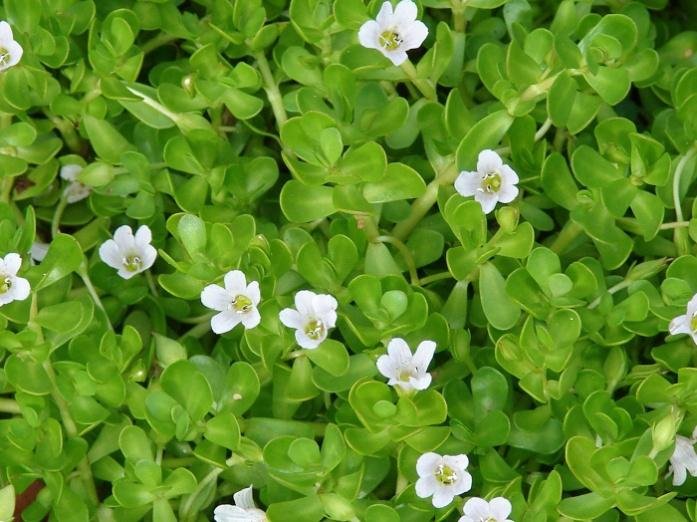
The entire Brahmi plant is used as medicine to cure epilepsy or other CNS-related diseases (20). The Brahmi plant is a low-growing, creeping herb that grows up to a height of 15 cm. It grows in full sun and in a wide range of soils (21).
Taxonomical classification (22)
| Rank | Classification |
|---|---|
| Kingdom | Plantae |
| Division | Tracheophyta |
| Class | Magnoliopsida |
| Order | Lamiales |
| Family | Plantaginaceae |
| Genus | Bacopa Aubl |
| Species | Bacopa monnieri(L). |
Vernacular names (17)
Latin name: Bacopa monnieri
English names: water hyssop and Indian pennywort
Hindi name: Brahmi
Assamese name: Brahmi Hak
Bengali name: Birami
Telugu name: Samberenu
Kannada name: Neerabrahmi
Sinhala name: Lunuwila
Chinese name: Jia-ma-chi-xian
Habitat
It is a perennial, creeping herb whose habitats include wetlands and muddy shores (23). It is found in marshy areas near streams and ponds throughout India, especially in the northeastern region (11). It is a plant that grows in a subtropical climate. A temperature range of 330-400 degrees Celsius with a relative humidity of 60%-65% has been observed for optimal vegetative growth (14).
It is found throughout India, Nepal, Sri Lanka, China, Pakistan, Taiwan, Vietnam, tropical and southern Africa, Madagascar, Australia, the Caribbean, and Central and South America (28). It is also found in Florida, Louisiana, Texas, and Hawaii (29,30).
Synonyms
Brahmi, Sarasvati, Madukamala, Medhya, Satyavati, Aindri (25), Gratiola monnieri, and Herpestis brownie Steud (26).
Description according to Ayurveda (24)
Rasa (taste): sweet, bitter, and astringent
Guna (property): light
Veerya (potency): cold
Vipaka (end result): sweet
Parts used
The whole plant, along with the flowers, is used.
Morphology
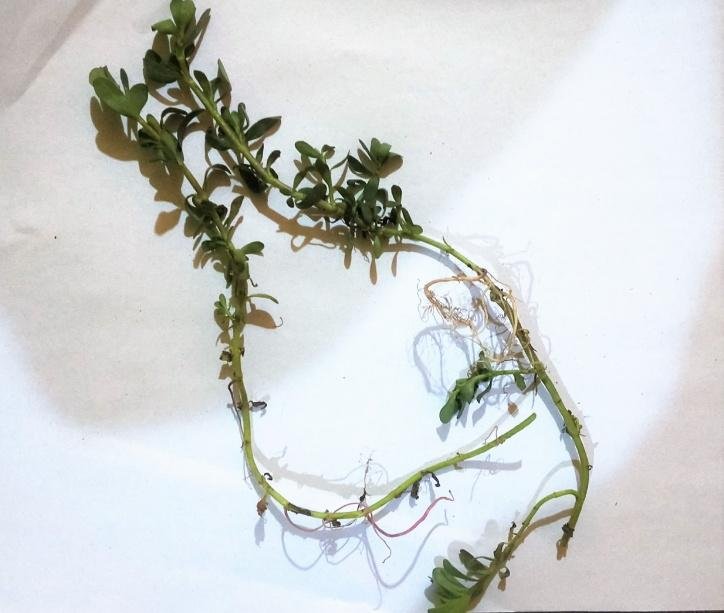
LEAF: Oval in shape, succulent, and thick in nature. Leaves grow alternately on the stem. They are green in color (27).
FLOWER: Unisexual. White to purplish in color. The stamen contains five plants. Flowers bloom throughout the year (27).
FRUIT: Oval in shape. It is sharp at the apex, with hooked hairs. It bears fruit throughout the year (27).
ROOT: Longitudinal, approximately 6-7 mm in diameter, wrinkled, and reddish-brown in color (31).
STEM: Greenish-brown stem. Stems range from 4 to 12 cm in height.
Clinical evidence for the memory-enhancing properties of Brahmi
Bacopa monnieri, commonly known as Brahmi, is traditionally classified as a Medhya Rasayana in Ayurveda and is widely recognized as a nootropic or brain tonic for cognitive enhancement.
Multiple human and animal studies have demonstrated its memory-improving potential. A double-blind, randomized, placebo-controlled trial conducted in Lucknow, India, evaluated 35 participants aged >55 years. The subjects received either a standardized extract of B. monnieri (EBM) or a placebo. Cognitive function was assessed using the Wechsler Memory Scale, including subtests for general information, logical memory, digit span forward and backward, orientation, mental control, visual reproduction, and paired-associate learning. Total memory scores showed significant improvement in the EBM group compared with the placebo group. Peak enhancement occurred at 8 weeks, with the greatest gains observed in paired-associate learning and logical memory subtests (34). These findings suggest that EBM may be beneficial for age-related memory impairment.
A second double-blind, randomized, placebo-controlled study assessed long-term dosing in 76 adults receiving 300 mg/day of Brahmi extract or placebo (40). After 6 and 12 weeks, the Brahmi group demonstrated improved information retention, attributed to reduced forgetfulness rather than enhanced acquisition. No significant effects on learning trials were observed (41).
Further evidence comes from a randomized, double-blind, placebo-controlled trial of 36 children with attention-deficit/hyperactivity disorder (ADHD), in which treatment improved logical memory scores (42). Additionally, an Australian study involving 81 subjects aged >55 years who received 300 mg/day of EBM for 12 weeks reported significant improvements in verbal learning, memory acquisition, and delayed recall (42).
Methods
Eighty-four healthy volunteers who were not undergoing any treatment or taking any medication or other herbal preparation and who reported no head injuries participated in the study. Eight participants were withdrawn after the first testing session, four from each group. Only one withdrawal was due to an adverse gastrointestinal reaction to the Brahmi capsules. Two participants from the placebo group withdrew when they began developing a medical condition. During a midtrial telephone call and the second testing session, participants were asked about their memory function and were given an opportunity to provide comments. During these assessments, no participant reported adverse reactions. Seventy-six participants (48 females and 28 males) aged 40-65 years (mean, 49; SD, 7) completed the study.
Design
The study employed a randomized, double-blind, placebo-controlled, independent-group design with two groups: a placebo group (n = 39) and a Bacopa monniera (KeenMind extract) group (n = 37).
Procedure
Participants were tested for approximately 1 hour on three separate occasions. In the first session, pretrial testing was conducted, and the participants were given capsules for 3 months at the dosage recommended by the manufacturers (300 mg for persons weighing <90 kg and 450 mg for persons weighing >90 kg, equivalent to 6 g and 9 g of dried rhizome, respectively). Participants were contacted by telephone approximately 6-8 weeks into the trial period to encourage compliance. After approximately 3 months, a second testing session was conducted, during which participants were asked not to take any remaining capsules. A posttrial testing session was conducted approximately 6 weeks after the end of the trial.
At each testing session, a group of tasks was administered to assess attention, a range of memory abilities, and psychological state. The order of task administration was the same for each session and was as follows: a questionnaire about everyday memory performance (from Bennett-Levy and Powell, 1980); immediate recall of a short story; digit span-forward and backward; a coding task involving either directly copying each letter presented, writing the next letter in the alphabet, or writing the previous letter (as described by Neubauer and Knorr, 1998); delayed recall of the short story read earlier; three trials of learning six unrelated word pairs; a visual span task requiring the tapping of a sequence of blocks in the correct order-forward and backward; a general knowledge test consisting of 20 questions (selected from Nelson and Narens, 1980); delayed recall of the word pairs; and the Depression, Anxiety and Stress Scale (Lovibond and Lovibond, 1995).
Analysis
Collectively, these trials demonstrate heterogeneity in design, population, and outcomes. Although studies consistently report benefits in memory acquisition and delayed recall, variations exist in dosing duration (6-12 weeks), age groups (children with ADHD vs. adults aged >55 years), and cognitive domains assessed. A standardized extract dose of 300 mg/day emerges as the most commonly used regimen showing significant effects across populations. However, differences in extract standardization and subtest selection limit direct comparison. Future meta-analyses should stratify by age, duration, and bacoside content to clarify effect sizes.
Proposed mechanism of action
Preclinical and clinical studies support the memory-enhancing effects of Bacopa monnieri. Behavioral studies in rodent models have shown that B. monnieri extracts improve learning in conditioned-avoidance and brightness-discrimination tasks (43). Treatment also enhanced retention, as evidenced by improved relearning, and attenuated amnesia induced by immobilization and electroconvulsive shock (43). These effects have been linked to bacosides A and B, which appear to modulate cholinergic systems (43). Recent work further indicates that Brahmi exerts antioxidant effects in the rat hippocampus, frontal cortex, and striatum (44).
Based on these preclinical findings, subsequent human trials were designed to examine whether B. monnieri improves cognitive performance. Consistent with animal data suggesting benefits for long-term memory, clinical studies have confirmed improvements in memory acquisition and retention in adult and older populations, as detailed in Section 2.0.
Chemical constituents
Several bioactive alkaloids and triterpene saponins are present in Brahmi and have strong physiological effects, in addition to numerous other organic compounds and volatile constituents. The best-characterized compounds in Bacopa monnieri are dammarane-type triterpenoid saponins known as bacosides, with jujubogenin or pseudojujubogenin moieties as aglycone units. Bacosides comprise a family of 12 known analogs. Other saponins, called bacopasides I-XII, have been identified more recently. The alkaloids brahmine, nicotine, and herpestine have been reported, along with D-mannitol, apigenin, hersaponin, monnierasides I-III, cucurbitacin, and plantainoside B (43,44,45,46).
The most extensively studied component is bacoside A, which was found to be a mixture of bacoside A3, bacopaside II, bacopasaponin C, and a jujubogenin isomer of bacopasaponin C. These assays have been conducted using whole-plant extract, and the bacoside concentration may vary depending on the plant part from which it is extracted. In one Bacopa monnieri sample, Rastogi et al. found the following bacoside profile: bacopaside I (5.37%), bacoside A3 (5.59%), bacopaside II (6.9%), bacopasaponin C isomer (7.08%), and bacopasaponin C (4.18%) (42,47,48, 49).
Future prospects of Brahmi as a memory enhancer
The herb is currently marketed worldwide as a memory enhancer and a blood glucose regulator. The plant has a vast number of active constituent compounds, including several alkaloids and saponins, with the main active compounds being the steroidal saponins bacosides A (a mixture of bacoside A3, bacopaside II, bacopasaponin C, and a jujubogenin isomer of bacopasaponin C). Although several other medicinal properties of the plant, including cardioprotective, hepatoprotective, and anticancer activities, have been reported, B. monnieri has been widely used in Ayurveda primarily for its memory-boosting property (51,52).
Various uses of Brahmi reported to date
Reduction of anxiety and stress (32)
The active ingredient present in the herb counteracts the effects of stress by regulating hormones, resulting in a calm and relaxing effect. Brahmi leaves are chewed (2-3 at a time) to obtain relief from stress and anxiety.
Enhancement of skin and hair quality (33)
It helps improve the skin's melanin pigment and enhances the skin's complexion. It is used to treat skin diseases such as eczema. Regular application of Brahmi reduces dryness, itchiness, and flakiness of the hair.
Improvement of respiratory health (50)
When Brahmi is brewed as tea or chewed as normal leaves, it can improve respiratory health. It has been used in Ayurvedic treatments for bronchitis, congestion, chest colds, and blocked sinuses. It can clear excess phlegm and mucus and relieve inflammation in the throat and respiratory tract to provide rapid relief.
Antiasthmatic activity (34)
Bacopa monnieri extract possesses relaxant properties in the tracheal muscle.
The methanolic extract is a potent mast-cell stabilizer, indicating the potential usefulness of Bacopa monnieri leaves in allergic conditions.
Anticancer activity (35)
Bacopa monnieri reduces acute stress-induced increases in ulcer index, adrenal gland weight, plasma glucose level, aspartate aminotransferase, and creatine kinase in patients with cancer, which is due to bacosides.
Anti-inflammatory activity
It can inhibit inflammation through modulation of proinflammatory mediator release (36), which means that it possesses anti-inflammatory activity related to the healing effectiveness of various inflammatory conditions in traditional medicine (37).
Anticonvulsant activity
It shows a neuroprotective effect during seizures and cognitive damage occurring during epilepsy (38). Some research indicates that taking Bacopa monnieri plant extract for 5 months prevents seizures in some cases (39).
Conclusion
The purpose of this review is to learn and explore more about the plant Bacopa monnieri, its names, habitat, chemical constituents, and uses. The review above indicates that Bacopa monnieri has much more scope than is currently known. This review article compiles information gathered from various research articles and reviews published to date.
Author Contributions
Both the authors contributed equally.
Acknowledgements
None.
Conflict of Interest
Declared none.
Funding
No funding was received.
Data Availability
Not applicable.
Ethics Approval
Not applicable.
Use of Generative AI
Any form of AI was not used.
References
- Current and future treatments in Alzheimer disease: an update. J Cent Nerv Syst Dis. 2020;12:1179573520907397.Crossref
- Dementia prevention, intervention, and care: 2020 report of the Lancet Commission. Lancet. 2020;396(10248):413-46.Crossref
- How is Alzheimer's disease treated?. .
- Medications for memory, cognition and dementia-related behaviors. .
- Historical review of medicinal plants' usage. Pharmacogn Rev. 2012;6(11):1-5.Crossref
- Development of health culture in Veles and its region from the past to the end of the 20th century. Veles: Society of Science and Art; 1999:13-34.
- 5 Powerful Nootropic Herbs for Mental Clarity and Focus. .
- 7 emerging benefits of Bacopa monnieri (Brahmi). .
- Meta-analysis of randomized controlled trials on cognitive effects of Bacopa monnieri extract. J Ethnopharmacol. 2014;151(1):528-35.Crossref
- Brahmi plant. .
- History of Bacopa monnieri. .
- Bacopa: herb of grace. .
- Horticulture: medicinal crops: Brahmi. .
- Bacopa monnieri. Ethnopharmacology. Hoboken (NJ): Wiley-Blackwell; 2015:1-15.
- Medicinal plants production towards globalization. Coimbatore (India): TNAU; 2008:107-11.
- A review on Bacopa monniera: current research and future prospects. Int J Green Pharm. 2010;4(1):1-9.Crossref
- Brahmi (Bacopa monnieri): properties, benefits, uses, dosage. .
- The molecular links of re-emerging therapy: a review of evidence of Brahmi (Bacopa monniera). Frontiers in pharmacology. 2016;7:44.Crossref
- Brahmi. .
- Brahmi. .
- What is Brahmi: learn about Brahmi plant care and garden uses. .
- Bacopa monnieri (L.) Pennell: taxonomic serial no. 33038. .
- Brahmi. .
- Brahmi: drug information and synonyms. .
- Bacopa monnieri (L.) Pennell. .
- Bacopa monnieri: Brahmi. .
- Bacopa monnieri (L.) Pennell. Germplasm Resources Information Network (GRIN-Global). .
- Bacopa monnieri. The IUCN Red List of Threatened Species. 2013:e.T164168A17722668.
- Bacopa monnieri. Plants of Louisiana. .
- A comparative study of roots of Bacopa monnieri (L.) Pennel and Bacopa floribunda (R.Br.) Wettst. Int J Pharmacogn Phytochem Res. 2012;4(1):8-11.
- Amazing benefits of Brahmi: the magical Ayurvedic herb. .
- Here's why Brahmi is the magical remedy for your skin and hair. .
- Clinical evaluation of memory enhancing properties of Memory Plus in children with attention deficit hyperactivity disorder. Indian J Psychiatry. 2000;42:S57.
- Adaptogenic effect of Bacopa monniera (Brahmi). Pharmacol Biochem Behav. 2003;75(4):823-30.Crossref
- Inhibition of pro-inflammatory mediators: role of Bacopa monniera (L.) Wettst. Inflammopharmacology. 2011;19(5):283-91.Crossref
- Anti-inflammatory activity of Bacopa monniera in rodents. J Ethnopharmacol. 2006;104(1-2):286-9.Crossref
- Neuroprotective role of Bacopa monnieri extract in epilepsy and effect of glucose supplementation during hypoxia: glutamate receptor gene expression. Neurochem Res. 2008;33(9):1663-71.Crossref
- Bacopa: health benefits, side effects, uses, dose & precautions. .
- Randomized controlled trial of standardized Bacopa monniera extract in age-associated memory impairment. Indian J Psychiatry. 2006;48(4):238-42.Crossref
- The chronic effects of an extract of Bacopa monniera (Brahmi) on cognitive function in healthy human subjects. Psychopharmacology (Berl). 2001;156(4):481-4.Crossref
- Does Bacopa monnieri improve memory performance in older persons? Results of a randomized, placebo-controlled, double-blind trial. J Altern Complement Med. 2010;16(7):753-9.Crossref
- Medicinal plants: chemistry and properties. Enfield (NH): Science Publishers; 2005:225.
- Dammarane triterpenoid saponins from Bacopa monnieri. Can J Chem. 2009;87(9):1230-4.Crossref
- Bacopasides III-V: three new triterpenoid glycosides from Bacopa monniera. Chem Pharm Bull (Tokyo). 2003;51(2):215-7.Crossref
- New phenylethanoid glycosides from Bacopa monniera. Chem Pharm Bull (Tokyo). 2002;50(12):1616-8.Crossref
- Neuropsychopharmacological effects of the Ayurvedic nootropic Bacopa monniera Linn. (Brahmi). Indian J Pharmacol. 1997;29(5):S359-65.
- Quantitative determination of the major saponin mixture bacoside A in Bacopa monnieri by HPLC. Phytochem Anal. 2005;16(1):24-9.Crossref
- Amelioration of age associated neuroinflammation on long term bacosides treatment. Neurochem Res. 2012;37(4):869-74.Crossref
- Triterpenoid glycosides from Bacopa monnieri. Phytochemistry. 2005;66(23):2719-28.Crossref
- Bacopa monnieri extract increases rat coronary flow and protects against myocardial ischemia/reperfusion injury. BMC Complement Altern Med. 2017;17(1):117.Crossref
- Potential effect of Bacopa monnieri on nitrobenzene induced liver damage in rats. Indian J Clin Biochem. 2010;25(4):401-4.Crossref
- Evaluation of anticancer potential of Bacopa monnieri L. against MCF-7 and MDA-MB 231 cell line. J Pharm Bioallied Sci. 2015;7(4):325-8.Crossref
References
References
- Current and future treatments in Alzheimer disease: an update. J Cent Nerv Syst Dis. 2020;12:1179573520907397.Crossref
- Dementia prevention, intervention, and care: 2020 report of the Lancet Commission. Lancet. 2020;396(10248):413-46.Crossref
- How is Alzheimer's disease treated?. .
- Medications for memory, cognition and dementia-related behaviors. .
- Historical review of medicinal plants' usage. Pharmacogn Rev. 2012;6(11):1-5.Crossref
- Development of health culture in Veles and its region from the past to the end of the 20th century. Veles: Society of Science and Art; 1999:13-34.
- 5 Powerful Nootropic Herbs for Mental Clarity and Focus. .
- 7 emerging benefits of Bacopa monnieri (Brahmi). .
- Meta-analysis of randomized controlled trials on cognitive effects of Bacopa monnieri extract. J Ethnopharmacol. 2014;151(1):528-35.Crossref
- Brahmi plant. .
- History of Bacopa monnieri. .
- Bacopa: herb of grace. .
- Horticulture: medicinal crops: Brahmi. .
- Bacopa monnieri. Ethnopharmacology. Hoboken (NJ): Wiley-Blackwell; 2015:1-15.
- Medicinal plants production towards globalization. Coimbatore (India): TNAU; 2008:107-11.
- A review on Bacopa monniera: current research and future prospects. Int J Green Pharm. 2010;4(1):1-9.Crossref
- Brahmi (Bacopa monnieri): properties, benefits, uses, dosage. .
- The molecular links of re-emerging therapy: a review of evidence of Brahmi (Bacopa monniera). Frontiers in pharmacology. 2016;7:44.Crossref
- Brahmi. .
- Brahmi. .
- What is Brahmi: learn about Brahmi plant care and garden uses. .
- Bacopa monnieri (L.) Pennell: taxonomic serial no. 33038. .
- Brahmi. .
- Brahmi: drug information and synonyms. .
- Bacopa monnieri (L.) Pennell. .
- Bacopa monnieri: Brahmi. .
- Bacopa monnieri (L.) Pennell. Germplasm Resources Information Network (GRIN-Global). .
- Bacopa monnieri. The IUCN Red List of Threatened Species. 2013:e.T164168A17722668.
- Bacopa monnieri. Plants of Louisiana. .
- A comparative study of roots of Bacopa monnieri (L.) Pennel and Bacopa floribunda (R.Br.) Wettst. Int J Pharmacogn Phytochem Res. 2012;4(1):8-11.
- Amazing benefits of Brahmi: the magical Ayurvedic herb. .
- Here's why Brahmi is the magical remedy for your skin and hair. .
- Clinical evaluation of memory enhancing properties of Memory Plus in children with attention deficit hyperactivity disorder. Indian J Psychiatry. 2000;42:S57.
- Adaptogenic effect of Bacopa monniera (Brahmi). Pharmacol Biochem Behav. 2003;75(4):823-30.Crossref
- Inhibition of pro-inflammatory mediators: role of Bacopa monniera (L.) Wettst. Inflammopharmacology. 2011;19(5):283-91.Crossref
- Anti-inflammatory activity of Bacopa monniera in rodents. J Ethnopharmacol. 2006;104(1-2):286-9.Crossref
- Neuroprotective role of Bacopa monnieri extract in epilepsy and effect of glucose supplementation during hypoxia: glutamate receptor gene expression. Neurochem Res. 2008;33(9):1663-71.Crossref
- Bacopa: health benefits, side effects, uses, dose & precautions. .
- Randomized controlled trial of standardized Bacopa monniera extract in age-associated memory impairment. Indian J Psychiatry. 2006;48(4):238-42.Crossref
- The chronic effects of an extract of Bacopa monniera (Brahmi) on cognitive function in healthy human subjects. Psychopharmacology (Berl). 2001;156(4):481-4.Crossref
- Does Bacopa monnieri improve memory performance in older persons? Results of a randomized, placebo-controlled, double-blind trial. J Altern Complement Med. 2010;16(7):753-9.Crossref
- Medicinal plants: chemistry and properties. Enfield (NH): Science Publishers; 2005:225.
- Dammarane triterpenoid saponins from Bacopa monnieri. Can J Chem. 2009;87(9):1230-4.Crossref
- Bacopasides III-V: three new triterpenoid glycosides from Bacopa monniera. Chem Pharm Bull (Tokyo). 2003;51(2):215-7.Crossref
- New phenylethanoid glycosides from Bacopa monniera. Chem Pharm Bull (Tokyo). 2002;50(12):1616-8.Crossref
- Neuropsychopharmacological effects of the Ayurvedic nootropic Bacopa monniera Linn. (Brahmi). Indian J Pharmacol. 1997;29(5):S359-65.
- Quantitative determination of the major saponin mixture bacoside A in Bacopa monnieri by HPLC. Phytochem Anal. 2005;16(1):24-9.Crossref
- Amelioration of age associated neuroinflammation on long term bacosides treatment. Neurochem Res. 2012;37(4):869-74.Crossref
- Triterpenoid glycosides from Bacopa monnieri. Phytochemistry. 2005;66(23):2719-28.Crossref
- Bacopa monnieri extract increases rat coronary flow and protects against myocardial ischemia/reperfusion injury. BMC Complement Altern Med. 2017;17(1):117.Crossref
- Potential effect of Bacopa monnieri on nitrobenzene induced liver damage in rats. Indian J Clin Biochem. 2010;25(4):401-4.Crossref
- Evaluation of anticancer potential of Bacopa monnieri L. against MCF-7 and MDA-MB 231 cell line. J Pharm Bioallied Sci. 2015;7(4):325-8.Crossref
Downloads

This work is licensed under a Creative Commons Attribution 4.0 International License.
Copyright (c) 2026 Dr Pratyush Purkayastha, Dr Banashree Barman
License terms
-
Attribution — You must give appropriate credit, provide a link to the license, and indicate if changes were made. You may do so in any reasonable manner, but not in any way that suggests the licensor endorses you or your use.
- No additional restrictions — You may not apply legal terms or technological measures that legally restrict others from doing anything the license permits.