
Posted inBlog
Australia vs New Zealand for PhD: Costs, Visas, Jobs
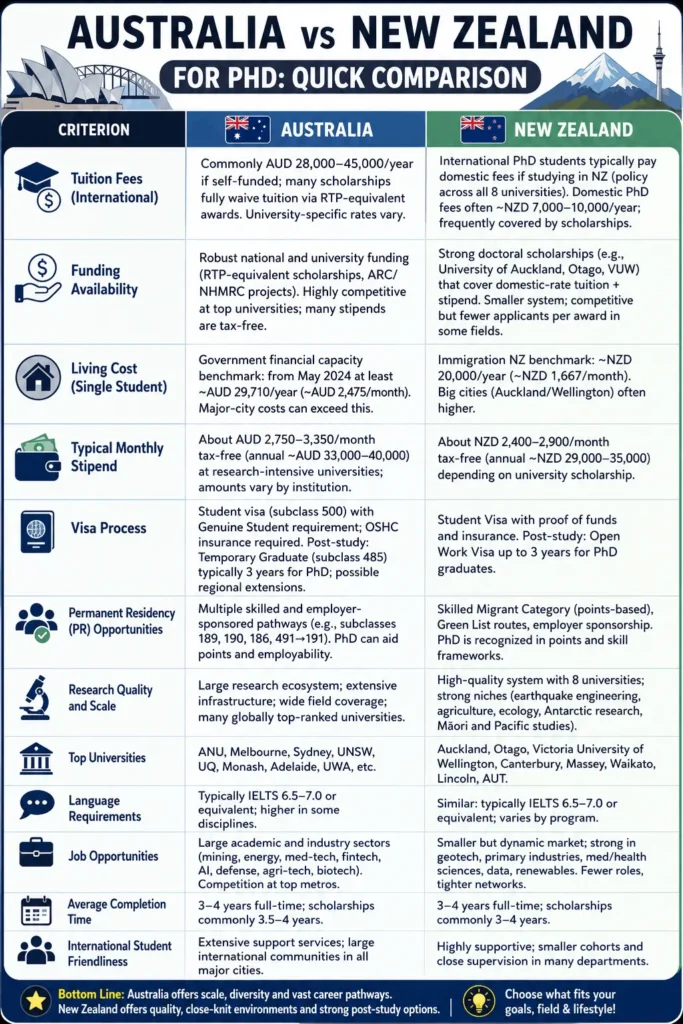
Choosing between Australia vs New Zealand for a PhD? This in-depth guide compares both destinations on the factors that matter most: tuition, domestic-rate fees for international PhDs in New Zealand, scholarship success rates, expected stipends, real living costs, supervisor quality and research strengths, visa and post-study work rules, permanent residency (PR) pathways, and career outcomes in academia and industry. You’ll also find quick-reference tables, official links to immigration and funding agencies, and expert tips for different profiles—from budget-conscious students and engineers to biomedical researchers and those with long-term immigration goals. By the end, you’ll know exactly which country better aligns with your research needs, finances, and career plans—and how to craft a winning application for competitive funding in either system.
