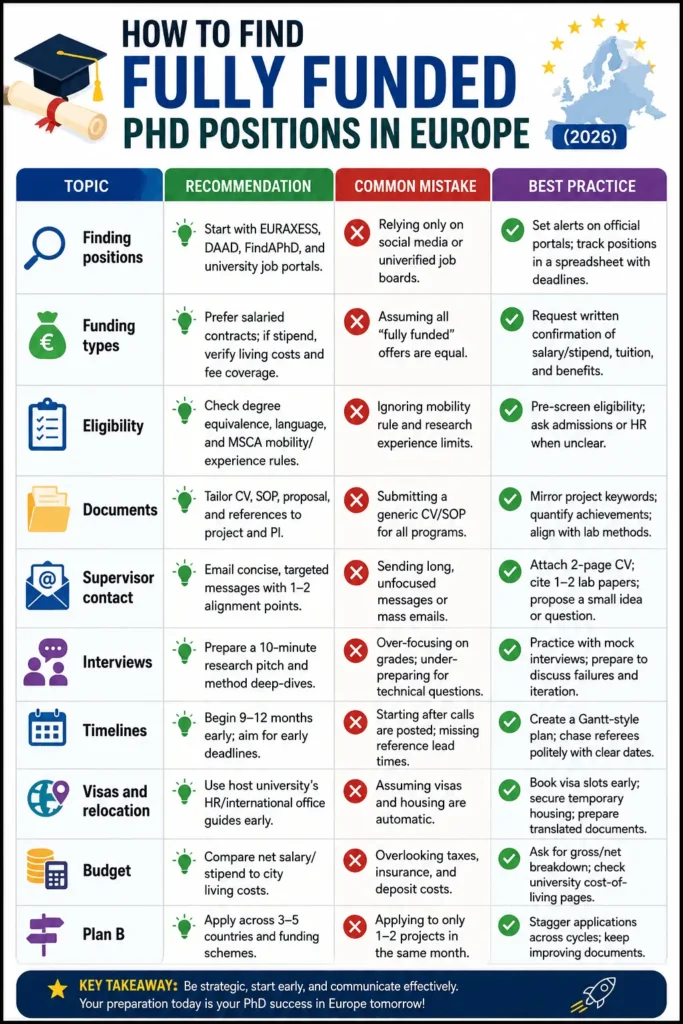
Infographic titled “How to Find Fully Funded PhD Positions in Europe (2026)” presented as a four-column table: Topic, Recommendation, Common Mistake, and Best Practice. It provides practical guidance across ten areas: finding PhD positions, funding types, eligibility, application documents, contacting supervisors, interview preparation, timelines, visas and relocation, budgeting, and maintaining a backup application strategy. Key advice includes using official portals such as EURAXESS and university job boards, verifying funding details, tailoring application materials, preparing research-focused interviews, starting applications 9–12 months in advance, planning visa and relocation early, comparing living costs, and applying across multiple countries and funding schemes. A concluding takeaway encourages applicants to start early, stay strategic, and communicate effectively.

How to Find Fully Funded PhD Positions in Europe (2026)

Looking for fully funded PhD positions in Europe in 2026? This in-depth guide shows you exactly where to find competitive, salaried doctoral opportunities and stipends across the EU/EEA, UK, and Switzerland. You will learn how to use official portals like EURAXESS, DAAD, FindAPhD, and MSCA Doctoral Networks; understand country-specific funding models and salaries; and build a standout application with proven email templates, CV/SOP outlines, and research proposal tips. We cover eligibility rules, timelines, visas, common mistakes, and interview strategies used by top labs and graduate schools. Whether you are a master’s student, recent graduate, or early-career researcher, you’ll leave with a practical checklist, curated resources, and an action plan to secure your funded doctoral position.
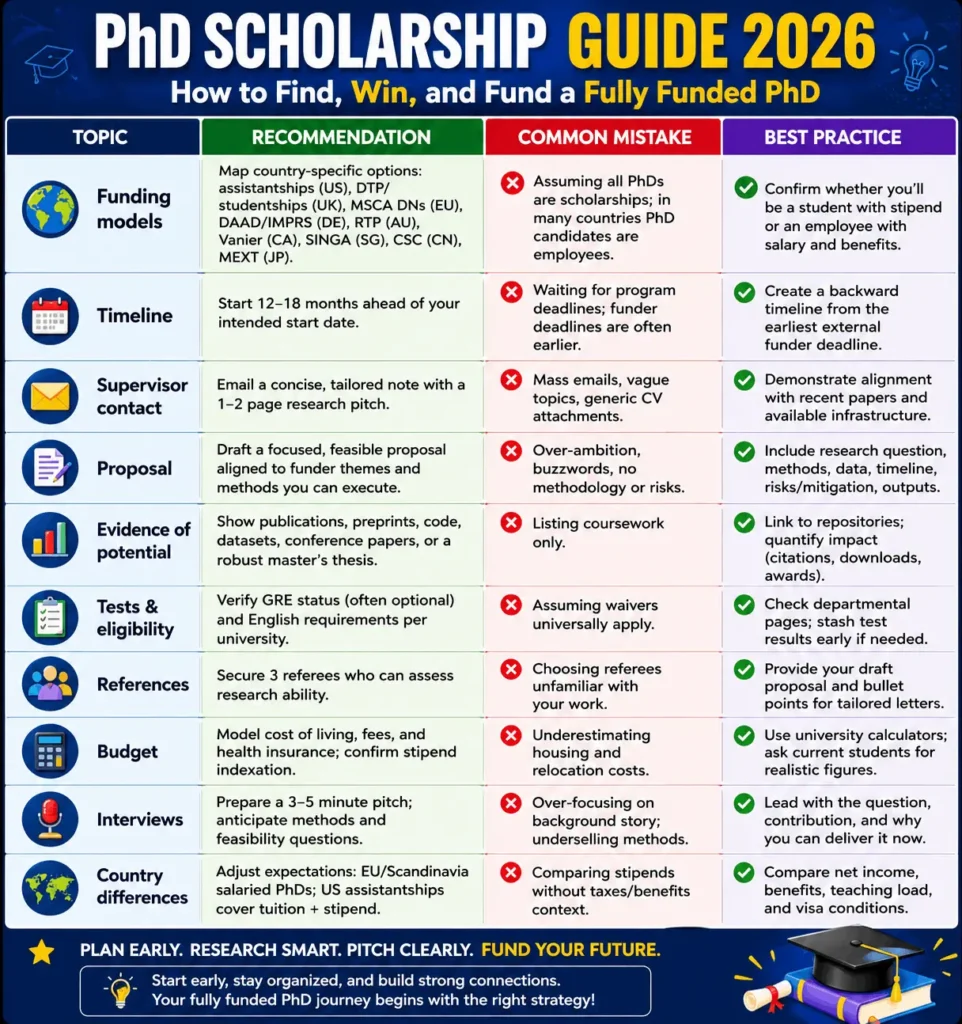
PhD Scholarship Guide 2026 infographic summarizing how to secure a fully funded PhD. The table compares ten key topics—including funding models, application timeline, supervisor contact, proposal writing, research evidence, eligibility tests, references, budgeting, interviews, and country differences—across three columns: recommendations, common mistakes, and best practices. It highlights major funding programs such as assistantships (US), DTP/studentships (UK), MSCA Doctoral Networks (EU), DAAD/IMPRS (Germany), RTP (Australia), Vanier (Canada), SINGA (Singapore), CSC (China), and MEXT (Japan).

PhD Scholarship Guide 2026: How to Find, Win, and Fund a Fully Funded PhD

This comprehensive, evidence-based PhD scholarship guide shows you exactly how to secure fully funded doctoral study in 2026. You’ll learn where and when to apply, how funding models differ across the US, UK, EU, Canada, Australia, and Asia, and how to craft winning applications. We include step-by-step timelines, country-specific advice, realistic budgeting, supervisor outreach strategies, and professional templates: emails, SOP outline, research proposal structure, and interview questions. Whether you are a final-year student, master’s graduate, PhD applicant, or postdoc planning a second doctorate, this guide gives you proven tactics used by successful awardees. Finish with a clear action plan, trusted official resources, and insider tips that can increase your odds—without guesswork.
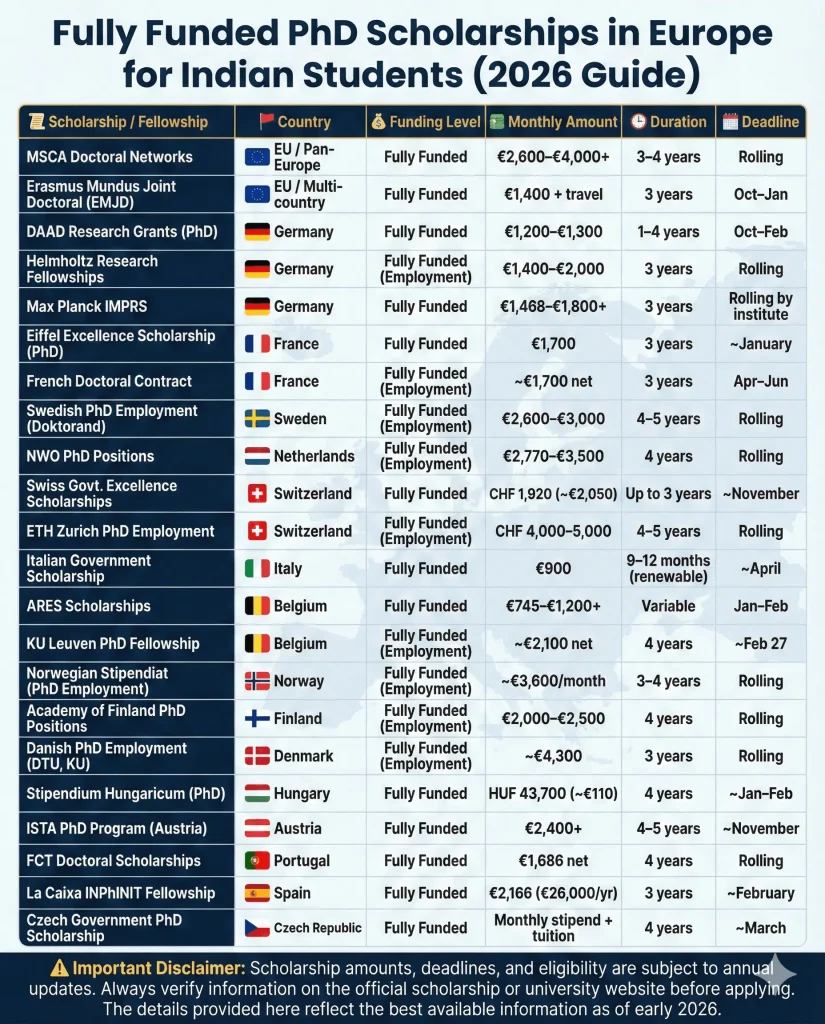
A comprehensive table titled "Fully Funded PhD Scholarships in Europe for Indian Students (2026 Guide)" outlining various scholarship and fellowship opportunities. The table includes columns for Scholarship/Fellowship name, Country with a flag icon, Funding Level, Monthly Amount, Duration, and Application Deadline. It lists programs from across Europe, including the EU, Germany, France, Sweden, Netherlands, Switzerland, Italy, Belgium, Norway, Finland, Denmark, Hungary, Austria, Portugal, Spain, and the Czech Republic. A disclaimer at the bottom advises verifying information with official sources.

Fully Funded PhD Scholarships in Europe for Indian Students (2026)

Dreaming of a PhD in Europe? This comprehensive 2026 guide covers 20+ fully funded PhD scholarships in Europe for Indian students — from Germany's DAAD and France's Eiffel Excellence to Norway's salaried positions and the EU's Marie Curie Doctoral Networks. Includes a complete summary table, step-by-step application strategy, and insider tips from IR Research Publication.