
Histone Deacetylases and Their Inhibitors: Classification, Clinical Development, and FDA-Approved Therapeutic Indications
Teerthanker Mahaveer College of Pharmacy, Teerthanker Mahaveer University, Moradabad 244001, Uttar Pradesh, India
Correspondence: Amrita Singh, singhamrita21st@gmail.com
- Received
- Revised
- Accepted
- Published
Abstract
Histone deacetylases (HDACs) are vital regulators of gene expression and chromatin structure. Their abnormal overactivity has been closely linked to the progression of various solid tumors, making them a significant focus of cancer research. HDAC inhibitors (HDACis) have shown clinical promise, particularly in the treatment of hematological cancers, but their use in solid tumors has been limited by modest effectiveness and safety concerns. This review outlines the classification and biological roles of HDACs, the mechanisms underlying HDAC inhibition, and therapeutic advances made through combination treatments involving chemotherapy, targeted drugs, and epigenetic agents. Importantly, the discussion also considers how HDAC-based therapies can align with the principles of sustainable development. By emphasizing the need for safer, more selective treatments that minimize harm to healthy cells and reduce long-term toxicity, the paper highlights the importance of developing cancer therapies that are not only effective but also responsible and sustainable. As cancer care evolves, integrating sustainability into drug development—through smarter design, improved delivery systems, and personalized strategies—offers a more balanced and forward-looking approach to managing solid tumors.
Introduction
Among the several post-translational modifications of histones, histone acetylation occupies a significant place. Since its first description in 1964, it has been determined to be essential to a wide variety of DNA-mediated biological processes. The dynamic balance between the activities of histone deacetylases (HDACs) and histone acetyltransferases (HATs) regulates histone-acetylation homeostasis (1). The terminal tails of histones interact with DNA to determine whether gene transcription is activated or repressed, and several chemical changes can alter the state of histones and affect gene transcription. HATs and HDACs specifically balance the N-ε-acetylation of lysine residues in histones (2). Interestingly, this regulatory balance is disrupted in certain solid tumors by abnormal overexpression of HDACs, which encourages the development of solid tumors. Researchers have developed a new family of anticancer medications known as HDAC inhibitors (HDACis) to address the imbalances observed in malignancies with high HDAC expression. Currently, several HDACis have received approval from the Chinese National Medical Products Administration (NMPA) and the US Food and Drug Administration (FDA) (3). Although these medications have demonstrated encouraging outcomes in the treatment of hematological malignancies, they are frequently ineffective when used alone to treat solid tumors. For example, limitations in the effectiveness of HDACis have been noted in urothelial carcinomas. To increase their effectiveness in solid tumors, it is imperative to develop HDACi-based combination-therapy approaches or more selective HDACis. This review first emphasizes the fundamental concepts of HDACs and their inhibitors (4). It then examines clinical trials that have used HDACis to treat solid tumors and summarizes notable preclinical examples in which combination HDACi therapies have been applied. Additionally, it assesses overall therapeutic outcomes and current difficulties in the treatment of solid tumors, providing information on prospective future applications of HDACis in this field (5).
Histone deacetylases (HDACs) are leading regulators of gene expression and chromatin dynamics, mainly through the removal of acetyl groups from lysine residues on both histone and non-histone substrates. This activity tightens chromatin around deacetylated DNA, prevents transcriptional access, and does not change histone-protein functions.
Deviant HDAC activity is implicated in cancer progression, with hyperexpression found in a variety of solid and hematological deformities, leading to transcriptional repression of tumor reduces and disordered oncology (6).
Histone deacetylases (HDACs)
HDAC classification
Human HDACs include 18 isoforms grouped into four classes based on biochemical properties and sequence homology (Table 1). Class IIA (HDAC4, HDAC5, HDAC7, and HDAC9) and class IIB (HDAC6 and HDAC10), which are related to yeast HDA1, undergo nucleocytoplasmic shuttling; class III (SIRT1–7) comprises NAD⁺-dependent sirtuins; and class IV includes HDAC11 (7). The zinc-dependent classes I, II, and IV are the primary focus of much HDAC-inhibitor research. Class IIA HDACs have minimal intrinsic catalytic activity and often act as adapters within corepressor complexes (8). Class I HDACs include the human enzymes HDAC1, HDAC2, HDAC3, and HDAC8, which are nuclear proteins that resemble the yeast protein Rpd3. Class I HDACs function in multiprotein complexes, such as NuRD, Sin3, and CoREST, and are involved in several physiological activities, including chromatin assembly, transcriptional repression, cell-cycle progression, and the maintenance of genomic stability. The yeast deacetylase Hda1 is homologous to class II HDACs, which include HDAC4, HDAC5, HDAC6, HDAC7, HDAC9, and HDAC10 (9). Phosphorylation regulates the nucleocytoplasmic shuttling of class II HDACs. The activities of these HDACs are associated with cellular functions such as migration and inflammation. HDAC11, the sole member of class IV, has characteristics of both class I and class II HDACs and shows homology with RPD3 and HDA1. All 11 of the aforementioned isoforms in classes I, II, and IV are zinc-dependent proteins (10). Catalysis is activated through a general acid–base mechanism that uses metal-bound water as the nucleophile. Class III HDACs, comprising SIRT1–7, are NAD⁺-dependent HDACs that strictly depend on NAD⁺ and do not require zinc for their activity, in contrast to the three classes described above. SIRT2 is an example of a class III HDAC involved in a wide range of physiological and pathological processes, including metabolism, the regulation of genetic material, and cell-cycle regulation. HDACs generally display distinct physiological roles and structural characteristics according to their respective classifications (11).
| HDAC Class | Members | Similarity to Yeast Protein | Cellular Location | Cofactor Dependency | Key Functions / Complex | Reference |
|---|---|---|---|---|---|---|
| Class I | HDAC1, HDAC2, HDAC3, HDAC8 | Related to yeast Rpd3 | Primarily located in the nucleus | Requires Zn²⁺ ion | Regulates gene silencing, chromatin structure, cell cycle & genome integrity. Functions within complexes like NuRD, Sin3, & CoREST. | (12) |
| Class II | HDAC4, HDAC5, HDAC6, HDAC7, HDAC9, HDAC10 | Similar to yeast Hda1 | Localized in both the nucleus and cytoplasm; undergoes nucleocytoplasmic shuttling regulated by phosphorylation. | Requires Zn²⁺ ion | Controls inflammation, stress, cell migration, and dynamic cellular processes. | (13) |
| Class III | SIRT1–SIRT7 | Not zinc-related; instead uses NAD⁺ | Varies by subtype (nuclear, cytosolic, mitochondrial) | NAD⁺ dependent | Critical roles in metabolism, gene expression, and cell cycle regulation. | (14) |
| Class IV | HDAC11 | Shares features with both Rpd3 & Hda1 | Localized variably within cells | Requires Zn²⁺ ion | Combines properties of Class I & II; involved in regulatory processes still under investigation. | (15) |
HDAC substrates
The acetylation of histone lysine is highly reversible. Histone/lysine acetyltransferase enzymes (HATs/KATs) acetylate lysine residues, and the acetyl groups are then removed by histone deacetylases (HDACs). Although histones are prescribed targets, HDACs also act on various non-histone proteins, including protein transcripse factors, chaperones, cytoskeletal drivers, metabolic proteins, and DNA-repair proteins, thereby affecting cell death, the cell cycle, immune responses, and the effect of metastasis. For example, the HDAC1/2 complex removes both acetyl and crotonyl marks from histone H3 and connects transcriptional control with decrotonylation. Isoform selectivity extends to differential non-histone targets (e.g., HDAC6-mediated deacetylation of α-tubulin and Hsp90), processing HDAC-inhibitor (HDACi) specificity design (16).
HDAC inhibitors
HDAC inhibitors and their clinical development
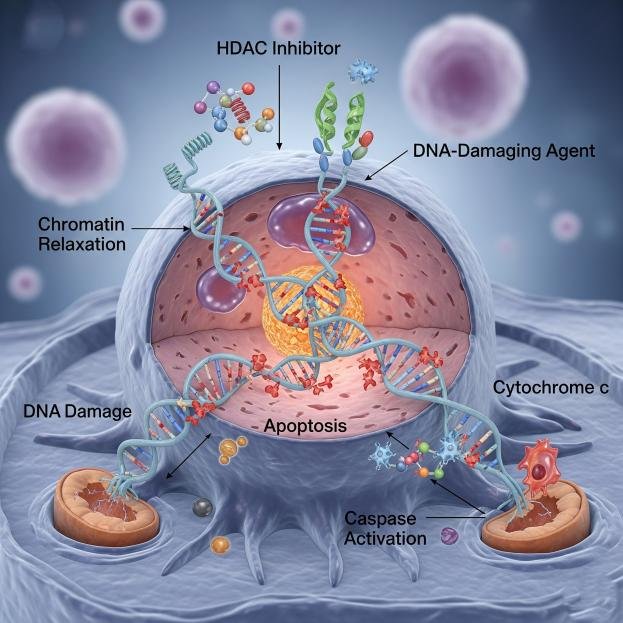
Histone deacetylase inhibitors (HDACis) represent a concept for exploiting the reversal of epigenetic silencing in cancer through the chelation of Zn²⁺ ions in the catalytic pocket of zinc-dependent HDACs (classes I, II, and IV). They prevent arrests, apoptosis, DNA damage, and angiogenesis. Preclinical studies in cancer cell lines and animal models demonstrate continuous selective cytotoxicity against malignant cells, saving large-scale normal cells. The antitumor mechanisms include ROS induction, a DNA-repair barrier, and activation of apoptotic routes, which promotes progress toward earlier human tests (Figure 1) (17).
HDACis belong to several chemical classes characterized by their zinc-binding moieties: hydroxamic acids (e.g., vorinostat and panobinostat), cyclic peptides (romidepsin), benzamides (entinostat, mocetinostat, and zabadinostat), and short-chain fatty acids (valproate) (18).
Hydroxamates—especially vorinostat and panobinostat— were among the first to enter clinical assessment because of their pan-HDAC inhibition. Benzamides offer extended class I selectivity (e.g., entinostat and mocetinostat), whereas newer agents such as zabadinostat demonstrate improved immunomodulatory activity by preferentially targeting the tumor microelement route (19).
FDA approvals and clinical indications
The clinical translation of HDACis resulted in several government approvals, mainly for hematological cancers. Vorinostat (SAHA) was first approved for dermal T-cell lymphoma (CTCL); romidepsin followed for CTCL and peripheral T-cell lymphoma. Belinostat received the indication for peripheral T-cell lymphoma, whereas panobinostat was approved in combination with bortezomib for multiple myeloma. These approvals revealed that pan-HDAC inhibitors can cause sustainable reactions in selected hematological deformities, although their effect in solid tumors was smaller (20).
Subsequent agents such as mocetinostat and entinostat have progressed through phase II/III trials in lymphoma and breast cancer. Mocetinostat showed initial activity in refractory lymphoma before it was turned to cardiac safety; entinostat is under investigation in breast, lung, and kidney cancers. Zabadinostat shows promising immune-growing properties and an educational effect with a checkpoint inhibitor in colorectal-cancer models and is now entering clinical development. Abexinostat, a pan-HDACi, received FDA Fast Track designation for follicular lymphoma after encouraging phase II responses (approximately 56% ORR) with hematological poisoning (21).
Pharmacodynamics and biomarker development
In diagnostic studies, HDACi activity is monitored through peripheral markers: histonacetylication, fluorescence-based HDAC activity analyses, and α-tubulin and H3 acetylation in tumor biopsies. These markers confirm target engagement but cannot predict the treatment response pharmacodynamically, thereby increasing the need for biomarkers. Complaints of cases, HDAC enzymes function in multiprotein complexes, which affect inhibitory specificity and downstream effects—a point performed by chemoproteomic studies. Understanding HDACi selectivity in vivo is therefore an important challenge in adapting clinical consequences. Given their limited effect as monotherapy—especially in solid tumors—combinations have become ideal (22).
Toxicity and safety considerations
Pan-HDAC inhibitors show synergy with DNA-damaging agents (e.g., cisplatin and doxorubicin) and proteasome inhibitors (bortezomib), increasing apoptosis and reducing dose-related toxicity. HDACi toxicity remains a clinical concern; common adverse effects include fatigue, gastrointestinal distress (nausea and diarrhea), and hematological suppression (thrombocytopenia and neutropenia). The heart button associated with agents such as mocetinostat led to a temporary halt in testing. Panobinostat, especially when used with proteasome inhibitors, requires alerting cardiac and electrolyte levels. Selective HDAC inhibitors are being developed to reduce this toxicity while maintaining antitumor activity (23).
Different regulatory pathways
Hypoxia and antiangiogenic regulation
Under hypoxic conditions, tumors adapt through stabilization of HIF-1α and secretion of vascular endothelial growth factor (VEGF), driving pathological angiogenesis. HDAC inhibitors such as panobinostat (LBH589) and TSA disrupt HIF-1α activity—either through direct acetylation or by acetylating cochaperones such as Hsp90—leading to HIF-1α degradation and reduced VEGF expression. They also reverse the hypoxic suppression of regulators such as RECK, which controls matrix metalloproteinases (MMPs); HDAC inhibitors disrupt HDAC1–HIF-1α interactions at the RECK promoter, thereby attenuating MMP-1 and MMP-9 activity and curbing tumor invasiveness (24).
Apoptotic pathways—intrinsic and extrinsic
HDAC inhibitors induce apoptosis through both intrinsic (mitochondrial) and extrinsic death-receptor mechanisms. Agents such as DWP0016 potentiate the acetylation of p53 through the recruitment of acetyltransferases (p300/CBP/PCAF), promoting cell-cycle arrest and apoptosis. Others, such as TW09, BIM, NOXA, PUMA, and BMF, induce the expression of antiapoptotic factors. In Hodgkin lymphoma, vorinostat enhances p21 and retards the antiapoptotic protein Bcl-xL; MPT0G157 initiates caspase-dependent apoptosis. To increase apoptosis, HDAC inhibitors can also alter the JNK/AP-1, death receptor 5/TRAIL, and Rb–E2F1 pathways (25).
Transcriptional and NF-κB pathway regulation
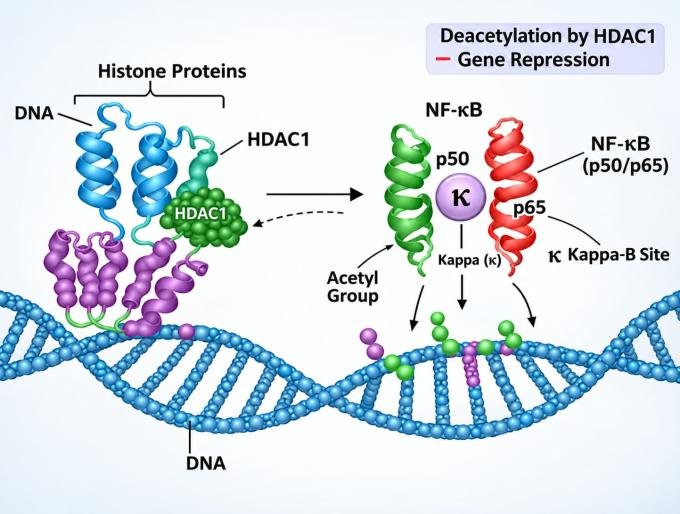
HDAC-inhibitory transcription has complex effects on causative activity. For example, in HeLa cells, apicidin induces NF-κB transcriptional activity through PI3K and PKC signaling but notably requires inhibition of HDAC1. HDAC1 expression suppresses NF-κB activity; NF-κB-dependent genes such as TNF-α and IL-8 emphasize the role of HDAC1 as a restraint on gene expression. This observation indicates reciprocal regulation between HDAC isoforms and inflammatory transcriptional programs (Figure 2) (26).
Autophagy and protein-degradation pathways
HDAC inhibitors also control cellular proteostasis through autophagic and proteasomal systems. The loss of HDAC10 crosses autophagic flux and increases sensitivity to cytotoxic medications. Sirtuin inhibition (e.g., inhibition of SIRT1/2 by tenovin-6) triggers autophagic induction through interactions with ATG proteins and Foxo1. Agents such as SAHA suppress mTOR, upregulate ULK1, and induce macroautophagy, although this can act as a survival mechanism that opposes apoptosis. Valproic acid (VPA) similarly facilitates autophagy, and CtIP affects the repair of symmetrical regeneration through decline. Depending on the cellular context, HDACi-induced autophagy can promote either survival or death (27).
Integration and crosstalk of pathways
HDAC inhibitors act at several nodes in cellular signaling— epigenetic regulation, transcription-factor activity, apoptosis, autophagy, and immune modulation—and create a broad but interconnected regulatory network. For example, NF-κB activation through PI3K/PKC can also regulate PD-L1 expression, linking inflammatory signaling with immunity. miRNA modulation connects transcriptional and epigenetic mechanisms, and autophagy can feed back into apoptotic pathways. Understanding these intersections is necessary to design rational combination treatments that maximize antitumor efficacy while overcoming mechanisms of resistance (28).
| Pathway | Key Mechanism | Key Molecules/Targets Involved | Effects | Reference |
|---|---|---|---|---|
| Hypoxia and Anti-Angiogenesis | Disruption of HIF-1α function and VEGF reduction | Panobinostat (LBH589), TSA, HIF-1α, Hsp90, RECK | HDAC inhibitors disrupt HDAC1–HIF-1α interactions and modulate Hsp90, leading to HIF-1α degradation, reduced VEGF expression, restoration of RECK activity, and suppression of MMP-1/MMP-9-mediated tumor invasiveness. | (29) |
| Apoptosis (Intrinsic & Extrinsic) | Activation of both mitochondrial and death receptor pathways | DWP0016, Vorinostat, MPT0G157, TW09, BIM, NOXA, PUMA, BMF | Acetylates p53 via p300/CBP/PCAF → cell cycle arrest/apoptosis - ↑ p21, ↓ Bcl-xL in Hodgkin Lymphoma | (30) |
| Transcriptional & NF-κB Regulation | Inhibition or modulation of inflammatory transcription factors | Apicidin, HDAC1, NF-κB, PI3K, PKC | HDAC1 inhibits NF-κB activity - ↓ TNF-α, IL-8 expression - Demonstrates HDAC isoform-specific regulation of inflammation | (31) |
| Autophagy & Proteostasis | Modulation of autophagy flux and proteasomal degradation | HDAC10, Tenovin-6 (SIRT1/2), SAHA, VPA, Foxo1, ULK1, mTOR | - HDAC10 loss → ↑ autophagy flux, ↑ drug sensitivity - SIRT1/2 inhibition → ATG-mediated autophagy | (32) |
| Integration & Crosstalk | Multi-pathway modulation including epigenetics, immunity, and miRNAs | NF-κB, PI3K/PKC, PD-L1, miRNAs | NF-κB via PI3K/PKC also upregulates PD-L1 - miRNA regulation intersects transcription/epigenetics - Autophagy feeds back into apoptosis | (33) |
Combination of HDAC inhibitors with other antitumor agents
Synergy with DNA-damaging agents and chemotherapy
Many studies show the effects of combining HDAC inhibitors (HDACis) with DNA-damaging agents such as platinum drugs (cisplatin and carboplatin), anthracyclines (doxorubicin), topoisomerase inhibitors (etoposide), and alkylating agents (temozolomide) across diverse cancer-cell types. HDACis increase drug-induced apoptosis by promoting chromatin relaxation, deteriorating DNA, and increasing proapoptotic signaling (Table 2). For example, valproic acid (VPA) exhibits synergistic anticancer activity when enhanced chromatin relaxation, increased DNA damage, and the promotion of apoptotic signaling. In contrast, VPA has not consistently demonstrated synergistic effects when combined with vincristine. This may be attributed to differences in their mechanisms of action, as vincristine primarily targets microtubule dynamics and mitotic-spindle formation, whereas HDAC inhibitors mainly modulate gene expression and DNA-damage responses. Such mechanistic differences may limit cooperative interactions and reduce the therapeutic benefit of this combination. In contrast, no significant synergistic effect was observed with vincristine, suggesting that the therapeutic benefit of HDAC-inhibitor-based combinations may depend on the mechanism of action of the partner drug (34).
Epigenetic combinations: HDACis plus DNMT or EZH inhibitors
HDAC inhibitors can be effectively combined with other epigenetic therapeutics to enhance tumor-cell death, overcome drug resistance, and improve anticancer efficacy through the synergistic modulation of gene expression and cellular signaling pathways. Such agents include DNA methyltransferase inhibitors (e.g., azacitidine and decitabine) or histone methyltransferase inhibitors in models of leukemia, medulloblastoma, and rhabdomyosarcoma; dual HDAC and DNMT prohibition induces apoptosis and reverses genes—even though it can ironically. In addition, the EZH inhibitor 3-deazaneplanocin A and vorinostat synergistically increased p27^Kip1 in NSCLC cells, suppressed EGFR signaling, and induced apoptosis despite the eg-crossing conditions. Together, these findings support the rationale for targeting multiple layers of epigenetic silencing (35).
Targeted agents and proteasome inhibitors
HDAC inhibitors also coordinate with targeted treatments and proteasome inhibitors. In several myeloma models, the apoptotic response was improved through oxidative and endoplasmic-reticulum stress and JNK-pathway activation by mixing away with HDACis. The proteasome inhibitor marizomib improved the effects of SAHA and entinostat in pancreatic-cancer cells, whereas carfilzomib improved SAHA activity in lymphoma lines, including bortezomib-resistant variants. In addition, BTK inhibitors (e.g., ibrutinib) combined with HDACis such as chidamide and increased T-cell infiltration and antitumor immunity in lymphoma models; entinostat combined with mTOR inhibitors (sirolimus or ridaforolimus) in before-of-the-preclinical models effectively inhibited tumor development without limiting poisoning. HDAC6-selective inhibitors such as ricolinostat also show synergy when combined with targeted agents or proteasome inhibitors (36).
HDACis with BET bromodomain, EGFR, PARP, and other pathway inhibitors
Broad-spectrum HDACis show general promise in combination with other pathway inhibitors (Table 3). In glioblastoma, joint treatment with panobinostat and the BET inhibitor JQ1 increased apoptosis and transcriptional disruption in tumor cells. Panobinostat also sensitized triple-negative breast-cancer (TNBC) cell lines to PARP inhibitors and cisplatin, thereby overcoming resistance. In hepatocellular carcinoma, SAHA upregulated PTEN, suppressed AKT signaling, and reversed lenvatinib resistance. Further evidence before pregnancy supports the use of SAHA with EGFR inhibitors in carcinoma and the combination of BET and HDAC6 inhibition to augment T-cell activation and suppress tumor growth (37).
| Combination Category | Agent | Synergistic Effect | Cancer Type | Reference |
|---|---|---|---|---|
| DNA-Damaging Agents & Chemotherapy | Cisplatin, Carboplatin, Doxorubicin, Etoposide, | Promotes chromatin relaxation, enhances DNA damage | Various cancer cell lines | (38) |
| Epigenetic Drug Combinations | Dual inhibition induces apoptosis, reactivates silenced genes | Leukemias, medulloblastoma, rhabdomyosarcoma | (39) | |
| Targeted Agents & Proteasome Inhibitors | Proteasome inhibitors (Marizomib, Carfilzomib) | Enhance oxidative and ER stress, boost HDACi-induced apoptosis | Pancreatic cancer, lymphoma (including bortezomib-resistant) | (40) |
| Other Pathway Inhibitors | Panobinostat + BET inhibitor (JQ1) | Enhances apoptosis and transcriptional disruption | Glioblastoma | (41) |
Resistance to HDAC inhibitors
Resistance to HDAC inhibitors in acute leukemia
Since the early 2000s, histone deacetylase inhibitors (HDACis) have been investigated with remarkable success in treating specific lymphomas; in 2006, the FDA approved an HDACi for cutaneous T-cell lymphoma. The function of HDACis in acute leukemia (AL) has been thoroughly examined in recent studies. Nonetheless, the most significant obstacle to the routine clinical application of these drugs may have gone unnoticed and unstudied (42). Despite preclinical success in leukemic animals, the development of resistance is the fundamental reason why the effectiveness of HDACis remains restricted in clinical settings. To improve sensitivity and combat resistance in AL, recent research has proposed combination therapies that match HDACis with substances targeting complementary pathways, such as apoptotic regulators or DNA methyltransferase (DNMT) inhibitors. AL counteracts resistance and sensitivity. Here, we discuss the cellular and molecular routes and mechanisms that lead to HDACi resistance in AL (43).
Epigenetic compensation and redundant pathways
Histone acetylation is the main target of HDACis, which aid chromatin relaxation and gene transcription. However, AL cells can sustain their malignant state by activating redundant pathways. By suppressing tumor-suppressor genes, compensatory overexpression of alternative epigenetic changes, such as DNA methylation and histone methylation, can reverse the effects of HDACis (44). For example, elevated DNMT activity in leukemic cells can reverse HDACi-induced acetylation and restore gene silencing. The effectiveness of combining HDACis with DNMT inhibitors, such as azacitidine or decitabine, has been demonstrated in preclinical and early clinical studies. This suggests that dual inhibition may prevent the resilencing of important tumor-suppressor genes by causing sustained epigenetic reprogramming that AL cells cannot readily circumvent, potentially leading to better patient outcomes (45).
Overexpression of efflux pumps
Drug efflux caused by adenosine triphosphate-binding cassette (ABC) transporters is a major obstacle to the use of HDACis for treating AL. These transmembrane proteins actively reduce intracellular HDACi concentrations, thereby limiting their effectiveness. HDACi resistance has been linked to the overexpression of ABC transporters, including ABCB1 (P-glycoprotein) and ABCC1 (multidrug resistance-associated protein 1). Clinical studies combining HDACis with ABC-transporter inhibitors or alternative drug-delivery techniques, such as nanoparticle formulations, are currently being conducted (46).
Compensatory signaling pathways
In response to HDACi-induced cellular stress, AL cells activate compensatory signaling pathways that increase survival and reduce sensitivity to apoptosis. Notably, HDACi-resistant cells show increased PI3K/AKT/mTOR and MAPK pathway activity, which supports cell survival and proliferation despite HDACi therapy. Preclinical data support the enhancement of HDACi effectiveness by blocking these pathways (47).
Altered expression of pro- and antiapoptotic genes
Resistance to HDACis frequently occurs when AL cells adapt by upregulating the antiapoptotic proteins BCL-2, BCL-XL, or MCL-1. Key proapoptotic genes, including BAX and BAK, are downregulated, which decreases the sensitivity of leukemic cells to HDACis. Small-molecule inhibitors of antiapoptotic proteins, such as the BCL-2 inhibitor venetoclax, are being investigated as possible combination treatments with HDACis (48).
Epigenetic plasticity and cancer stem cells
Because of their strong epigenetic plasticity, cancer stem cells (CSCs) can dynamically adapt to therapeutic pressure. CSCs in AL can withstand HDACi treatment because reversible alterations in gene expression enable them to restore the leukemic-cell population after drug withdrawal. Their plasticity and capacity for quiescence allow CSCs to avoid HDACi-induced cell death and subsequently reinitiate leukemia (49). When combined with HDACis, CSC-targeting drugs, such as those involving Notch or Wnt signaling, may aid in eliminating CSCs; however, this approach is still being studied. Furthermore, maintenance therapy using HDACis or other epigenetic modulators may prevent CSC-driven recurrence in AL.
Conclusion
Histone deacetylases (HDACs) are crucial regulators of chromatin dynamics and gene expression, and their substrate spectrum extends beyond histones to a wide range of non-histone proteins that affect cell survival, apoptosis, and immune responses. Deviant HDAC activity is strongly associated with oncogenesis, making HDAC inhibition a rational therapeutic approach. The clinical development of HDAC inhibitors (HDACis) has shown impressive effects, especially in hematological deformities, while ongoing trials aim to expand their effects in solid tumors.
Overall, HDAC inhibitors are at the forefront of epigenetic cancer therapy. Future progress will depend on adapting selectivity, developing rational combinations, and integrating mechanistic insights to achieve sustainable responses. This integrated approach positions HDACis as versatile agents with transformative potential in oncology.
Author Contributions
Amrita Singh contributed to Conceptualization, Methodology, Investigation, Data Curation, Formal Analysis, Visualization, Writing – Original Draft, and Writing – Review & Editing. Deepak Singh contributed to Methodology, Formal Analysis, Investigation, Validation, Writing – Review & Editing, and Supervision.
Acknowledgements
No acknowledgements were provided in the submitted manuscript.
Conflict of Interest
A conflict-of-interest statement was not provided in the submitted manuscript. Author confirmation is required.
Funding
A funding statement was not provided in the submitted manuscript. Author confirmation is required.
Data Availability
No data-availability statement was provided in the submitted manuscript. Author confirmation is required.
Ethics Approval
Not applicable. This review did not involve new research with human participants or animals.
Use of Generative AI
The authors confirm that no generative artificial intelligence (AI) tools were used in the preparation, writing, editing, or revision of this manuscript. Accordingly, no generative-AI assistance was used, and the authors take full responsibility for the content of the manuscript.
References
- Seto E, Yoshida M. Erasers of histone acetylation: the histone deacetylase enzymes. Cold Spring Harbor perspectives in biology. 2014;6(4):a018713.
- Shahid Z, Simpson B, Miao KH, Singh G. Genetics, histone code. In StatPearls [Internet]. StatPearls Publishing; 2023.
- Li Y, Seto E. HDACs and HDAC inhibitors in cancer development and therapy. Cold Spring Harbor perspectives in medicine. 2016;6(10):a026831.
- Federico M, Bagella L. Histone deacetylase inhibitors in the treatment of hematological malignancies and solid tumors. BioMed Research International. 2011;2011(1):475641.
- Shi MQ, Xu Y, Fu X, Pan DS, Lu XP, Xiao Y, Jiang YZ. Advances in targeting histone deacetylase for treatment of solid tumors. Journal of hematology & oncology. 2024;17(1):37.
- Milazzo G, Mercatelli D, Di Muzio G, Triboli L, De Rosa P, Perini G, Giorgi FM. Histone deacetylases (HDACs): evolution, specificity, role in transcriptional complexes, and pharmacological actionability. Genes. 2020;11(5):556.
- Xu Y, Zhang S, Lin S, Guo Y, Deng W, Zhang Y, Xue Y. WERAM: a database of writers, erasers and readers of histone acetylation and methylation in eukaryotes. Nucleic acids research. 2016 Oct 26:gkw1011.
- Park SY, Kim JS. A short guide to histone deacetylases including recent progress on class II enzymes. Experimental & molecular medicine. 2020;52(2):204-212.
- Ruijter AJD, GENNIP AHV, Caron HN, Kemp S, KUILENBURG ABV. Histone deacetylases (HDACs): characterization of the classical HDAC family. Biochemical Journal. 2003;370(3):737-749.
- Witt O, Deubzer HE, Milde T, Oehme I. HDAC family: What are the cancer relevant targets?. Cancer letters. 2009;277(1):8-21.
- Pandey R, MuÈller A, Napoli CA, Selinger DA, Pikaard CS, Richards EJ, Bender J, Mount DW, Jorgensen RA. Analysis of histone acetyltransferase and histone deacetylase families of Arabidopsis thaliana suggests functional diversification of chromatin modification among multicellular eukaryotes. Nucleic acids research. 2002 Dec 1;30(23):5036-55.
- Zhao S, Zhang X, Li H. Beyond histone acetylation—writing and erasing histone acylations. Current Opinion in Structural Biology. 2018 Dec 1;53:169-77.
- Sengupta N, Seto E. Regulation of histone deacetylase activities. Journal of cellular biochemistry. 2004 Sep 1;93(1):57-67.
- Finkel T, Deng CX, Mostoslavsky R. Recent progress in the biology and physiology of sirtuins. Nature. 2009;460(7255):587-591.
- Lahm A, Paolini C, Pallaoro M, Nardi MC, Jones P, Neddermann P, Gallinari P. Unraveling the hidden catalytic activity of vertebrate class IIa histone deacetylases. Proceedings of the National Academy of Sciences. 2007;104(44):17335-17340.
- Wolfson NA, Pitcairn CA, Fierke CA. HDAC8 substrates: Histones and beyond. Biopolymers. 2013;99(2):112-126.
- Marks PA. The clinical development of histone deacetylase inhibitors as targeted anticancer drugs. Expert opinion on investigational drugs. 2010;19(9):1049-1066.
- West AC, Johnstone RW. New and emerging HDAC inhibitors for cancer treatment. The Journal of clinical investigation. 2014;124(1):30-39.
- Arts J, Angibaud P, Marien A, Floren W, Janssens B, King P, Van Emelen K. R306465 is a novel potent inhibitor of class I histone deacetylases with broad-spectrum antitumoral activity against solid and haematological malignancies. British journal of cancer. 2007;97(10):1344-1353.
- Pu J, Liu T, Wang X, Sharma A, Schmidt-Wolf IG, Jiang L, Hou J. Exploring the role of histone deacetylase and histone deacetylase inhibitors in the context of multiple myeloma: mechanisms, therapeutic implications, and future perspectives. Experimental hematology & oncology. 2024;13(1):45.
- Evens AM, Balasubramanian S, Vose JM, Harb W, Gordon LI, Langdon R, Bartlett NL. A phase I/II multicenter, open-label study of the oral histone deacetylase inhibitor abexinostat in relapsed/refractory lymphoma. Clinical cancer research. 2016;22(5):1059-1066.
- Bondarev AD, Attwood MM, Jonsson J, Chubarev VN, Tarasov VV, Schiöth HB. Recent developments of HDAC inhibitors: Emerging indications and novel molecules. British journal of clinical pharmacology. 2021 Dec;87(12):4577-97.
- Denslow SA, Wade PA. The human Mi-2/NuRD complex and gene regulation. Oncogene. 2007;26(37):5433-5438.
- Zhang W, Ge L, Zhang Y, Zhang Z, Zhang W, Song F, Xu T. Targeted intervention of tumor microenvironment with HDAC inhibitors and their combination therapy strategies. European Journal of Medical Research. 2025;30(1):69.
- Bolden JE, Peart MJ, Johnstone RW. Anticancer activities of histone deacetylase inhibitors. Nature reviews Drug discovery. 2006;5(9):769-784.
- Kim YK, Seo DW, Kang DW, Lee HY, Han JW, Kim SN. Involvement of HDAC1 and the PI3K/PKC signaling pathways in NF-κB activation by the HDAC inhibitor apicidin. Biochemical and biophysical research communications. 2006;347(4):1088-1093.
- Li G, Tian Y, Zhu WG. The roles of histone deacetylases and their inhibitors in cancer therapy. Frontiers in cell and developmental biology. 2020;8:576946.
- Berr A, Shafiq S, Shen WH. Histone modifications in transcriptional activation during plant development. Biochimica et Biophysica Acta (BBA)-Gene Regulatory Mechanisms. 2011 Oct 1; 1809(10):567-76.
- Rocco JW, Leong CO, Kuperwasser N, DeYoung MP, Ellisen LW. p63 mediates survival in squamous cell carcinoma by suppression of p73-dependent apoptosis. Cancer cell. 2006;9(1):45-56.
- Gill, S., Barker, M., & Pulido, O. (2008). Neuroexcitatory targets in the female reproductive system of the nonhuman primate (Macaca fascicularis). Toxicologic pathology, 36(3), 478-484.
- Bhatt D, Ghosh S. Regulation of the NF-κB-mediated transcription of inflammatory genes. Frontiers in immunology. 2014;5:71.
- Bonnet, J., & Endy, D. (2013). Switches, switches, everywhere, in any drop we drink. Molecular Cell, 49(2), 232-233.
- Chen DS, Mellman I. Elements of cancer immunity and the cancer–immune set point. Nature. 2017;541(7637):321-330.
- Eckschlager T, Plch J, Stiborova M, Hrabeta J. Histone deacetylase inhibitors as anticancer drugs. International journal of molecular sciences. 2017;18(7):1414.
- Li C, Wang Y, Gong Y, Zhang T, Huang J, Tan Z, Xue L. Finding an easy way to harmonize: a review of advances in clinical research and combination strategies of EZH2 inhibitors. Clinical Epigenetics. 2021;13(1):62.
- Hideshima T, Richardson PG, Anderson KC. Mechanism of action of proteasome inhibitors and deacetylase inhibitors and the biological basis of synergy in multiple myeloma. Molecular cancer therapeutics. 2011;10(11):2034-2042.
- Meng W, Wang B, Mao W, Wang J, Zhao Y, Li Q,, Ma J. Enhanced efficacy of histone deacetylase inhibitor combined with bromodomain inhibitor in glioblastoma. Journal of Experimental & Clinical Cancer Research. 2018;37(1):241.
- Minucci S, Pelicci PG. Histone deacetylase inhibitors and the promise of epigenetic (and more) treatments for cancer. Nature Reviews Cancer. 2006;6(1):38-51.
- Jones PA, Issa JPJ, Baylin S. Targeting the cancer epigenome for therapy. Nature Reviews Genetics. 2016;17(10):630-641.
- C Potts B, X Albitar M, C Anderson K, Baritaki S, Berkers C, Bonavida B, ... , A Palladino M. Marizomib, a proteasome inhibitor for all seasons: preclinical profile and a framework for clinical trials. Current cancer drug targets. 2011;11(3):254-284.
- Berenguer‐Daizé C, Astorgues‐Xerri L, Odore E, Cayol M, Cvitkovic E, Noel K, ... , Ouafik LH. OTX015 (MK‐8628), a novel BET inhibitor, displays in vitro and in vivo antitumor effects alone and in combination with conventional therapies in glioblastoma models. International journal of cancer. 2016;139(9):2047-2055.
- Quintas-Cardama A, Santos FPS, Garcia-Manero G. Histone deacetylase inhibitors for the treatment of myelodysplastic syndrome and acute myeloid leukemia. Leukemia. 2011;25(2):226-235.
- Akbarzadeh MA, Vaez-Gharamaleki Y, Hosseini MS. Mechanisms of resistance to histone deacetylase inhibitors in acute leukemia. Therapeutic Advances in Hematology. 2024;15:20406207241306553.
- Issa JP. Epigenetic variation and cellular Darwinism. Nature genetics. 2011;43(8):724-726.
- Boileau M, Jessa S, Worme S, Faury D, Jabado N, Mercier F, ... , Eppert K. Single Cell Transcriptomic Analysis of the Histone H3 K27M Mutation in Pre-Leukemic Hematopoietic Stem Cells. Blood. 2019;134:3773.
- Robey RW, Pluchino KM, Hall MD, Fojo AT, Bates SE, Gottesman MM. Revisiting the role of ABC transporters in multidrug-resistant cancer. Nature Reviews Cancer. 2018;18(7):452-464.
- Li X, Su Y, Madlambayan G, Edwards H, Polin L, Kushner J, ... , Ge Y. Antileukemic activity and mechanism of action of the novel PI3K and histone deacetylase dual inhibitor CUDC-907 in acute myeloid leukemia. Haematologica. 2019;104(11):2225.
- Pan R, Hogdal LJ, Benito JM, Bucci D, Han L, Borthakur G, ... , Letai AG. Selective BCL-2 inhibition by ABT-199 causes on-target cell death in acute myeloid leukemia. Cancer discovery. 2014;4(3):362-375.
- Lagadinou ED, Sach A, Callahan K, Rossi RM, Neering SJ, Minhajuddin M, ... , Jordan CT. BCL-2 inhibition targets oxidative phosphorylation and selectively eradicates quiescent human leukemia stem cells. Cell stem cell. 2013;12(3):329-341.
References
References
- Seto E, Yoshida M. Erasers of histone acetylation: the histone deacetylase enzymes. Cold Spring Harbor perspectives in biology. 2014;6(4):a018713.
- Shahid Z, Simpson B, Miao KH, Singh G. Genetics, histone code. In StatPearls [Internet]. StatPearls Publishing; 2023.
- Li Y, Seto E. HDACs and HDAC inhibitors in cancer development and therapy. Cold Spring Harbor perspectives in medicine. 2016;6(10):a026831.
- Federico M, Bagella L. Histone deacetylase inhibitors in the treatment of hematological malignancies and solid tumors. BioMed Research International. 2011;2011(1):475641.
- Shi MQ, Xu Y, Fu X, Pan DS, Lu XP, Xiao Y, Jiang YZ. Advances in targeting histone deacetylase for treatment of solid tumors. Journal of hematology & oncology. 2024;17(1):37.
- Milazzo G, Mercatelli D, Di Muzio G, Triboli L, De Rosa P, Perini G, Giorgi FM. Histone deacetylases (HDACs): evolution, specificity, role in transcriptional complexes, and pharmacological actionability. Genes. 2020;11(5):556.
- Xu Y, Zhang S, Lin S, Guo Y, Deng W, Zhang Y, Xue Y. WERAM: a database of writers, erasers and readers of histone acetylation and methylation in eukaryotes. Nucleic acids research. 2016 Oct 26:gkw1011.
- Park SY, Kim JS. A short guide to histone deacetylases including recent progress on class II enzymes. Experimental & molecular medicine. 2020;52(2):204-212.
- Ruijter AJD, GENNIP AHV, Caron HN, Kemp S, KUILENBURG ABV. Histone deacetylases (HDACs): characterization of the classical HDAC family. Biochemical Journal. 2003;370(3):737-749.
- Witt O, Deubzer HE, Milde T, Oehme I. HDAC family: What are the cancer relevant targets?. Cancer letters. 2009;277(1):8-21.
- Pandey R, MuÈller A, Napoli CA, Selinger DA, Pikaard CS, Richards EJ, Bender J, Mount DW, Jorgensen RA. Analysis of histone acetyltransferase and histone deacetylase families of Arabidopsis thaliana suggests functional diversification of chromatin modification among multicellular eukaryotes. Nucleic acids research. 2002 Dec 1;30(23):5036-55.
- Zhao S, Zhang X, Li H. Beyond histone acetylation—writing and erasing histone acylations. Current Opinion in Structural Biology. 2018 Dec 1;53:169-77.
- Sengupta N, Seto E. Regulation of histone deacetylase activities. Journal of cellular biochemistry. 2004 Sep 1;93(1):57-67.
- Finkel T, Deng CX, Mostoslavsky R. Recent progress in the biology and physiology of sirtuins. Nature. 2009;460(7255):587-591.
- Lahm A, Paolini C, Pallaoro M, Nardi MC, Jones P, Neddermann P, Gallinari P. Unraveling the hidden catalytic activity of vertebrate class IIa histone deacetylases. Proceedings of the National Academy of Sciences. 2007;104(44):17335-17340.
- Wolfson NA, Pitcairn CA, Fierke CA. HDAC8 substrates: Histones and beyond. Biopolymers. 2013;99(2):112-126.
- Marks PA. The clinical development of histone deacetylase inhibitors as targeted anticancer drugs. Expert opinion on investigational drugs. 2010;19(9):1049-1066.
- West AC, Johnstone RW. New and emerging HDAC inhibitors for cancer treatment. The Journal of clinical investigation. 2014;124(1):30-39.
- Arts J, Angibaud P, Marien A, Floren W, Janssens B, King P, Van Emelen K. R306465 is a novel potent inhibitor of class I histone deacetylases with broad-spectrum antitumoral activity against solid and haematological malignancies. British journal of cancer. 2007;97(10):1344-1353.
- Pu J, Liu T, Wang X, Sharma A, Schmidt-Wolf IG, Jiang L, Hou J. Exploring the role of histone deacetylase and histone deacetylase inhibitors in the context of multiple myeloma: mechanisms, therapeutic implications, and future perspectives. Experimental hematology & oncology. 2024;13(1):45.
- Evens AM, Balasubramanian S, Vose JM, Harb W, Gordon LI, Langdon R, Bartlett NL. A phase I/II multicenter, open-label study of the oral histone deacetylase inhibitor abexinostat in relapsed/refractory lymphoma. Clinical cancer research. 2016;22(5):1059-1066.
- Bondarev AD, Attwood MM, Jonsson J, Chubarev VN, Tarasov VV, Schiöth HB. Recent developments of HDAC inhibitors: Emerging indications and novel molecules. British journal of clinical pharmacology. 2021 Dec;87(12):4577-97.
- Denslow SA, Wade PA. The human Mi-2/NuRD complex and gene regulation. Oncogene. 2007;26(37):5433-5438.
- Zhang W, Ge L, Zhang Y, Zhang Z, Zhang W, Song F, Xu T. Targeted intervention of tumor microenvironment with HDAC inhibitors and their combination therapy strategies. European Journal of Medical Research. 2025;30(1):69.
- Bolden JE, Peart MJ, Johnstone RW. Anticancer activities of histone deacetylase inhibitors. Nature reviews Drug discovery. 2006;5(9):769-784.
- Kim YK, Seo DW, Kang DW, Lee HY, Han JW, Kim SN. Involvement of HDAC1 and the PI3K/PKC signaling pathways in NF-κB activation by the HDAC inhibitor apicidin. Biochemical and biophysical research communications. 2006;347(4):1088-1093.
- Li G, Tian Y, Zhu WG. The roles of histone deacetylases and their inhibitors in cancer therapy. Frontiers in cell and developmental biology. 2020;8:576946.
- Berr A, Shafiq S, Shen WH. Histone modifications in transcriptional activation during plant development. Biochimica et Biophysica Acta (BBA)-Gene Regulatory Mechanisms. 2011 Oct 1; 1809(10):567-76.
- Rocco JW, Leong CO, Kuperwasser N, DeYoung MP, Ellisen LW. p63 mediates survival in squamous cell carcinoma by suppression of p73-dependent apoptosis. Cancer cell. 2006;9(1):45-56.
- Gill, S., Barker, M., & Pulido, O. (2008). Neuroexcitatory targets in the female reproductive system of the nonhuman primate (Macaca fascicularis). Toxicologic pathology, 36(3), 478-484.
- Bhatt D, Ghosh S. Regulation of the NF-κB-mediated transcription of inflammatory genes. Frontiers in immunology. 2014;5:71.
- Bonnet, J., & Endy, D. (2013). Switches, switches, everywhere, in any drop we drink. Molecular Cell, 49(2), 232-233.
- Chen DS, Mellman I. Elements of cancer immunity and the cancer–immune set point. Nature. 2017;541(7637):321-330.
- Eckschlager T, Plch J, Stiborova M, Hrabeta J. Histone deacetylase inhibitors as anticancer drugs. International journal of molecular sciences. 2017;18(7):1414.
- Li C, Wang Y, Gong Y, Zhang T, Huang J, Tan Z, Xue L. Finding an easy way to harmonize: a review of advances in clinical research and combination strategies of EZH2 inhibitors. Clinical Epigenetics. 2021;13(1):62.
- Hideshima T, Richardson PG, Anderson KC. Mechanism of action of proteasome inhibitors and deacetylase inhibitors and the biological basis of synergy in multiple myeloma. Molecular cancer therapeutics. 2011;10(11):2034-2042.
- Meng W, Wang B, Mao W, Wang J, Zhao Y, Li Q,, Ma J. Enhanced efficacy of histone deacetylase inhibitor combined with bromodomain inhibitor in glioblastoma. Journal of Experimental & Clinical Cancer Research. 2018;37(1):241.
- Minucci S, Pelicci PG. Histone deacetylase inhibitors and the promise of epigenetic (and more) treatments for cancer. Nature Reviews Cancer. 2006;6(1):38-51.
- Jones PA, Issa JPJ, Baylin S. Targeting the cancer epigenome for therapy. Nature Reviews Genetics. 2016;17(10):630-641.
- C Potts B, X Albitar M, C Anderson K, Baritaki S, Berkers C, Bonavida B, ... , A Palladino M. Marizomib, a proteasome inhibitor for all seasons: preclinical profile and a framework for clinical trials. Current cancer drug targets. 2011;11(3):254-284.
- Berenguer‐Daizé C, Astorgues‐Xerri L, Odore E, Cayol M, Cvitkovic E, Noel K, ... , Ouafik LH. OTX015 (MK‐8628), a novel BET inhibitor, displays in vitro and in vivo antitumor effects alone and in combination with conventional therapies in glioblastoma models. International journal of cancer. 2016;139(9):2047-2055.
- Quintas-Cardama A, Santos FPS, Garcia-Manero G. Histone deacetylase inhibitors for the treatment of myelodysplastic syndrome and acute myeloid leukemia. Leukemia. 2011;25(2):226-235.
- Akbarzadeh MA, Vaez-Gharamaleki Y, Hosseini MS. Mechanisms of resistance to histone deacetylase inhibitors in acute leukemia. Therapeutic Advances in Hematology. 2024;15:20406207241306553.
- Issa JP. Epigenetic variation and cellular Darwinism. Nature genetics. 2011;43(8):724-726.
- Boileau M, Jessa S, Worme S, Faury D, Jabado N, Mercier F, ... , Eppert K. Single Cell Transcriptomic Analysis of the Histone H3 K27M Mutation in Pre-Leukemic Hematopoietic Stem Cells. Blood. 2019;134:3773.
- Robey RW, Pluchino KM, Hall MD, Fojo AT, Bates SE, Gottesman MM. Revisiting the role of ABC transporters in multidrug-resistant cancer. Nature Reviews Cancer. 2018;18(7):452-464.
- Li X, Su Y, Madlambayan G, Edwards H, Polin L, Kushner J, ... , Ge Y. Antileukemic activity and mechanism of action of the novel PI3K and histone deacetylase dual inhibitor CUDC-907 in acute myeloid leukemia. Haematologica. 2019;104(11):2225.
- Pan R, Hogdal LJ, Benito JM, Bucci D, Han L, Borthakur G, ... , Letai AG. Selective BCL-2 inhibition by ABT-199 causes on-target cell death in acute myeloid leukemia. Cancer discovery. 2014;4(3):362-375.
- Lagadinou ED, Sach A, Callahan K, Rossi RM, Neering SJ, Minhajuddin M, ... , Jordan CT. BCL-2 inhibition targets oxidative phosphorylation and selectively eradicates quiescent human leukemia stem cells. Cell stem cell. 2013;12(3):329-341.
Downloads

This work is licensed under a Creative Commons Attribution 4.0 International License.
Copyright (c) 2026 Amrita Singh, Deepak Singh
License terms
-
Attribution — You must give appropriate credit, provide a link to the license, and indicate if changes were made. You may do so in any reasonable manner, but not in any way that suggests the licensor endorses you or your use.
- No additional restrictions — You may not apply legal terms or technological measures that legally restrict others from doing anything the license permits.