
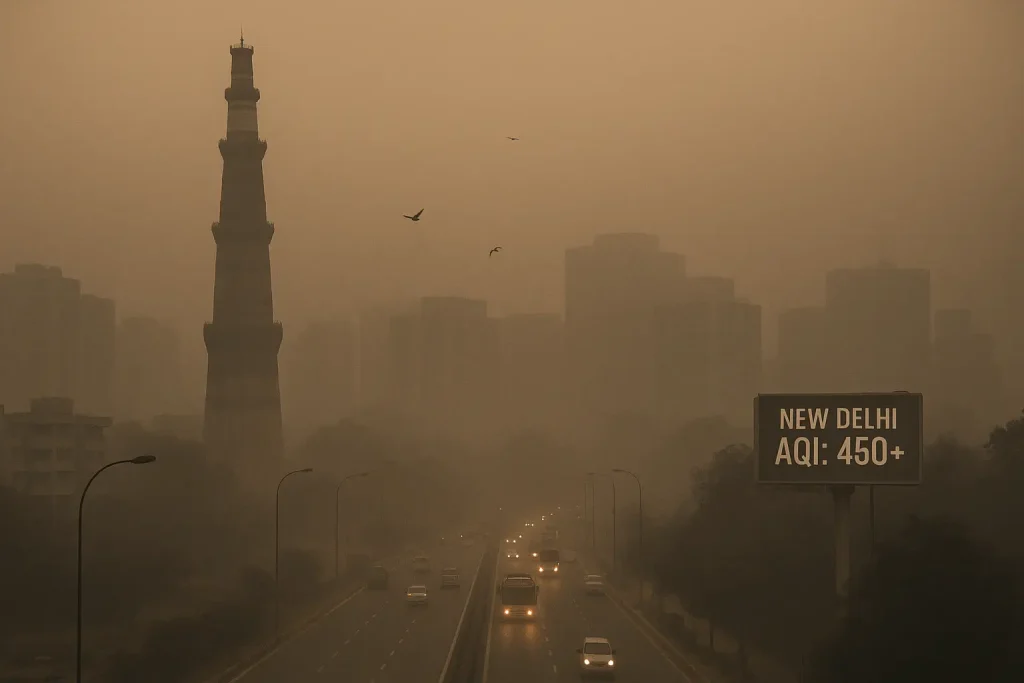

It’s 6:30 AM in Delhi, and Priya Sharma does what millions of Indian parents now do before their children wake up—she checks her phone. Not for messages or news, but for the Air Quality Index (AQI). The number glows ominously on her screen: 387. “Severe,” the app warns in red. She sighs, knowing her 7-year-old daughter will spend another recess indoors, breathing recycled air through makeshift purifiers the school installed last year.
This isn’t just a bad day. This is the new normal. And it’s killing us- slowly, invisibly, but measurably.
What if I told you that your address is determining how long you’ll live? That the air you breathe daily is systematically stealing years from your life expectancy? According to the latest Air Quality Life Index report from 2025, every single one of India’s 1.4 billion residents lives in areas where air quality exceeds WHO safety guidelines. For Delhi residents like Priya and her daughter, the cost is staggering: 8.2 years of life expectancy, simply erased by the air they have no choice but to breathe.
This isn’t a future threat. It’s happening right now, with every breath.
The Numbers Don’t Lie: Understanding the Air Quality Crisis
The ~8-Year Gap: What the Air Quality Index Reveals About Our Lives
The statistics are nothing short of alarming. India’s air pollution has reached a tipping point where it’s become the country’s greatest external threat to human health. The 2025 Air Quality Life Index, produced by the Energy Policy Institute at the University of Chicago, provides the most comprehensive analysis of how particulate matter affects longevity across the country.
The national average is sobering enough—air pollution reduces the life expectancy of the average Indian by 3.5 years. But this figure masks dramatic regional variations that reveal a country divided by invisible borders of breathable versus toxic air.
Delhi residents face the worst reality: 8.2 years of potential life lost. Ten years that could have been spent watching grandchildren grow up, pursuing dreams, or simply enjoying retirement. The Indo-Gangetic plains, which includes Uttar Pradesh, Bihar, West Bengal, and parts of Haryana and Punjab, sees residents losing 5 to 8 years on average. In Bihar specifically, the figure reaches 5.6 years. Even Mumbai, with its coastal advantages, sees residents losing 3.5 years.
To put this in perspective, air pollution is more damaging to Indian life expectancy than unsafe water and sanitation (which reduces life expectancy by 1.6 years), alcohol and drug use (0.9 years), and even conflict and terrorism (negligible impact). Globally, only tobacco use rivals air pollution in its deadly impact.
The Air Quality Index, or AQI, has become India’s most watched daily metric, surpassing even stock market indices for many health-conscious citizens. When the AQI air quality readings cross 300, entering “severe” territory, schools close, construction stops, and emergency health advisories flood smartphones across northern India. But here’s the terrifying reality: in Delhi during winter months, AQI readings regularly exceed 400 and have spiked above 500—levels considered hazardous to all populations.
Who’s Being Hit Hardest? Regional Breakdown of Air Degradation
The geography of India’s air quality crisis tells a story of unequal suffering. While all Indians breathe unsafe air according to WHO standards, the intensity of exposure varies dramatically across regions, creating what researchers call “pollution inequality.”
The Indo-Gangetic Belt bears the heaviest burden. This densely populated region, home to over 500 million people, functions as a natural trap for air contaminants. The Himalayan mountain range to the north blocks wind patterns, while atmospheric conditions during winter create thermal inversions that lock pollutants close to the ground. Delhi, positioned at the heart of this belt, experiences the worst effects.
In 2024, thirteen of the world’s twenty most polluted cities were in India, with Bynirhat in Meghalaya ranking as the most polluted city globally. Cities like Lucknow, Kanpur, Patna, and Ghaziabad regularly feature in the top ten most polluted urban areas worldwide. These cities have become ground zero for understanding how extreme air pollution impacts human health.
Urban versus rural disparities also paint an interesting picture. While cities generally show higher AQI readings due to concentrated vehicular emissions and industrial activity, rural areas aren’t immune. Agricultural burning, biomass fuel use for cooking, and dust from unpaved roads contribute significantly to rural air pollution. In fact, some rural areas in Punjab and Haryana see seasonal spikes that rival urban pollution during harvest burning seasons.
The economic divide matters too. Wealthier Indians can afford air quality monitors, home purification systems, and the ability to relocate during severe pollution episodes. Middle-class and poor families have no such options. They breathe the same toxic air without protective barriers, making air pollution one of India’s most democratizing yet devastating equalizers.
Children and the elderly suffer disproportionately. A child’s developing lungs are particularly vulnerable to particulate matter, potentially leading to lifelong respiratory complications, reduced lung capacity, and cognitive impacts. The elderly, often with compromised cardiovascular systems, face increased risk of heart attacks and strokes during high pollution days.
Understanding the Enemy: What Makes Air Quality Dangerous?
The Invisible Killer in Every Breath: Particulate Matter Explained
When we talk about air pollution in India, we’re primarily discussing particulate matter—tiny particles suspended in the air that you can’t see individually but that collectively create the hazy, grey skies that have become synonymous with Delhi winters.
Particulate matter comes in two main varieties based on size: PM10 (particles with diameter less than 10 micrometers) and PM2.5 (particles smaller than 2.5 micrometers). To understand just how small these are, consider that a human hair is about 70 micrometers in diameter. PM2.5 particles are thirty times smaller than that.
Size matters immensely when it comes to health impacts. PM10 particles can be filtered by your nose and throat, though they still cause respiratory irritation. PM2.5 particles, however, are small enough to bypass your body’s natural defenses entirely. They travel deep into your lungs, cross into your bloodstream, and circulate throughout your body. These microscopic invaders don’t just affect your lungs—they impact every organ system.
The composition of these particles makes them particularly dangerous. Particulate matter contains a toxic cocktail of substances: black carbon from diesel exhaust, heavy metals like lead and mercury from industrial emissions, sulfates and nitrates from coal burning, and organic compounds from biomass burning. Each particle is essentially a microscopic poison pill.
Current WHO guidelines recommend annual average PM2.5 concentrations should not exceed 5 micrograms per cubic meter (µg/m³). India’s national ambient air quality standard is set at 40 µg/m³—already eight times higher. Delhi’s annual average typically hovers around 100-110 µg/m³, exceeding WHO guidelines by 20-fold. During winter, daily readings frequently exceed 300 µg/m³, representing pollution levels equivalent to smoking 25-30 cigarettes per day.
Why PM2.5 is More Dangerous Than You Think: Health Impacts Explained
The health impacts of sustained exposure to particulate matter read like a medical encyclopedia of chronic diseases. PM2.5 particles trigger inflammation throughout the body, creating a cascade of health problems that extend far beyond coughing and wheezing.
Respiratory impacts are the most obvious. Chronic exposure leads to reduced lung function, chronic obstructive pulmonary disease (COPD), asthma development and exacerbation, and increased susceptibility to respiratory infections. In Indian cities with severe air pollution, hospital admissions for respiratory emergencies spike whenever the AQI crosses hazardous thresholds.
Cardiovascular effects are equally concerning and often underestimated. PM2.5 particles cause arterial inflammation, promote blood clotting, increase blood pressure, and contribute to atherosclerosis—the hardening and narrowing of arteries. Studies have linked air pollution exposure to increased rates of heart attacks, strokes, and arrhythmias. For someone with existing heart disease, a severe pollution day can be life-threatening.
Emerging research reveals even more disturbing connections. Neurological studies show associations between air pollution and cognitive decline, increased dementia risk, and potentially developmental delays in children. Oncological research has established PM2.5 as a Group 1 carcinogen—definitively cancer-causing—particularly for lung cancer. Metabolic research suggests links to diabetes development. Reproductive health studies show connections to low birth weight, premature births, and fertility issues.
Children face unique vulnerabilities because their bodies are still developing. A child growing up in Delhi breathes toxic air during crucial years of lung development, potentially permanently reducing lung capacity and setting them up for lifelong respiratory problems. Studies suggest cognitive impacts too, with some research linking air pollution exposure to reduced academic performance.
The elderly, with already compromised immune systems and often existing health conditions, face amplified risks. For someone with heart disease or diabetes, severe pollution days can be the trigger that turns chronic illness into acute emergency.
What makes air pollution particularly insidious is its invisibility and unavoidability. Unlike smoking—a voluntary risk—or unsafe water that can be filtered, air pollution affects everyone regardless of personal choices. You can’t stop breathing, and most Indians can’t simply move to cleaner air zones.
The Perfect Storm: Understanding the Causes of Air Pollution in India
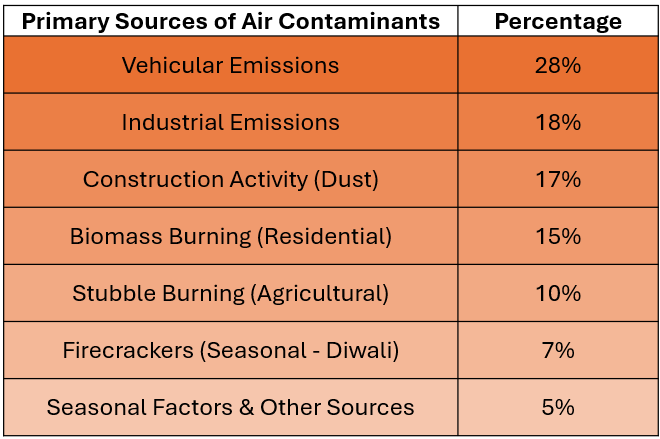
Sources: Ministry of Earth Sciences (2018), DPCC (2023), SAFAR (2024), Recent Diwali Studies (2024-2025). Note: Percentages represent PM2.5 contribution. Firecracker contribution spikes to 40% on Diwali night specifically but represents smaller annual average.
A Lethal Combination: Primary Sources of Air Contaminants
India’s air quality crisis isn’t the result of a single cause but rather a perfect storm of multiple pollution sources converging in densely populated areas with unfavorable geography. Understanding these causes is crucial to appreciating both the complexity of the problem and the challenge of solving it.
Since 1998, particulate pollution in India has increased by a staggering 61.4%. Even more remarkably, since 2013, India has contributed 44% of the world’s total increase in pollution—a figure that underscores both the speed of India’s development and the environmental cost of that growth.
Vehicular Emissions: Vehicular emissions represent one of the most visible and rapidly growing sources. India’s vehicle fleet has quadrupled over the past two decades. Delhi alone has over 12 million registered vehicles crammed into a space roughly one-sixth the size of New York City. Each vehicle contributes nitrogen oxides, carbon monoxide, and particulate matter to the air. During rush hours, traffic-clogged arteries become mobile pollution factories, with millions of idling engines pumping exhaust into stagnant air.
Industrial Emissions: Industrial emissions form another critical component. Thermal power plants burning coal, brick kilns operating without pollution controls, and manufacturing facilities lacking adequate scrubbers all contribute massive amounts of particulate matter and sulfur dioxide. The Indo-Gangetic belt hosts thousands of small and medium industries, many operating with minimal environmental oversight.
Construction Activity: Construction activity generates enormous amounts of dust, particularly problematic in rapidly urbanizing areas. Delhi’s perpetual construction boom—from metro expansions to real estate development—creates clouds of fine dust that settle over the city. Inadequate dust suppression measures mean this construction-related pollution continues unchecked.
Stubble Burning: Agricultural stubble burning represents a dramatic seasonal contributor. After rice harvesting in October-November, farmers in Punjab and Haryana burn crop residue to quickly clear fields for wheat planting. This practice, driven by tight agricultural calendars and lack of affordable alternatives, creates massive pollution plumes that blow into Delhi and surrounding regions. Satellite imagery during burning season shows thousands of fires across the region, and the AQI typically spikes into hazardous territory.
Firecrackers: Diwali firecrackers add another explosive layer to the air quality crisis, quite literally. The festival of lights, celebrated across India typically in October or November, coincides with the worst air quality period. The tradition of bursting firecrackers—from small sparklers to large aerial bombs—releases enormous quantities of particulate matter, sulfur dioxide, and heavy metals into already polluted air. A single night of Diwali celebrations can push AQI levels from “very poor” to “severe” or even “hazardous.” Delhi regularly records its worst air quality readings of the year in the days following Diwali. The chemical composition of firecracker smoke is particularly toxic, containing compounds like barium, aluminum, and copper that pose serious health risks. Despite Supreme Court restrictions and public awareness campaigns about the health impacts, firecracker use remains widespread, creating a cultural versus health debate. Post-Diwali, hospitals report sharp increases in respiratory emergencies, asthma attacks, and cardiovascular incidents. The combination of stubble burning smoke drifting into cities precisely during Diwali creates a perfect storm—agricultural pollution meets cultural celebration, resulting in air quality that becomes genuinely life-threatening for vulnerable populations including children, elderly, and those with pre-existing conditions.
Biomass Burning: Biomass burning for cooking and heating remains widespread, particularly in rural areas and urban slums. Millions of households burn wood, dung cakes, and agricultural waste for fuel, creating substantial particulate matter. While cleaner LPG cooking gas has expanded significantly, biomass burning persists among poorer populations. Coal dependence for power generation represents a structural cause. India still derives over 70% of its electricity from coal-fired power plants. While the country is rapidly expanding renewable energy capacity, coal consumption continues to grow in absolute terms to meet rising energy demands.
Seasonal Factors: Seasonal factors amplify these sources. Winter in northern India creates atmospheric conditions that trap pollutants. Temperature inversions—where warmer air sits above cooler air—act like a lid, preventing pollutants from dispersing upward. Low wind speeds during winter mean pollutants accumulate rather than disperse. Combined with increased biomass burning for heating, these conditions create the toxic smog that blankets northern India from October through February.
From Economic Miracle to Public Health Emergency: The Development Dilemma
India’s air pollution crisis reflects a broader tension between economic development and environmental sustainability—a challenge many developing nations face but that India exemplifies at an unprecedented scale.
The country’s economic transformation since liberalization in 1991 has been remarkable. GDP has grown roughly sevenfold, hundreds of millions have escaped poverty, and India has become the world’s fourth-largest economy. This growth required massive industrialization, urbanization, infrastructure development, and energy expansion—all pollution-intensive activities.
The problem isn’t growth itself but the particular pathway India has taken. Reliance on coal for energy, diesel for transport, and construction practices that prioritize speed over environmental standards created a development model with environmental externalities now manifesting as a public health emergency.
China’s experience offers both warning and hope. China’s air quality deteriorated severely during its rapid industrialization from 1990-2010. Beijing’s pollution became legendary. However, facing mounting public pressure and recognition of the economic costs, China implemented aggressive controls starting around 2013. Within seven years, China reduced its particulate pollution by roughly 40%, adding two years to average life expectancy. China’s success proves that even severe air pollution can be reversed with political will and resources.
India stands at a similar crossroads. The question isn’t whether India should develop—that’s both necessary and inevitable—but whether it can pursue a development pathway that doesn’t sacrifice the health of its citizens. Renewable energy expansion, electric vehicle adoption, and industrial modernization offer possibilities for continuing economic growth while bending the air quality curve downward.
The demographic dimension adds urgency. India is young, with a median age around 28 years. Today’s children and young adults will bear the lifetime health consequences of decisions made now about air quality. Conversely, they’ll reap the benefits of successful pollution control—potentially decades of healthier life.
Political economy factors complicate solutions. Powerful interests benefit from the status quo: coal mining and power generation employ millions; automobile manufacturers want diesel sales; construction firms oppose dust control costs; farmers lack alternatives to stubble burning. Each pollution source has stakeholders who resist change, making comprehensive action politically challenging.
Climate change intersects with air quality in complex ways. Many air pollutants are also greenhouse gases or are co-emitted with them. Actions to address climate change—like transitioning away from coal—also improve air quality. However, some climate actions have air quality tradeoffs. For instance, promoting biomass energy might be carbon-neutral but worsens local air quality if combustion isn’t clean.
Ground Zero: The Most Affected Cities and the National Air Quality Index
The Indo-Gangetic Belt: India’s Pollution Corridor
The Indo-Gangetic plains, stretching from Punjab through Haryana, Delhi, Uttar Pradesh, Bihar, and into West Bengal, represents the epicenter of India’s air quality crisis. This region, home to roughly 500 million people, experiences some of the worst sustained air pollution anywhere on Earth.
Geography conspires against this region. The Himalayas form a natural barrier to the north, blocking wind patterns that would otherwise disperse pollutants. The plains themselves are relatively flat with few elevation changes to disrupt air flow. During winter, stable atmospheric conditions create a “pollution dome” that traps contaminants close to ground level.
Delhi occupies the center of this corridor and represents the extreme case. The capital’s air quality has become globally infamous, regularly making international headlines during severe pollution episodes. Delhi’s winter air pollution stems from a combination of local sources—10 million vehicles, construction sites, waste burning—and regional influences like stubble burning from surrounding agricultural states.
The National Air Quality Index, launched by India’s Central Pollution Control Board, provides standardized measurements across Indian cities. The index converts complex pollution measurements into a simple 0-500 scale with six categories: Good (0-50), Satisfactory (51-100), Moderate (101-200), Poor (201-300), Very Poor (301-400), and Severe (401-500). During peak winter pollution, Delhi regularly registers readings in the “severe” category, with occasional spikes beyond the index’s upper limit.
Uttar Pradesh cities like Lucknow, Kanpur, and Ghaziabad consistently rank among India’s most polluted. These cities combine industrial emissions, dense traffic, construction dust, and proximity to agricultural burning zones. Lucknow’s life expectancy reduction matches Delhi’s, with residents losing approximately 7-8 years due to sustained exposure to dangerous air quality levels.
Bihar’s cities present a particularly concerning case. While less internationally visible than Delhi, cities like Patna and Muzaffarpur experience comparable pollution levels with far less public attention or resources for mitigation. Residents face the same health consequences without the air purifiers, pollution monitoring, or emergency response systems available in wealthier cities.
Punjab and Haryana occupy a unique position as both victims and contributors. These agriculturally productive states generate significant pollution through stubble burning but also suffer from poor air quality. Cities like Chandigarh, despite its planned design and green spaces, regularly experiences hazardous air quality during stubble burning season.
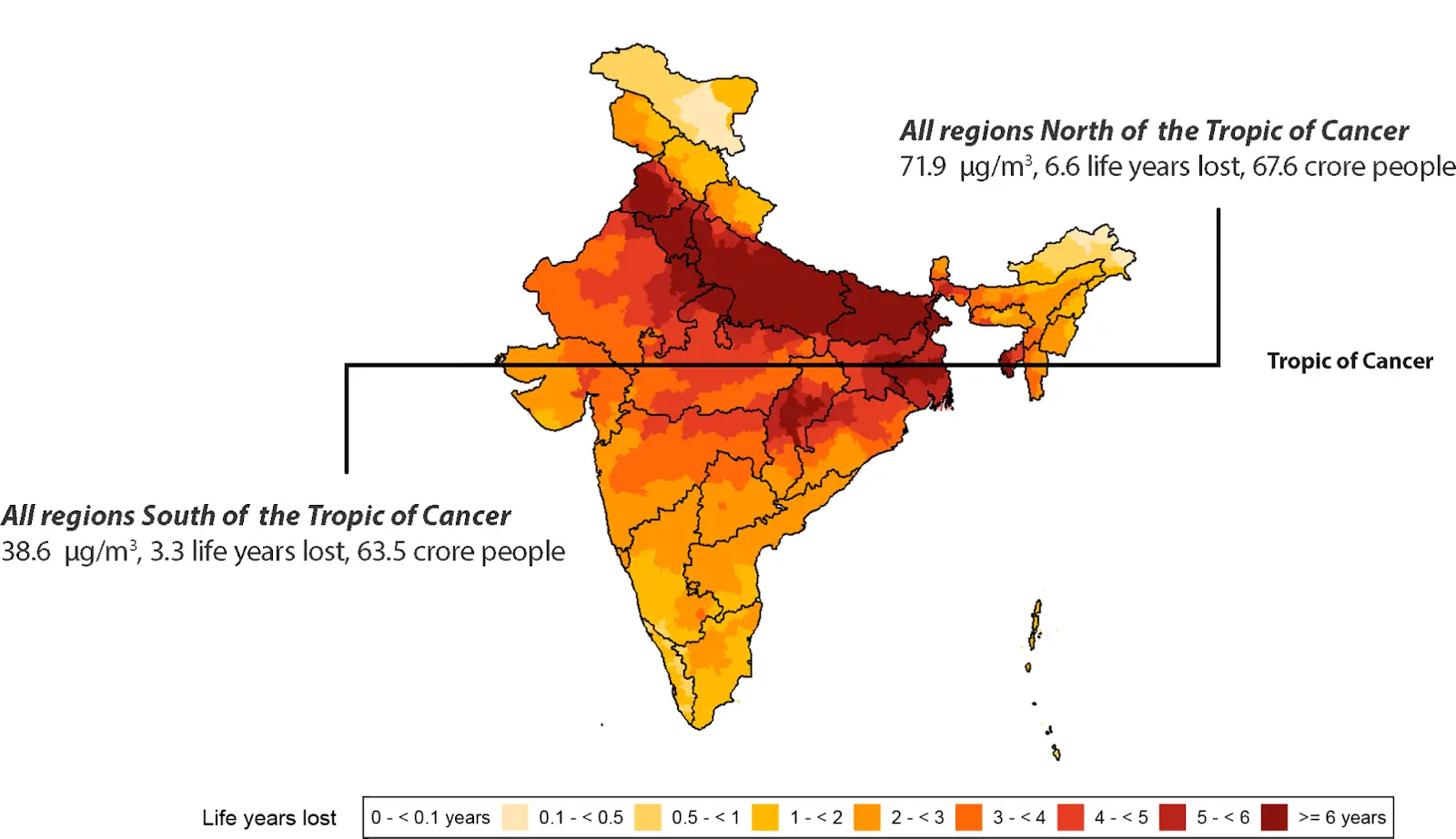
Source: Energy Policy Institute, University of Chicago (EPIC) – Air Quality Life Index 2023
City Spotlight: Where the Air Quality Monitor Shows Red
A closer examination of India’s most polluted cities reveals patterns in how air degradation manifests differently across urban landscapes.
Delhi’s pollution profile is multifaceted. The city experiences severe pollution from October through February, moderate-to-poor levels during transition months, and relatively better (though still unhealthy by WHO standards) air during monsoon season. The worst days typically occur in November when stubble burning peaks, Diwali firecracker emissions add to the burden, and meteorological conditions trap everything in place. During these episodes, visibility drops to a few hundred meters, the sun appears as a dim orange disc through grey haze, and hospitals report surges in respiratory emergencies.
Mumbai presents an interesting contrast. Coastal location and sea breezes give Mumbai better air circulation than inland cities. However, the city still exceeds WHO guidelines substantially. Mumbai’s pollution stems more from vehicular emissions and industrial activity than agricultural burning. The megacity’s sheer density—20 million people in limited space—means even moderate per-capita emissions translate to poor overall air quality.
Bangalore, often considered one of India’s more liveable cities, has seen deteriorating air quality alongside rapid growth. Once known for pleasant weather and greenery, the city now experiences increasingly frequent “poor” air quality days. Vehicular growth, construction dust, and declining tree cover have transformed Bangalore’s air quality over two decades.
Kolkata faces unique challenges from a combination of vehicular emissions, industrial activity, and seasonal agricultural burning. The city’s aging vehicle fleet and heavy truck traffic contribute substantially. During winter, Kolkata’s air quality regularly enters “very poor” territory.
Smaller cities often face worse pollution with fewer resources to address it. Cities like Gaya, Muzaffarpur, and Meerut appear near the top of pollution rankings but lack the infrastructure, resources, or public attention that larger metros receive. Residents of these cities face health consequences without access to air quality monitoring, pollution forecasts, or emergency healthcare capacity.
The seasonal nature of Indian air pollution means that annual averages, while useful for life expectancy calculations, mask dramatic swings. A Delhi resident might breathe relatively clean air in August (though still above WHO guidelines) and breathe air equivalent to smoking two packs of cigarettes daily in November. This variability makes pollution feel less urgent during clear months but doesn’t reduce the cumulative health impact.
Rural areas, while receiving less attention, face substantial pollution challenges. Biomass burning for cooking, dust from unpaved roads, agricultural activities, and increasingly, industrial facilities locating in rural areas with less oversight all contribute. The notion that “village air” is automatically clean is increasingly outdated across much of India.
The Economic Toll: Quantifying the Cost of Air Pollution
The $90 Billion Question: Calculating Lost Potential
Air pollution isn’t just a health crisis—it’s an economic catastrophe. The economic costs manifest through multiple channels: direct healthcare expenses, lost productivity from illness and premature death, and reduced quality of life. Recent analyses have attempted to quantify these costs, revealing staggering figures.
Air pollution costs the Indian economy an estimated $95 billion per year, which is approximately 3% of the country’s GDP. A 2017 analysis calculated that premature deaths attributable to PM2.5 pollution resulted in lost labor income between $30 billion and $78 billion. This calculation considers only the economic value of lives lost and doesn’t account for healthcare costs, reduced productivity from illness, or broader economic impacts.
Healthcare system burden represents another substantial cost. India’s public health system, already stretched thin, faces massive additional pressure from pollution-related illnesses. Respiratory and cardiovascular conditions attributable to air pollution require hospitalization, medication, and long-term management. Private expenditure on healthcare related to pollution—from hospital bills to air purifiers—drains household savings, particularly impacting middle and lower-income families.
Lost work days due to pollution-related illness reduce economic productivity across sectors. When severe pollution forces school closures, working parents must stay home, reducing productivity. Chronic health conditions reduce workforce participation rates. Workers in outdoor occupations—construction, agriculture, traffic police—face particular risks, with higher exposure leading to more frequent illness.
The cognitive impacts of air pollution may represent the most concerning long-term economic effect. Emerging research suggests sustained exposure to particulate matter affects cognitive function, potentially reducing educational achievement in children and cognitive performance in adults. If air pollution systematically reduces human capital formation—the development of skills, knowledge, and capabilities—the long-term economic consequences could dwarf current estimates.
Tourism and international perception represent softer but real economic impacts. India’s tourism industry, worth billions annually, faces challenges from air quality concerns. International travelers, business visitors, and potential expatriate workers factor air quality into decisions about visiting or relocating to India. Delhi’s reputation as one of the world’s most polluted cities affects its positioning as an international hub.
Real estate markets have begun pricing in air quality. Property values in less polluted areas command premiums, while areas with consistently poor air quality see reduced demand. This emerging “pollution inequality” means wealthier Indians can increasingly pay for cleaner air through residential choices, while poorer populations remain trapped in heavily polluted areas.
Investment decisions increasingly consider environmental factors, including air quality. International firms evaluating where to locate operations factor in air quality’s impact on employee health, productivity, and willingness to relocate. India’s pollution challenges create competitive disadvantages versus cleaner Asian cities.
The opportunity cost framework provides another perspective. Resources devoted to treating pollution-related illnesses, installing air purification systems, and managing pollution crises represent resources unavailable for productive investments in education, infrastructure, or innovation. India is, in effect, running faster just to stay in place—spending billions to mitigate a self-inflicted problem rather than investing in growth-enhancing activities.
Agricultural impacts add another dimension. While agriculture contributes to air pollution through stubble burning, it also suffers from it. Studies show reduced crop yields under high pollution conditions due to decreased solar radiation reaching plants and direct plant damage from pollutants. This creates a perverse cycle where agricultural practices degrade air quality, which in turn reduces agricultural productivity.
When Pollution Kills Productivity: The Hidden Economic Burden
Beyond the dramatic figures of tens of billions in lost income, air pollution imposes countless smaller economic burdens that collectively reshape how Indians live and work.
The air quality monitor has become an essential tool for daily planning. Families check AQI readings before deciding whether children can play outdoors. Athletes and joggers plan workouts around pollution levels. Outdoor workers—from construction laborers to street vendors—face impossible choices between earning income and protecting health. This constant need to adjust plans and routines represents a subtle economic friction that reduces quality of life and economic efficiency.
The “pollution tax” on daily life manifests in numerous ways. Middle-class families invest in air purifiers, creating a market now worth hundreds of millions of dollars. Schools install air filtration systems. Hospitals expand respiratory departments. These represent defensive expenditures—money spent not to improve quality of life but merely to partially mitigate deteriorating conditions.
Corporate impacts are increasingly recognized. Companies face higher healthcare insurance costs as employee health claims rise. Absenteeism increases during severe pollution episodes. Some companies, particularly in the technology sector, have begun offering “pollution breaks” allowing employees to temporarily relocate during peak pollution months—an expensive accommodation that reduces productivity.
Educational impacts carry long-term economic consequences. School closures during severe pollution disrupt learning. Children studying in polluted environments may have reduced concentration and cognitive function. If air pollution systematically reduces educational outcomes, the impact on India’s future workforce productivity could be profound.
The inequality dimension has economic implications. Wealthier Indians can afford protection—air purifiers, cars instead of walking, homes in less polluted areas, ability to leave during peak pollution. Poorer Indians lack these options, meaning pollution deepens existing inequalities. The economic consequences of poor health fall disproportionately on those least able to bear them.
Environmental migration represents an emerging phenomenon. Some families, particularly urban professionals, consider relocating from severely polluted cities to cleaner locations when possible. Brain drain within India—movement of educated talent from polluted to cleaner cities—could reshape regional economic development patterns.
Hope on the Horizon: Solutions to Improve Air Quality
The National Clean Air Programme: India’s Battle Plan
Facing mounting evidence of air pollution’s devastating impacts, India has launched the National Clean Air Programme (NCAP), representing the country’s most comprehensive effort yet to address air quality systematically.
Launched in 2019, NCAP initially targeted a 20-30% reduction in PM2.5 and PM10 concentrations across 102 cities by 2024, using 2017 as the baseline. The program was subsequently revised with more ambitious goals: a 40% reduction by 2026, expanded coverage to 131 cities, and increased funding.
The program takes a multi-pronged approach addressing various pollution sources. For vehicular emissions, measures include promoting cleaner fuels, accelerating vehicle emission standards (Bharat Stage VI), expanding public transportation, and incentivizing electric vehicle adoption. Delhi has implemented an odd-even vehicle rationing scheme during severe pollution episodes and has begun transitioning its bus fleet to electric vehicles.
For industrial emissions, NCAP mandates stricter emission controls, continuous emission monitoring systems, and closure of non-compliant facilities. Coal-fired power plants must install flue gas desulfurization systems. Industries in heavily polluted areas face additional scrutiny and requirements.
Construction dust control measures include mandatory barriers around construction sites, water spraying systems, mechanized sweeping of roads, and penalties for non-compliance. However, enforcement remains inconsistent, particularly for smaller construction projects.
Agricultural stubble burning represents one of the most challenging areas. The government has promoted alternatives including in-situ crop residue management, subsidies for machinery that can incorporate stubble into soil, and development of uses for crop residue as raw material. However, adoption remains limited due to costs and logistical challenges.
The expansion of air quality monitoring networks represents important progress. India now has hundreds of continuous ambient air quality monitoring stations, providing real-time data accessible through apps and websites. This transparency allows citizens to make informed decisions and creates pressure for action during severe pollution episodes.
State-level action plans complement national efforts. Delhi’s Winter Action Plan involves multiple measures activated based on pollution levels, including restrictions on construction, increased mechanical road sweeping, and deployment of water sprinklers. However, critics note that these actions amount to crisis management rather than addressing root causes.
What’s Working and What Isn’t: Evaluating Progress
Five years after NCAP’s launch, evidence of impact is emerging, though the picture is complex.
The encouraging news is that progress is possible. From 2022 to 2023, India achieved a 19.3% reduction in particulate pollution in NCAP-covered districts—the largest single-year improvement recorded. This reduction translated to 51 additional days of life expectancy for residents of these areas. Cities implementing NCAP measures saw 19% reductions compared to 16% in non-NCAP cities, suggesting the program is having measurable impact.
Delhi has achieved notable improvements in PM2.5 concentrations during some years, though severe pollution episodes still occur. The transition to cleaner fuels—near-universal access to BS-VI fuel—has helped. Stricter industrial controls and closure of coal power plants near the city contributed to reductions.
Electric vehicle adoption is accelerating, though from a low base. India’s electric vehicle market is growing rapidly, with electric two-wheelers and three-wheelers becoming common in some cities. Government incentives and falling battery costs are driving this transition.
The expansion of metro rail systems in multiple cities provides cleaner transportation alternatives. Delhi, Bangalore, Mumbai, and other cities have substantially expanded metro networks, reducing dependence on private vehicles for some trips.
However, significant challenges remain. Stubble burning continues at scale despite alternatives. Farmers face economic pressures, tight planting schedules, and insufficient support for alternatives. Until these structural issues are addressed, this major pollution source will persist.
Industrial and construction sector compliance remains inconsistent. While large, visible facilities face scrutiny, thousands of smaller operations continue with minimal pollution controls. Enforcement capacity is limited, corruption undermines regulations, and political connections protect some violators.
The fundamental challenge is that pollution sources—vehicles, industry, construction—continue growing even as per-unit emissions decline. India’s economy and urban population are expanding rapidly. Unless per-unit pollution reductions outpace overall growth, absolute pollution levels may not decline despite efficiency improvements.
Seasonal nature of pollution means that some improvements represent meteorological variation rather than sustainable progress. A year with better weather patterns may show lower pollution, creating false optimism that reverses when weather patterns shift.
International examples offer lessons. China’s success in reducing pollution followed massive investment, strict enforcement including criminal penalties for violators, and political prioritization at the highest levels. India’s approach, while well-designed on paper, lacks the resources and political commitment that characterized China’s campaign.
Technological solutions are proliferating. Startups are developing innovations from smog towers that filter air to drone-based pollution mapping to apps that provide hyperlocal air quality data. While valuable, technology alone cannot substitute for addressing pollution sources directly.
The Supreme Court’s 2024 ruling that clean air is a fundamental right represents a legal milestone. This decision empowers citizens to challenge governmental inaction and could reshape how air quality is addressed through litigation. However, judicial declarations require implementation, where India often falters.
Personal Action Plan: What You Can Do to Protect Your Family
While systemic solutions are necessary, individuals can take steps to protect themselves and their families from air pollution’s worst effects.
Monitoring air quality daily is the foundation of personal protection. Apps like AQI India, CPCB’s Sameer app, and private services provide real-time air quality data. Check AQI levels before planning outdoor activities, especially for children and elderly family members. On days when AQI exceeds 200, limit outdoor exposure, particularly strenuous activity.
Indoor air quality improvements offer significant protection since most people spend majority of time indoors. Air purifiers with HEPA filters remove particulate matter effectively. Position them in bedrooms and main living spaces. Change filters regularly according to manufacturer recommendations. While expensive, air purifiers demonstrably reduce indoor pollution exposure.
Improve indoor ventilation strategically. During times of day when outdoor AQI is better (often late morning before traffic builds), open windows to refresh indoor air. Keep windows closed during peak pollution hours—typically morning and evening rush hours.
Masks offer protection during unavoidable outdoor exposure. N95 or N99 masks filter particulate matter effectively. Ensure proper fit—gaps render masks much less effective. While uncomfortable, masks demonstrably reduce exposure during high pollution days.
Lifestyle modifications reduce exposure. Exercise indoors or during lower pollution times. Children’s outdoor play should be limited when AQI is poor. Walking or cycling on roads with heavy traffic increases exposure; use parks or less-trafficked routes when possible.
Reduce personal pollution contributions. Use public transport, carpool, or walk when practical. Avoid burning leaves, trash, or other materials. Support cleaner businesses and practices. While individual impact is small, collective action matters.
Political engagement and advocacy create pressure for systemic solutions. Contact elected representatives about air quality priorities. Support organizations working on environmental issues. Vote for candidates who prioritize air quality. Attend public hearings on environmental regulations. Systemic change requires political will, which comes from public pressure.
Home environment adjustments help. Indoor plants can improve air quality modestly, though effect is limited. Avoid indoor pollutants like smoking, toxic cleaning products, and synthetic fragrances. Use exhaust fans when cooking. Choose low-VOC paints and materials during renovations.
Health monitoring becomes important for high-risk individuals. Those with respiratory or cardiovascular conditions should work with doctors to adjust medications or treatments during high pollution seasons. Emergency action plans for severe pollution days can prevent health crises.
Creating community awareness amplifies impact. Share information about air quality with neighbors and social networks. Coordinate community action like school advocacy for air purification systems or neighborhood vehicle pooling arrangements. Collective action has more influence than individual efforts.
Prepare for severe pollution episodes. Keep masks, air purifiers, and medications stocked. Have work-from-home arrangements when possible during severe pollution. Plan indoor activities for children. Having plans in place reduces stress and exposure during inevitable severe pollution periods.
Stay informed about pollution science and solutions. Understanding air quality issues empowers better decision-making and advocacy. Follow credible sources of air quality information and avoid misinformation common in social media.
The Road Ahead: India’s Air Quality Future
A Choice Between Growth and Breath: Navigating the Development Pathway
India stands at a crossroads. The next decade will determine whether the country can break the historical pattern of development-driven environmental degradation or whether pollution will continue stealing years from lives and billions from the economy.
The pessimistic scenario is stark. If current trends continue—vehicle fleet growth, coal dependence, inadequate enforcement—India’s air quality could worsen despite incremental improvements. More cities could see Delhi-level pollution. Life expectancy losses could extend beyond the current 3.5-year national average. Health impacts could create a generation with reduced lung capacity, increased chronic disease burden, and diminished cognitive function.
Climate change adds an ominous wildcard. Rising temperatures may increase ground-level ozone formation. Changing precipitation patterns could affect pollution dispersion. More frequent temperature inversions could trap pollutants more effectively. The interaction between climate change and air quality is complex and potentially reinforcing.
However, the optimistic scenario is equally plausible. China’s experience proves that severe air pollution can be reversed within a decade with sustained commitment. India’s recent improvements show that progress is possible. Falling costs of clean technology—renewable energy, electric vehicles, industrial pollution controls—make the clean development pathway increasingly economically viable.
India’s renewable energy expansion is genuinely impressive. The country has become a global leader in solar energy deployment and has ambitious targets for renewable capacity. As renewable energy replaces coal, air quality co-benefits will be substantial. Electric vehicle adoption, while still in early stages, is accelerating rapidly with government support and falling costs.
The demographic dividend offers opportunity. India’s young population, increasingly aware of pollution’s impacts, creates political constituency for action. Digital connectivity enables rapid awareness spreading and mobilization. Younger generations may demand environmental quality in ways previous generations, focused on economic survival, did not.
Technological innovation provides tools previous generations lacked. Real-time air quality monitoring, satellite tracking of pollution sources, advanced filtration technologies, and clean energy alternatives offer solutions that didn’t exist when developed countries industrialized. India can potentially leapfrog the dirty development phase that other countries endured.
International pressure and cooperation could accelerate progress. As climate change and air pollution become global priorities, international finance and technology transfer may support India’s transition. Global supply chains increasingly demand environmental standards, creating economic incentives for cleaner production.
The pathway forward requires threading a needle—continuing economic development while decoupling growth from pollution. This demands massive investment in clean infrastructure, strict enforcement of environmental regulations, political will to confront powerful interests, and social acceptance of necessary changes.
What 2030 Could Look Like: Two Scenarios for India’s Air
Imagine two versions of India in 2030, just five years from now, based on the choices made today.
Scenario One: Business as Usual
In this timeline, incremental improvements fail to keep pace with overall growth. Delhi’s air quality remains among the world’s worst, with annual average PM2.5 hovering around 100 µg/m³—twenty times WHO guidelines. Winter pollution episodes regularly push AQI above 500. Other northern cities follow Delhi’s trajectory.
Vehicle fleet has grown to 450 million, overwhelming modest improvements in emission standards. Coal continues providing the majority of electricity despite renewable energy growth. Stubble burning persists due to lack of economically viable alternatives. Construction booms continue with inadequate dust controls.
Health impacts intensify. Life expectancy losses increase to 4-5 years nationally, with Delhi residents losing 12 years. Respiratory diseases become endemic. Children growing up in heavily polluted areas show systematically reduced lung capacity. Healthcare system strain from pollution-related illness worsens.
Economic costs mount. Direct healthcare expenses and lost productivity exceed $100 billion annually. Brain drain accelerates as educated Indians increasingly relocate abroad, citing air quality as a primary factor. International businesses hesitate to locate operations in heavily polluted cities. Tourism suffers.
Public frustration grows but lacks channels for effective action. Protests during severe pollution episodes become routine but don’t translate to systematic change. Inequality deepens as wealthy Indians increasingly live in filtered bubbles while poor populations bear full exposure.
Scenario Two: Sustained Progress
In this alternative timeline, India treats air quality as the national priority it deserves. Political leadership across parties recognizes that public health and economic development depend on breathable air.
Vehicle electrification accelerates dramatically. By 2030, 30% of new vehicle sales are electric. Public transportation expands substantially. High-speed rail reduces short-haul flights. Cycling infrastructure makes active transportation viable in cities.
Renewable energy reaches 60% of electricity generation. Remaining coal plants have state-of-the-art pollution controls. Industrial emissions face strict monitoring with real penalties for violations. Construction standards mandate effective dust control, with genuine enforcement.
Stubble burning reduces dramatically through combination of subsidized alternatives, agricultural calendar adjustments, and development of markets for crop residue. Biomass burning for cooking becomes rare as clean cooking fuel reaches virtually all households.
Delhi’s annual average PM2.5 drops to 50 µg/m³—still above WHO guidelines but a dramatic improvement. Winter severe pollution episodes become occasional rather than routine. Other cities see proportional improvements. National average life expectancy loss from pollution drops to 1.5 years—still concerning but no longer catastrophic.
Health impacts stabilize and begin declining. Children born in 2030 breathe notably cleaner air than their parents did. Chronic respiratory disease rates peak and begin declining. Healthcare system capacity shifts from crisis management to prevention and treatment.
Economic benefits manifest. Healthcare costs decline. Productivity increases. India’s reputation improves, facilitating tourism and business development. The country becomes a showcase for how developing nations can achieve clean air alongside economic growth.
Which scenario materializes depends on choices made in the next few years. The technology and knowledge exist. The question is political will and social commitment.
Taking Action: From Awareness to Change
Individual Actions That Create Collective Impact
While systemic change requires governmental action, individual choices collectively create the social and political environment that enables policy change. Every person can contribute to solutions while protecting themselves and their families.
Immediate Personal Protection Measures:
Install air quality monitors or use reliable air quality apps to track pollution levels near you. Knowledge enables better decision-making about when to stay indoors, when outdoor activities are safer, and when to use protective measures.
Invest in proper air purification for your home. A single good HEPA purifier for the bedroom where you sleep 6-8 hours nightly provides substantial protection. Additional purifiers for main living spaces increase benefits. This isn’t a luxury for the wealthy—it’s a health necessity comparable to clean water filters.
Use N95 or N99 masks during high pollution days when outdoor exposure is unavoidable. Proper fit matters—gaps render masks ineffective. While uncomfortable, masks demonstrably reduce particulate matter exposure.
Transportation Choices:
Whenever practical, use public transportation, carpool, walk, or bicycle. Each personal vehicle on the road contributes to traffic congestion and pollution. Electric two-wheelers are becoming affordable and eliminate tailpipe emissions entirely.
Maintain your vehicle properly. Well-maintained engines produce fewer emissions. Get regular pollution checks. Don’t idle unnecessarily—turn off the engine during extended waits.
Support expansion of public transportation. Vote for politicians who prioritize metro expansion, bus rapid transit, and cycling infrastructure. Use public transport even when personal vehicles are convenient, creating demand that justifies further expansion.
Home and Lifestyle Adjustments:
Eliminate indoor pollution sources. Don’t burn trash, leaves, or other materials. Avoid indoor smoking. Use exhaust fans when cooking. Choose low-emission products, paints, and cleaning supplies.
Strategic ventilation improves indoor air. Open windows during times when outdoor air quality is better—often mid-morning before traffic builds or after rains. Keep windows closed during peak pollution hours.
Plant trees if you have space. While individual impact is modest, collective greening of neighborhoods improves air quality and quality of life. Trees absorb pollutants, provide shade that reduces urban heat island effects, and create more liveable spaces.
Advocacy and Political Engagement:
Contact elected representatives about air quality. Politicians respond to constituent pressure. Express that air quality is a voting priority. Demand action plans with measurable targets and accountability.
Support environmental organizations working on air quality issues. Groups like the Centre for Science and Environment, Clean Air Asia, and others conduct research, advocacy, and litigation. They need public support—both financial contributions and participation in campaigns.
Attend public hearings on environmental regulations. Comment periods for industrial permits, transportation plans, and building projects offer opportunities for citizen input. Participate to ensure environmental concerns are heard.
Vote for candidates who prioritize environmental issues. Make air quality a determining factor in voting decisions. Politicians will prioritize issues that affect election outcomes.
Community Building:
Share air quality information with neighbors, friends, and family. Many people remain unaware of pollution’s severity or personal protection measures. Sharing knowledge expands impact.
Organize community action. Neighborhood groups can advocate for local improvements—better bus service, cycling lanes, tree planting, school air filtration. Collective voices have more influence than individual complaints.
Engage with schools about air quality protection for children. Advocate for air purifiers in classrooms, outdoor activity policies based on AQI, and air quality education. Children’s developing lungs are particularly vulnerable and deserve protection.
Support businesses that prioritize environmental responsibility. Choose companies with clean practices. Avoid businesses that flagrantly violate environmental regulations. Consumer choices create economic incentives for cleaner operations.
Professional and Workplace Actions:
If you have workplace influence, advocate for air quality measures—purifiers for offices, work-from-home options during severe pollution, company shuttle services reducing individual vehicle use.
Professionals in relevant fields—urban planning, engineering, medicine, policy, journalism—can integrate air quality into their work. Engineers can design cleaner systems, doctors can educate patients, journalists can cover the issue persistently, policymakers can craft better regulations.
Business leaders can implement clean practices even beyond regulatory requirements. Corporate leadership on environmental issues influences broader norms and creates competitive pressure for others to follow.
Education and Awareness:
Educate yourself about air pollution causes, impacts, and solutions. Informed citizens make better decisions and more effective advocates. Follow credible sources and scientific research, not misinformation.
Teach children about air quality. Age-appropriate education about environmental issues creates a generation that grows up prioritizing clean air. Schools should integrate environmental science that includes air quality.
Combat misinformation. Air quality discussions sometimes attract false claims—about solutions that don’t work, conspiracy theories, or downplaying legitimate concerns. Promoting scientific literacy helps.
Building a Movement for Clean Air
Systemic change requires not just individual actions but social movements that create irresistible political pressure for action. India needs a clean air movement comparable to movements that have driven transformative change on other issues.
The right to breathe clean air must become a non-negotiable political demand. When air quality becomes a definitive voting issue—where politicians lose elections over inaction—change will accelerate dramatically. Building this political salience requires persistent advocacy, strategic communications, and broad coalition building.
Success stories from other countries offer inspiration. South Korea’s clean air movement mobilized millions, forcing governmental action that substantially improved Seoul’s air quality. China’s public pressure helped drive the aggressive pollution control policies implemented after 2013. These movements succeeded by making air quality impossible for politicians to ignore.
India’s democratic system provides tools for citizens to drive change. Unlike autocratic systems where top-down action is necessary, democracies enable bottom-up pressure. Elections, courts, media, and civil society can all amplify demands for clean air.
The legal pathway offers promise. The Supreme Court’s recognition of clean air as a fundamental right creates opportunities for litigation compelling governmental action. Public interest litigation has driven progress on other environmental issues and can do so for air quality.
Media coverage matters enormously. Sustained, prominent coverage of air quality—not just during crisis episodes but year-round—keeps the issue visible. Investigative journalism exposing pollution sources, non-compliance, and regulatory failures creates accountability.
Coalition building across diverse constituencies strengthens movements. Air quality affects everyone—urban and rural, wealthy and poor, young and old. Building coalitions that transcend typical political divisions creates broader pressure for action.
Conclusion: The Choice is Ours
It’s 6:30 AM in Delhi, and Priya Sharma checks her phone. Today, the AQI reads 387—severe. She sighs, but this time, something is different. She opens another app and reports the construction site near her home that’s operating without dust controls. She shares the AQI reading on her community group, where neighbors are organizing to demand air purifiers for the local school. She’s volunteering this weekend for an environmental organization’s awareness campaign.
Small actions, but multiplied across millions of Indians, they create unstoppable momentum for change.
The statistics are stark— 8 years of life lost in Delhi, 3.5 years nationally, $90 billion in economic costs annually. These numbers represent real people—children with asthma, elderly relatives with heart disease, dreams cut short, potential unrealized. Behind every statistic is a human story of suffering that could be prevented.
But the statistics also prove that change is possible. China reduced pollution 40% in seven years. India achieved 19% reduction in a single year in NCAP cities. Every percentage point of pollution reduction translates to days and months of life expectancy gained, billions in economic benefits, and improved quality of life.
The air quality crisis isn’t a natural disaster beyond human control. It’s the consequence of specific choices—about energy sources, transportation systems, industrial practices, agricultural methods, and enforcement priorities. Different choices will produce different outcomes.
The question isn’t whether India can afford to address air pollution. The country cannot afford not to. The economic costs of inaction exceed the investment costs of solutions. The health burden of poisoned air undermines the human capital necessary for development. The years of life stolen from 1.4 billion people represent an existential national loss.
India stands at a defining moment. The country has achieved remarkable economic progress, lifted hundreds of millions from poverty, and established itself as a rising global power. But what does that success mean if it comes at the cost of citizens’ health and years of life?
The children being born today will inherit the consequences of choices made now. Will they look back at 2025 as the turning point when India decisively addressed its air quality crisis? Or will they wonder why their parents’ generation knew the problem but failed to act with necessary urgency?
The technology exists. The solutions are known. China, South Korea, and other countries have demonstrated that severe air pollution can be reversed. What’s needed now is political will, sustained commitment, and social mobilization.
Every Indian has a role to play. Protect your family through personal measures. Use your voice for political advocacy. Make consumer choices that reduce pollution. Build community action. Support organizations driving change. Vote for clean air.
Priya’s daughter deserves to play outside without checking an AQI app first. She deserves to breathe without surrendering 10 years of life. Every child across India deserves the same.
The silent killer has been exposed. Its mechanisms are understood. Its costs are quantified. Now comes the hard part—building the political will and social commitment to choose breathable air over business as usual.
The choice is ours. The time is now. Every breath depends on what we do next.
About Air Quality Monitoring
To check real-time air quality near you, download the official CPCB Sameer app or visit reputable air quality monitoring websites. Know your AQI, protect your health, and join the movement for clean air.
Take Action Today:
- Check your city’s Air Quality Index right now
- Share this article with three people who need to know
- Contact your elected representative about air quality
- Join an environmental organization working on clean air
- Make one change in your life that reduces pollution
The air we breathe connects us all. Together, we can reclaim it.
Sources and Further reading
The University of Chicago: All of India breathes bad air, AQLI 2025 report says
ACQ IAS: Air Quality Life Index
Council on Foreign Relations: China’s Battle Against Air Pollution: An Update
India Today: Morning after Diwali was cleaner, felt many. But why did AQI data differ?
BBC: Toxic haze in Delhi despite ‘green’ Diwali
India Emissions Trading: Particulate air pollution is the single greatest threat to human health globally.
The Ground Truth Project: Air Pollution Cuts Indians’ Life Expectancy By 5 Years: Air Quality Life Index
About Publisher
IR Research Publication is publisher, editorial, and profile building service provider. It was founded with the mission to support scientists, researchers, academicians, and students in advancing their careers and contributing to global scientific knowledge. IR Research Publication is committed to delivering high-quality, reliable, and professional editorial services alongside a credible and ethical publishing platform.
If you like this article, then visit our Blog page for more such articles.


