
Digital Health, Telemedicine and Remote Patient Monitoring: Transforming Healthcare Delivery
- Department of Pharmaceutical Science & Technology, Madan Mohan Malaviya University of Technology, Gorakhpur, Uttar Pradesh.
- Department of Pharmaceutical Science & Technology, Madan Mohan Malaviya University of Technology, Gorakhpur, Uttar Pradesh
Correspondence: Pratik Kumar Vishwakarma, pratikkumar.kumar13@gmail.com
- Received
- Revised
- Accepted
- Published
Abstract
Telehealth and digital health technology have been revolutionizing health care delivery for many years, but the rapid use of these technologies greatly increased because of the COVID-19 Pandemic. The purpose of this review is to critically evaluate the role of telehealth, remote patient monitoring (RPM), and artificial intelligence (AI), and how they have been able to improve the overall delivery of health care, particularly in managing chronic diseases. A narrative review of published literature was completed, analysing literature regarding telehealth applications, digital health tools, and the integration of AI among a variety of health care domains. The evidence demonstrates that telehealth offers increased access to care and promotes better patient participation and monitoring of disease (e.g. diabetes and hypertension). There are some differences in the outcomes of telehealth services based on the population being served, the digital literacy of the patient and the overall digital infrastructure of the health care system being used. AI integration to support telehealth has also been shown to support accurate diagnosis and improved clinical decision making for a patient, however, there still exist some concerns pertaining to data privacy, bias and regulatory frameworks governing the use of AI. The use of telehealth and digital health technology have incredible potential to transform health care systems through increased access and efficiency of service delivery and providing patient-centred care; however, it is critical to address necessary infra-structural, ethical, and regulatory issues to make them sustainable and equitably implemented across health care systems everywhere.
Introduction
The delivery of the healthcare is going through a big transformation due the reason of rapid advancement in the digital technologies, creating an emergence of digital health as the driver of modern healthcare. The concept of digital health is a broad term which include telemedicine, mobile health (mHealth), wearable sensors, electronic health records, artificial intelligence (AI) and use of data analytics for the improvement of access to healthcare system. In the present world the rate of chronic disease, aging population, rise in healthcare cost and shortage of healthcare professionals (1). Telemedicine with remote patient monitoring (RPM) has been providing strength to digital health and provide the methods to healthcare professional for providing health to remote patients and their real time monitoring. These technologies have caused a significant change in the healthcare of rural and less mobility population. Data showed that telemedicine monitoring can give better results in some conditions then in-patients monitoring of chronic conditions and maternal health. In the United States, telemedicine use is now increasing significantly and steadily. Nearly 10% of all outpatient clinic visits in the nation are today attributed to telemedicine, according to trend data. This represents a significant rise over pre-pandemic levels and validates telemedicine's position as a crucial component of numerous clinical service lines and care models (2).
Further, the telehealth intervention has been reported in increasing the patient participation, convenience, and continuity of care while decreasing hospital cases and healthcare amount. Technologies for remote monitoring could have an impact on society in both routine circumstances, such as preventing transportation expenses and patient mobility problems, and in extreme circumstances, like a pandemic, where telemedicine helps hospitals replace in-person visits with remote controls to reduce the risk of COVID-19 contagion or virus spread (3). The COVID-19 pandemic has result in increased the adoption of digital health technologies throughout world. During this pandemic, telemedicine and RPM have crucial role in the maintenance of the healthcare services while reducing the infection risk. Remote monitoring systems helped the doctors in tracking of the patient’s vital symptom and disease progression at home, reduction in the burden of healthcare facilities and enhancement of patient safety (4). Recently the surveys shows that information and communication technology (ICT) based remote monitoring has increased the efficiency, access and quality of care during the pandemic and demonstrated the feasibility of connected healthcare (5). And as a result, digital health showed a transformation from a supplementary health care system to an important component of today's health care system. The importance of digital health extends beyond clinical outcomes to healthcare efficiency and patient empowerment. By integrating wearable sensors, IoT devices and AI-powered analytics, digital health systems enable personalized, data-driven health interventions. Research studies have shown that IoT-enabled remote monitoring and telemedicine platforms facilitate real-time data collection and predictive analytics, improve chronic disease management, and reduce hospital readmissions. These developments underscore the transformative potential of digital health technologies to reshape models of healthcare delivery (6).
There are important policy and regulatory consequences when digital health is included into healthcare delivery. The legal environment is changing to meet the special opportunities and difficulties that they present. While encouraging innovation, regulatory agencies are adjusting to guarantee the security, confidentiality, and effectiveness of telehealth services. The main elements influencing the legal environment for telemedicine include licensing regulations, provider reimbursement, and liability considerations. Policies pertaining to telehealth differ between nations and regions, and continuous attempts are made to create uniform standards to guarantee the uniformity of telemedicine services. The need to strike a balance between innovation, patient safety, and ethical issues is reflected in this change in the regulatory landscape (7).
The enhancement of digital health technologies has been driven by advancement in information technology, biomedical engineering and in the communication networks. The pre-form of digital era has been consisted of telephone consultations and basic electronic systems. However, the addition of Internet-based platforms, cloud computing, mobile applications and wearable devices has result in increased application of the healthcare through digital means. An important step forward in the attempt to increase access to healthcare is the combination of AI and telemedicine (8). By integrating these technologies, we may increase diagnostic skills, solve the issues of limited access to care and enhancing efficiency, accuracy, and accessibility the standard of healthcare services. This method not only assists in offering prompt fixes for urgent medical problems, but it also provides long-term plans for long-lasting advancements in healthcare. Four emerging trends can be used to identify the potential influence of AI in telemedicine: collaborative information analysis, intelligent aid and diagnosis, healthcare information technology, and patient monitoring (9). In imaging studies, artificial intelligence techniques have been developed to identify diabetic retinopathy or lung cancer. Medical images, such as CT, MRI, and X-ray scans, can be analysed by AI-powered systems with remarkable accuracy. For example, Google's DeepMind has developed AI algorithms to detect eye conditions and predict patient decline. These technologies show how AI can be used to enhance remote monitoring, boost diagnosis accuracy, and improve treatment planning. Physicians may be crucial to the adoption of AI in healthcare since they are knowledgeable mentors and leaders in the process. AI cannot completely replace doctors, even though it may be more accurate than a doctor in some specific situations (10).
The review studies indicate that AI has significant potential to improve remote diagnosis for healthcare, patient engagement and chronic disease management through wearable technologies and real-time data analysis. These advances have laid the foundation for the integration of telemedicine and RPM into routine clinical practice, and have transformed healthcare from a reactive to a proactive and preventive care model. By integrating findings from existing literature, this review aims to provide a holistic understanding of how digital health technologies are reshaping healthcare, and to identify gaps and opportunities for future research and implementation. Despite all that, this technical advancement, like all others, speaks to significant challenges in reaching its full potential. Recognizing the industry as it evolves is quite difficult (11).
Concept and Component of Digital Health
The digital health indicates a potential change in the approach towards the healthcare delivery in the advancement of the health outcome, in increasing its reach and increase the efficacy of system. The term “digital health” has been pronounced from a long time but now it has a wide range of variety which includes telemedicine, mobile health (mHealth), wearable devices, electronic health records (EHR), artificial intelligence (AI). These tools and technologies help to support the disease diagnosis, its treatment, monitoring and management along with treatment. The World Health Organization (WHO) defines digital health as the application of the digital, android and wireless tools to support and achieve goals of health (12).
The digital health is far high then traditional e-health by merging the advance data analytics, AI and connectivity to provide a well-structured healthcare and patient- care. Digital health provides healthcare model with proactive and continuous patient care, unlikely the models that are presented by the traditional healthcare models. The digital health provides the concept to fill the gap in the healthcare and minimize the disparities and enhance the healthcare quality by applying perfect communication among the patient and healthcare provider (13). The studies of review have highlighted that digital health supports continuous development model, mainly in the field of chronic disease management and preventive health care. By providing with real-time data collection and analysing the digital health boost physicians in making potential decisions and patients to participate in their care. The healthcare industry has seen a dramatic change as a result of technological advancements in telemedicine, such as enhanced connectivity and telecommunication, the expansion of mHealth applications, the creation of wearable technologies, and the incorporation of AI and machine learning. These developments have improved healthcare services' efficiency, quality, and accessibility, allowing for more proactive and individualized patient care. Telemedicine has the potential to completely transform the way healthcare is delivered as it develops further (14).
Role of Digital Health in Chronic Disease Management
Chronic illness has always been a significant concern in the realm of health management. According to the Global Burden of Disease 2015 Studies, chronic diseases account for almost 50% of deaths globally, with diabetes, cardiovascular disease, and chronic obstructive pulmonary disease (COPD) being the three main causes. Telehealth offers additional options for patient monitoring. Chronic illnesses are long-term issues that seldom receive full treatment and usually improve with time. They can have a major financial impact on society and the affected individuals' families, reduce people's quality of life, and cause premature deaths (19,20).
In the United States alone, Chronic diseases impose a substantial economic burden, with costs estimated in hundreds of billions of dollars annually. Improvements in the management of chronic illnesses have led to shorter hospital stays and, in some cases, the avoidance of hospital visits, which has increased demand for home care services. Healthcare providers can offer home care services by visiting a patient's home or by using information and communication technology, sometimes known as home telehealth (21,22).
Here are some cases how digital health helps manage chronic illnesses.
Diabetes: Telemedicine has been successful for managing diabetes, but not all telemedicine services provide the same results everywhere. Studies of tele-monitoring and tele-consultations show that these services give patients better glycaemic control and higher levels of compliance than standard care. However, some research has found no evidence that treatment is statistically different from traditional forms of care, especially for patients who lack access to resources like technology and internet connectivity. The result of the telemedicine service, therefore, can be very positive, but ultimately the results will depend on three key elements: patient participation, access to courts, and access to a quality healthcare facility/infrastructure. These elements are not consistently available across regions. (23,24).
| S.N. | Category | Key Functions | Clinical Impact & Evidence | Reference |
|---|---|---|---|---|
| 1 | Telemedicine | Virtual consultations, telediagnosis, telemonitoring, remote clinical decision-making and patient education | Systematic reviews report effectiveness in chronic disease management, mental health disorders, dermatology, and perioperative care, with improved access and continuity of care. | (15) |
| 2 | Mobile Health (mHealth) | Medication reminders, lifestyle modification support, appointment scheduling, symptom tracking, and self-monitoring | Research evidence shows improved medication adherence, self-management behaviours, and patient engagement, particularly in diabetes and hypertension. | (16) |
| 3 | Remote Patient Monitoring (RPM) | Chronic disease management, post-discharge follow-up, elderly care and early detection of clinical deterioration | Studies demonstrate reduced hospital readmissions, improved early intervention, and enhanced quality of life. | (17) |
| 4 | Wearable Devices and Sensors | Heart rate, physical activity, sleep patterns, level of glucose; preventive and personalized care | Recent reviews indicate integration with AI enables early disease detection, personalized interventions, and real-time health monitoring. | (18) |
Hypertension: One reason people visit their healthcare providers is to monitor their blood pressure, but thanks to advances in telemedicine technology and the availability of digital devices for use at home, patients can now access and send their data to their provider in real-time (25). The research shows that when done properly, telemonitoring can assist patients in managing hypertension and controlling their blood pressure. The effectiveness of telemonitoring is impacted by three key factors these include adherence to the telemonitoring process, accuracy of their home blood pressure readings, and reliability of the telemonitoring device used. There may also be differences in the way blood pressure recordings are taken or standardization issues that may affect data quality. Nevertheless, telemedicine can be a viable alternative to receiving care in the traditional manner; this is particularly true for those living in rural or other under-served areas. Telemedicine can improve long-term outcomes for patients with hypertension (26).
Dialysis: Particularly for patients undergoing peritoneal dialysis (PD), telemedicine has drastically transformed dialysis therapy. A comprehensive analysis of "peritoneal dialysis care that was added to the effect of Telehealth interventions" revealed a number of advantages of incorporating Telehealth into the treatment of peritoneal dialysis. According to the review, remote patient monitoring (RPM) decreased the number of required trips to the tradition, the frequency and length of hospitalization, and the transfer rate of haemodialysis. Additionally, patients expressed greater satisfaction with the care they received (27).
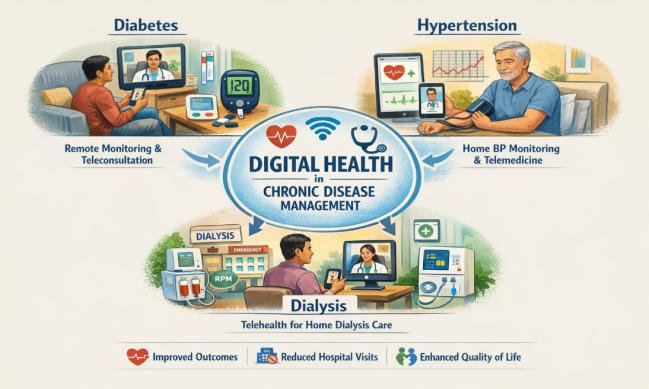
Video-based telehealth dialysis examines the use of video -based telemedicine in patients for kidney disease care. Video-assisted peritoneal dialysis decreased dropout rates and improved enrolment in home dialysis programs. This came into the hospital with a low emergency visit and entry into the hospital, as well as the patient's confidence, authority and freedom with the patients who received video-based care (28).
Telemedicine in Healthcare Delivery
Telemedicine, to put it simply, is medicine at a distance because the prefix "tele" is derived from the Greek term meaning "at a distance" (27). Therefore, it encompasses all medical interventions, including illness diagnosis, treatment, and prevention; continuous patient and healthcare professional education; and research and assessment. The use of telecommunications technologies to deliver medical information and treatments is known as telemedicine. A wide range of therapeutic applications and technologies are included in telemedicine (28). What distinguishes telemedicine is the use of electrical signals to transfer data between locations. Telemedicine systems can be defined by the type of information provided (e.g., radiography or clinical data) and the mode of communication. In order to increase access and cost-effectiveness in both developed and developing countries, it seeks to solve time, distance, and difficult terrain challenges that impede the delivery of health care. It serves a special use during emergencies like earthquakes and floods (29).
The World Health Organization (WHO) states that the provision of healthcare services, where distance is a crucial factor, by all healthcare professionals using information and communication technologies for the exchange of reliable information for the diagnosis, treatment, and prevention of disease and injuries, research and evaluation, and for the continuing education of healthcare providers, all in the interests of improving the health of individuals and their communities. For people who would prefer not to waste their time waiting in a doctor's office, telemedicine may provide an alternative. In certain situations, like stroke, it cannot replace the prompt initiation of treatment for the patient at a distant location (30).
Although it is primarily concentrated on assessing particular medical technologies or procedures, it is predicated on a similar set of assumptions as programs. In particular, before novel medical procedures and technologies are authorized for routine professional or consumer use, their efficacy and safety must be determined. On the other hand, telemedicine, telehealth, and e-health conceptually and practically incorporate aspects of health programs and associated medical or health therapies (31). If help is more readily accessible, patients will get the right care the first time. This has other benefits, such as reduced average recovery times, less unneeded drug prescriptions, and lower costs for patients and hospitals. Self-help will expand as a result of the abundance of online medical information. Patients who are more informed may make fewer needless medical visits (32).
Patients in both urban and rural settings can now access healthcare when they need it because to telemedicine. This also provides access to care for people who may not have access to transportation or who may be too sick to travel long distances. For some patients, including those with cystic fibrosis, who are afraid of contracting antibiotic-resistant bacteria and do not want to go to the hospital, a virtual office visit may be a safe option. Telemedicine was essential to the administration of medical services during COVID-19 (33).
Role of Artificial Intelligence in Healthcare
Artificial intelligence (AI) and data analytics is the base of digital health potential and advancement they play a major role in telemedicine services, remote patient monitoring (RPM) and adds the healthcare system. Through the intelligent processing of complex and large data, AI provide support to in clinical decision-making, predictive healthcare along with the personalized care. The transition from conventional, reactive healthcare to proactive, predictive, and precision-based treatment has been expedited by the convergence of artificial intelligence (AI), machine learning (ML), and big data analytics (34).
In healthcare, AI is mainly used through machine learning, deep learning and natural language processing techniques. These technologies analyse large amounts of structured and unstructured health data generated from electronic health records (EHR), medical imaging, wearable devices and RPM systems. Many studies have shown that AI increases diagnostic accuracy and clinical efficiency (35). For example, deep learning algorithms have achieved performance equal to or even better than physicians in medical imaging applications such as dermatology, radiology, and pathology. Within digital health systems, AI supports the automation of routine tasks, reduces the workload of doctors and enables the timely identification of clinical risks. AI improves the quality and efficiency of virtual consultations by supporting triage, diagnosis and clinical decision-making. AI-powered chatbots and virtual assistants are increasingly being used for initial symptom assessment, appointment scheduling and patient education (36).
| S.N. | Area of work | Key Technologies Used | Outcomes | References |
|---|---|---|---|---|
| 1 | Artificial Intelligence in Healthcare | Machine Learning (ML), Deep Learning (DL), Natural Language Processing (NLP) | Increased diagnostic accuracy, improved clinical efficiency, automation of routine tasks, reduced physician workload | (38) |
| 2 | AI in Medical Imaging | Deep Learning Algorithms | Performance equal to or better than physicians in some diagnostic tasks | (39) |
| 3 | AI in Telemedicine & Virtual Care | AI Chatbots, Virtual Assistants, Clinical Decision Support Systems (CDSS) | Faster diagnosis, improved workflow, reduced delays, increased patient satisfaction | (40) |
| 4 | AI in Remote Patient Monitoring (RPM) | Machine Learning Algorithms, Predictive Analytics | Early detection of clinical deterioration, personalized monitoring, reduced hospitalization | (41) |
| 5 | Population Health Management | AI-Based Surveillance Systems, Data Analytics Platforms | Disease prevention, targeted interventions, improved public health outcomes | (42) |
| 6 | Public Health Applications (COVID-19 Example) | AI-powered Data Analytics | Improved pandemic response, efficient resource allocation | (43) |
The role of AI and data analytics in digital health is expected to increase with advances in computing power, connectivity and data integration. Future digital health systems will increasingly rely on AI-powered automation, real-time analytics and interoperable platforms to deliver intelligent, patient-centric care. Continued research, ethical oversight and policy support will be necessary to fully realize the transformational potential of AI in healthcare. AI can help provide better diagnoses and access to healthcare services; however, before AI can be widely used, there are some significant challenges that need to be addressed, such as algorithmic bias, lack of transparency, and concerns over data privacy. Also, poor-quality data will result in poor-quality clinical decisions, because the algorithms depend on the quality of the data provided. Thus, while AI is very valuable in providing telemedicine, it should be a supplement rather than a replacement for a physician's clinical judgment (37).
Benefits of Digital Transformation in Healthcare
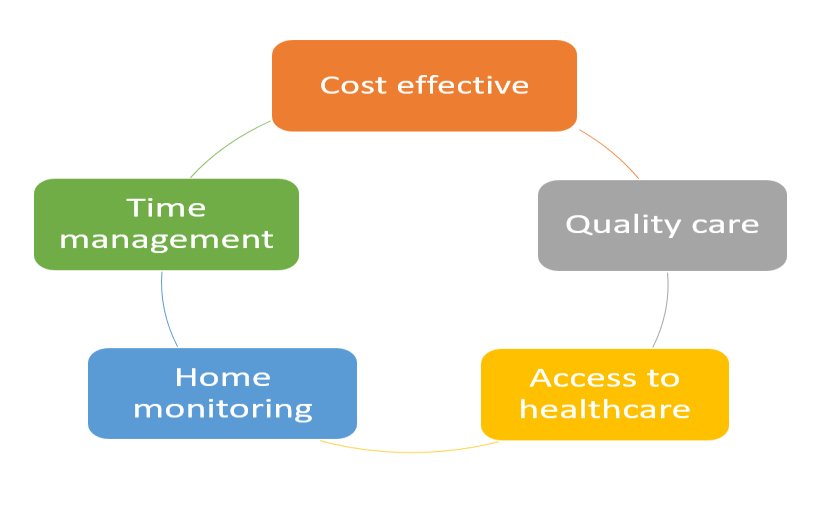
Numerous benefits of digital health demonstrate its promise during pandemics for both patients and clinicians, including cost savings, accessibility, and safety for both parties. It makes it easier for health care practitioners to stay current on patient and case-related data by improving access to information through electronic search engines like PUBMED, MEDLERS, and others. Due to local shortages and the availability of specialized supervision, the Norwegian government created a nationwide telemedicine network and program in the 1980s to give people of isolated and rural areas an alternative to traveling great distances (44).
- The digital transformation offers a better access to information it includes health care services transmission through using audio and video technology and provide a management that can provide the frequent coverage (45).
- The planning for quality management of treatment and lower cost of healthcare. Its focus towards providing faster access to healthcare professionals and provide a time saving approach (46).
- It offers advantage in accessing the healthcare services at home it helps in treatment of the mental and physical needs of the chronically ills and elders. It also improves the life quality and offers reduction in cost by ignoring prolong stays in hospitals.
- Emergency specialist support is offered by various applications, for example video links established at sea, in aircrafts offering prevention in disasters. Accident and emergency (A&E) department permits links and connections with the surgeons and other medical specialists (47).
- Digital health enhances the availability to the primary care and offering strength to primary cares and access to hospitals may improve with more exposure to competent. It also shows its potential in increasing access inside and between hospitals (48).
- It provides ideal tools and services to measure weight, food intake, blood pressure, temperature, heart rate, and blood sugar levels either manual means or through the wearable device, and sending data and information to the doctor (49).
- Spending a lot of time in the waiting room, scheduling transportation, or wasting time off from work are rarely necessary. Telehealth makes it simple to schedule appointments at times that are more convenient for patients, which lowers the total amount of time needed to see a doctor (50).
Challenges and Barriers
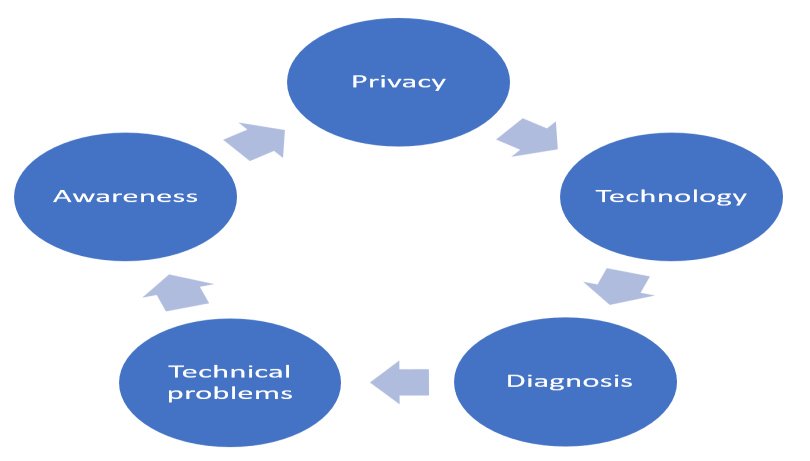
Due of its potential benefits, telemedicine has transformed healthcare and made a variety of medical services available in faraway locations. Unawareness or lack of knowledge regarding the potential and safety concerns of telemedicine in the current evolving environment is one of the constraints that have been found. It is believed that cultural opposition and high costs are the two main barriers to telemedicine utilization in developing countries. Developing countries must realize that investments in telemedicine may not necessarily provide immediate financial or clinical benefits (51).
The lack of a physical examination is the main source of pain for patients using telemedicine, and they would much rather know and have a relationship with the medical consultants they are seeing. It demonstrates a dependence on technology, and remote locations should be subject to technology planning and management difficulties. At the system level, the difficulties make it more difficult to embrace telemedicine and integrate it with the current health care infrastructure, including electronic health records and workflows. To overcome these challenges, authorities, healthcare facilities, and technology providers must work together to enhance digital and health competencies, expand the infrastructure, and establish precise regulatory standards for telemedicine implementation (52, 53).
The several other drawbacks and barriers of the telemedicine are:
- The relationship between the patient and the doctor will deteriorate as a result of consultations; the quality of communication between the two parties has decreased due to the widespread usage of telephones. In certain situations, the patient feels uncomfortable discussing the issue during the virtual conference, which strains their relationship and affects the course of treatment (54).
- Hospitals may face challenges when implementing digital health in the areas of infrastructure development and design, regulations, and medical malpractice liability. The primary barriers to digital health implementation in Saudi Arabian institutions are funding and infrastructure (55).
- The major drawback that arises is the confidentiality, as there is a high chance of the increased risk of access to patient information by unauthorized sources comparing it with information in written form in paper.
- The quality of easily accessible medical information on the internet is another problem, and medical professionals may find that using m-health or mobile health services to track symptoms can be expensive (56).
- The inability to conduct a comprehensive consultation because video links may be adequate for a full physical examination is another drawback that may result from the use of digital health (57).
- Patients suffering from the problem of vision or have reduced hearing condition may develop some physical or mental factors that may causes difficulty in teleconsultation and the information shared through video link, text and sign languages are not properly carried.
- Lack of reimbursement has also become an issue with adopting digital health since funding may only cover a portion of the telemedicine's components, as many must be completed in practice (58).
Future Directions
Future research must be directed to develop telemedicine implementation standards, with the goal of developing consensus on how to deliver care. Ethical issues have also become one of the top priorities of telemedicine research (e.g. data protection and privacy; security of patient data; and algorithmic discrimination in AI applications). In addition to developing additional infrastructure and increasing access to technology in low- and middle-income regions, it will also be essential to evaluate potential differences between the delivery of care in these various regions and populations. Furthermore, additional research will need to evaluate the quality of care provided through digital health interventions over longer time periods, including safety, efficacy, and cost differences across all populations.
Conclusion
Innovations in digital health technologies - remote patient monitoring (RPM), telemedicine (TM), and AI - have a significant impact on providing patients with more available, easier-to-use, and patient-centred health care. Though there are many studies demonstrating these digital technologies improve chronic disease management and healthcare access, there continues to be barriers to adoption (e.g., implementation infrastructure limitations, individuals’ lack of digital literacy/training, regulatory issues, and data security concerns). By creating a model that allows the use of innovations alongside traditional healthcare delivery methods, the maximum benefit will be achieved. As digital technology advances and policies/regulations supporting their use are developed, digital health will continue to be a foundation for developing an internationally equitable and sustainable healthcare system.
Acknowledgements
The authors would like to express their sincere gratitude to their respective institutions and colleagues for their support and encouragement during the preparation of this review article. The authors also acknowledge the researchers whose published work contributed to the development of this manuscript.
Conflict of Interest
The authors declare that there are no conflicts of interest regarding the publication of this manuscript.
Funding
This review received no specific grant from any funding agency in the public, commercial, or not-for-profit sectors.
Data Availability
No new data were generated or analyzed in this study. Data sharing does not apply to this article as it is based on previously published literature.
Ethics Approval
Ethical approval was not required for this study because it is a review article and does not involve human participants, animals, or primary experimental data.
References
- Digital health: from remote monitoring to remote care. J Card Fail. 2025;31(2):489-491.
- Remote patient monitoring: a promising digital health frontier. Proc Int Conf Inf Digit Technol (IDT). IEEE; 2021:297-302.
- Telemedicine and remote patient monitoring. JAMA. 2002;288(4):423-425.
- Remote patient monitoring via non-invasive digital technologies: a systematic review. Telemed J E Health. 2017;23(1):3-17.
- Telehealth and remote patient monitoring after the COVID pandemic. Pediatr Allergy Immunol Pulmonol. 2021;34(4):130-131.
- Telemedicine technologies: information technologies in medicine and digital health. Hoboken: John Wiley & Sons; 2020.
- Remote patient monitoring and telehealth: the future of cardiac care. Int J Eng Technol Res Manag. 2024;8(6).
- Effective remote healthcare and telemedicine approaches for improving digital healthcare systems. Digital health transformation with blockchain and artificial intelligence. Boca Raton: CRC Press; 2022:273-297.
- The impact of telemedicine and remote patient monitoring on healthcare delivery: a comprehensive evaluation. Cureus. 2024;16(3).
- Blockchain and artificial intelligence in telemedicine and remote patient monitoring. Handbook on Augmenting Telehealth Services. 2024;30:279-94.
- Transforming telehealth with artificial intelligence: predictive and diagnostic advances in remote patient care. World J Adv Eng Technol Sci. 2025;16(1):355-365.
- Current challenges and potential solutions to the use of digital health technologies in evidence generation: a narrative review. Front Digit Health. 2023;5:1203945.
- Exploring the revolution in healthcare systems through the applications of digital twin technology. Biomed Technol. 2023;4:28-38.
- Digital health interventions to support chronic disease management: systematic scoping review. JMIR mHealth uHealth. 2026;14:e63742.
- Telehealth: mapping the evidence for patient outcomes from systematic reviews. .
- The effectiveness of mobile-health technology-based health behaviour change or disease management interventions: a systematic review. PLoS Med. 2013;10(1):e1001362.
- Structured telephone support or non-invasive telemonitoring for patients with heart failure. Cochrane Database Syst Rev. 2015(10).
- The rise of consumer health wearables: promises and barriers. PLoS Med. 2016;13(2):e1001953.
- Global burden of disease: a bibliometric analysis. Int J Health Manag Tour. 2019;4(3):237-249.
- Economic cost of chronic disease in Canada. Ontario: Ontario Chronic Disease Prevention Alliance; 2007.
- An unhealthy America: the economic burden of chronic disease. Santa Monica: Milken Institute; 2007.
- Current status and future perspectives in telecare for elderly people suffering from chronic diseases. J Telemed Telecare. 2008;14(4):195-203.
- Revolutionizing healthcare: how telemedicine is improving patient outcomes. Cureus. 2024;16(7).
- Association of glycaemia with macrovascular and microvascular complications of type 2 diabetes (UKPDS 35): prospective observational study. BMJ. 2000;321(7258):405-412.
- The role of telemedicine in hypertension management. Curr Hypertens Rep. 2015;17(4):21.
- 2017 ACC/AHA guideline for the prevention, detection, evaluation, and management of high blood pressure in adults. Hypertension. 2018;71(6):e13-e115.
- The role of telemedicine in kidney transplantation. Kidney360. 2020;1(5):420-423.
- Video-based telemedicine for kidney disease care. Clin J Am Soc Nephrol. 2021;16(12):1813-1823.
- Telemedicine and e-health in disaster response. Telemed J E Health. 2014;20(7):605-606.
- Telemedicine and virtual consultation: the Indian perspective. Natl Med J India. 2018;31(4).
- Telemedicine, telehealth, and mobile health applications. Am J Med. 2014;127(3):183-187.
- Telemedicine evaluation. Telemed J E Health. 2005;11(3):296-316.
- Telemedicine—an innovating healthcare system in India. Pharma Innov. 2013;2(4):1.
- Telemedicine and artificial intelligence in diabetic retinopathy. Ophthalmol Ther. 2021;10(3):445-464.
- Role of artificial intelligence within telehealth. Yearb Med Inform. 2019;28(1):35-40.
- Trends in telemedicine utilizing artificial intelligence. AIP Conf Proc. 2018;1933(1).
- Emerging trends in telemedicine. Int J Life Sci Res Arch. 2024;6(1):137-147.
- High-performance medicine: convergence of human and AI. Nat Med. 2019;25(1):44-56.
- Dermatologist-level classification of skin cancer with deep neural networks. Nature. 2017;542(7639):115-118.
- Chatbots in the fight against COVID-19. NPJ Digit Med. 2020;3(1):65.
- Machine learning in cardiovascular medicine. Heart. 2018;104(14):1156-1164.
- Artificial intelligence in healthcare. Stroke Vasc Neurol. 2017;2(4).
- Prediction models for COVID-19 diagnosis. BMJ. 2020;369.
- Telemedicine acceptance in developing countries. Razavi Int J Med. 2016;4(3).
- Telepsychiatry: tele yes, but what about psychiatry?. J Telemed Telecare. 1997;3(Suppl 1):3-5.
- Benefits of home telecare. J Telemed Telecare. 2007;13(4):172-179.
- Smart home technology for telemedicine. J Ambient Intell Humaniz Comput. 2013;4:535-546.
- Wearable sensing and telehealth technology. IEEE Rev Biomed Eng. 2020;14:48-70.
- Advancements in medical education: emerging aspects and innovations. Preventive Medicine. Theory and Practice. 2024;2(6):25-31.
- Evaluation of telemedicine perception in India. J Fam Med Prim Care. 2016;5(4):798-803.
- Service quality of telemedicine consultation. Telemed J E Health. 2023;29(2):156-171.
- Ethical and legal challenges in telemedicine. Telemed J E Health. 2020;26(12):1427-1437.
- Digital transformation in healthcare. Int J Environ Res Public Health. 2023;20(4):3407.
- Provider perceptions of patient care in telemedicine. Michigan State University; 2024.
- Barriers in Saudi telemedicine network. J Infect Public Health. 2016;9(6):725-733.
- Mobile health in remote monitoring. Diagnostics. 2021;11(4):607.
- The rise of AI in telehealth. Emerging practices in telehealth. 2023:183-207.
- Equitable access to telehealth. Health Equity. 2023;7(1):126-136.
References
References
- Digital health: from remote monitoring to remote care. J Card Fail. 2025;31(2):489-491.
- Remote patient monitoring: a promising digital health frontier. Proc Int Conf Inf Digit Technol (IDT). IEEE; 2021:297-302.
- Telemedicine and remote patient monitoring. JAMA. 2002;288(4):423-425.
- Remote patient monitoring via non-invasive digital technologies: a systematic review. Telemed J E Health. 2017;23(1):3-17.
- Telehealth and remote patient monitoring after the COVID pandemic. Pediatr Allergy Immunol Pulmonol. 2021;34(4):130-131.
- Telemedicine technologies: information technologies in medicine and digital health. Hoboken: John Wiley & Sons; 2020.
- Remote patient monitoring and telehealth: the future of cardiac care. Int J Eng Technol Res Manag. 2024;8(6).
- Effective remote healthcare and telemedicine approaches for improving digital healthcare systems. Digital health transformation with blockchain and artificial intelligence. Boca Raton: CRC Press; 2022:273-297.
- The impact of telemedicine and remote patient monitoring on healthcare delivery: a comprehensive evaluation. Cureus. 2024;16(3).
- Blockchain and artificial intelligence in telemedicine and remote patient monitoring. Handbook on Augmenting Telehealth Services. 2024;30:279-94.
- Transforming telehealth with artificial intelligence: predictive and diagnostic advances in remote patient care. World J Adv Eng Technol Sci. 2025;16(1):355-365.
- Current challenges and potential solutions to the use of digital health technologies in evidence generation: a narrative review. Front Digit Health. 2023;5:1203945.
- Exploring the revolution in healthcare systems through the applications of digital twin technology. Biomed Technol. 2023;4:28-38.
- Digital health interventions to support chronic disease management: systematic scoping review. JMIR mHealth uHealth. 2026;14:e63742.
- Telehealth: mapping the evidence for patient outcomes from systematic reviews. .
- The effectiveness of mobile-health technology-based health behaviour change or disease management interventions: a systematic review. PLoS Med. 2013;10(1):e1001362.
- Structured telephone support or non-invasive telemonitoring for patients with heart failure. Cochrane Database Syst Rev. 2015(10).
- The rise of consumer health wearables: promises and barriers. PLoS Med. 2016;13(2):e1001953.
- Global burden of disease: a bibliometric analysis. Int J Health Manag Tour. 2019;4(3):237-249.
- Economic cost of chronic disease in Canada. Ontario: Ontario Chronic Disease Prevention Alliance; 2007.
- An unhealthy America: the economic burden of chronic disease. Santa Monica: Milken Institute; 2007.
- Current status and future perspectives in telecare for elderly people suffering from chronic diseases. J Telemed Telecare. 2008;14(4):195-203.
- Revolutionizing healthcare: how telemedicine is improving patient outcomes. Cureus. 2024;16(7).
- Association of glycaemia with macrovascular and microvascular complications of type 2 diabetes (UKPDS 35): prospective observational study. BMJ. 2000;321(7258):405-412.
- The role of telemedicine in hypertension management. Curr Hypertens Rep. 2015;17(4):21.
- 2017 ACC/AHA guideline for the prevention, detection, evaluation, and management of high blood pressure in adults. Hypertension. 2018;71(6):e13-e115.
- The role of telemedicine in kidney transplantation. Kidney360. 2020;1(5):420-423.
- Video-based telemedicine for kidney disease care. Clin J Am Soc Nephrol. 2021;16(12):1813-1823.
- Telemedicine and e-health in disaster response. Telemed J E Health. 2014;20(7):605-606.
- Telemedicine and virtual consultation: the Indian perspective. Natl Med J India. 2018;31(4).
- Telemedicine, telehealth, and mobile health applications. Am J Med. 2014;127(3):183-187.
- Telemedicine evaluation. Telemed J E Health. 2005;11(3):296-316.
- Telemedicine—an innovating healthcare system in India. Pharma Innov. 2013;2(4):1.
- Telemedicine and artificial intelligence in diabetic retinopathy. Ophthalmol Ther. 2021;10(3):445-464.
- Role of artificial intelligence within telehealth. Yearb Med Inform. 2019;28(1):35-40.
- Trends in telemedicine utilizing artificial intelligence. AIP Conf Proc. 2018;1933(1).
- Emerging trends in telemedicine. Int J Life Sci Res Arch. 2024;6(1):137-147.
- High-performance medicine: convergence of human and AI. Nat Med. 2019;25(1):44-56.
- Dermatologist-level classification of skin cancer with deep neural networks. Nature. 2017;542(7639):115-118.
- Chatbots in the fight against COVID-19. NPJ Digit Med. 2020;3(1):65.
- Machine learning in cardiovascular medicine. Heart. 2018;104(14):1156-1164.
- Artificial intelligence in healthcare. Stroke Vasc Neurol. 2017;2(4).
- Prediction models for COVID-19 diagnosis. BMJ. 2020;369.
- Telemedicine acceptance in developing countries. Razavi Int J Med. 2016;4(3).
- Telepsychiatry: tele yes, but what about psychiatry?. J Telemed Telecare. 1997;3(Suppl 1):3-5.
- Benefits of home telecare. J Telemed Telecare. 2007;13(4):172-179.
- Smart home technology for telemedicine. J Ambient Intell Humaniz Comput. 2013;4:535-546.
- Wearable sensing and telehealth technology. IEEE Rev Biomed Eng. 2020;14:48-70.
- Advancements in medical education: emerging aspects and innovations. Preventive Medicine. Theory and Practice. 2024;2(6):25-31.
- Evaluation of telemedicine perception in India. J Fam Med Prim Care. 2016;5(4):798-803.
- Service quality of telemedicine consultation. Telemed J E Health. 2023;29(2):156-171.
- Ethical and legal challenges in telemedicine. Telemed J E Health. 2020;26(12):1427-1437.
- Digital transformation in healthcare. Int J Environ Res Public Health. 2023;20(4):3407.
- Provider perceptions of patient care in telemedicine. Michigan State University; 2024.
- Barriers in Saudi telemedicine network. J Infect Public Health. 2016;9(6):725-733.
- Mobile health in remote monitoring. Diagnostics. 2021;11(4):607.
- The rise of AI in telehealth. Emerging practices in telehealth. 2023:183-207.
- Equitable access to telehealth. Health Equity. 2023;7(1):126-136.
Downloads

This work is licensed under a Creative Commons Attribution 4.0 International License.
Copyright (c) 2026 Shivansh Pathak, Sakshi Shukla, Rajesh Kushwaha, Talib Quraishi, Pratik Kumar Vishwakarma
License terms
-
Attribution — You must give appropriate credit, provide a link to the license, and indicate if changes were made. You may do so in any reasonable manner, but not in any way that suggests the licensor endorses you or your use.
- No additional restrictions — You may not apply legal terms or technological measures that legally restrict others from doing anything the license permits.