
Antibacterial, Acute Toxicity and Histological Study of Dodonaea viscosa, Eucalyptus camaldulencis and Senna siamae: Ethnobotanical Plants for Typhoid Fever in Kano State, Nigeria
Department of Biology, Aliko Dangote University of Science and Technology, Wudil, Kano State, Nigeria
Correspondence: Sakina Sani Buhari, sakinasanibuhari@yahoo.com
- Received
- Revised
- Accepted
- Published
Abstract
This study evaluated the antibacterial activity, acute toxicity, and histological effects of Eucalyptus camaldulensis, Dodonaea viscosa, and Senna siamae, three ethnobotanical plants traditionally used to treat typhoid fever in Kano State, Nigeria. Antibacterial activity against Salmonella typhi was assessed using the agar well diffusion method, followed by determination of minimum inhibitory concentration (MIC) and minimum bactericidal concentration (MBC). Acute toxicity was evaluated using a single oral limit dose of 5000 mg/kg in mice, and histological assessment of the liver, kidney, and heart was performed using hematoxylin-eosin staining. At 100 mg/ml, E. camaldulensis exhibited the largest inhibition zone (20.3 ± 2.52 mm), followed by S. siamae (15.0 ± 0.00 mm) and D. viscosa (13.0 ± 0.00 mm) which showed a statistically significant (p < 0.05) with the control. MIC and MBC values confirmed that E. camaldulensis had the highest antibacterial potency (MIC 6.25 mg/ml; MBC 12.5 mg/ml), whereas D. viscosa and S. siamae showed MIC 12.5 mg/ml and MBC 25 mg/ml. Acute toxicity assessment revealed no mortality at 5000 mg/kg for all the extracts (LD50 > 5000 mg/kg). Histological evaluation showed normal heart tissues in all the tested groups, normal liver and kidney tissues in E. camaldulensis and S. siamae-treated mice, but slight tubular necrosis in the kidney and minimal hepatic necrosis in the liver of D. viscosa-treated mice. Lesions were graded as minimal and observed in 1 out of 3 mice per group.
Introduction
Typhoid fever, caused by Salmonella typhi, remains a significant public health concern in many developing countries, including Nigeria, where it contributes to high morbidity and economic burden (1). The emergence of multidrug-resistant Salmonella strains has reduced the efficacy of conventional antibiotics, underscoring the need for alternative therapeutic agents (2).
Ethnobotanical knowledge provides a valuable source of potential antibacterial agents. In Kano State, Nigeria, medicinal plants such as Eucalyptus camaldulensis, Dodonaea viscosa, and Senna siamae are traditionally used for the treatment of typhoid fever (2).
Eucalyptus camaldulensis (Family Myrtaceae) commonly known as eucalyptus or river red gum is a fast-growing tree native to Australia but widely distributed across tropical and sub-tropical regions including Africa, Asia and the middle east (4). In northern part of Nigeria, it is referred to as ‘Bishiyar turare or Dogon Yaro’. The plant has gained attention in medicinal plant research due it’s wide range of traditional uses. The parts of the plant especially the leaves have been used in folk medicine to treat respiratory infections, remedy for sore throat (5,6). Phytochemical studies revealed that E. camalduensis contains essential compounds such as flavonoids, tannins, terpenoids, and phenolic compounds which contribute to its antibacterial, antioxidant, anti-inflammatory and antifungal activities (7,8).
Dodonaea viscosa (Family Sapindaceae) commonly known as hopbush, is a hardy shrub widely distributed in tropical and sub-tropical regions in Africa, Asia, Australia and the Americas (9). Traditionally, various cultures used D.viscosa for the treatment of ailments including inflammation, wound, typhoid fever, malaria, diarrhea, rheumatism and respiratory disorders (10,11,3). Phytochemicals studies have that D.viscosa contains flavonoids, saponins, tannins, terpenoids and phenolic compounds, which are responsible for its broad-spectrum pharmacological activities such as antibacterial, antioxidant, ant-inflammatory and antifungal activities (12,11).
Senna siamae (Family fabaceae) commonly known as Cassia siamae, Siamese senna or cassod tree, is a tropical tree native to southeast Asia and widely cultivated in Africa and South Asia. In traditional medicine, S. siamae has been used to treat malaria, typhoid, pile, fever, constipation, insomnia, diabetes mellitus and hypertension (13,3) Phytochemical analysis showed that S. siamae contains flavonoids, alkaloids, anthroquinones, tannins and saponins, which are responsible for its antimalarial, antioxidant and antibacterial activities ( 13, 14).
This study therefore aimed to evaluate the antibacterial activity of ethanolic leaf extracts of E. camaldulensis, D. viscosa, and S. siamae against S. typhi and to assess acute toxicity and histopathological effects in mice so as to provide evidence-based guidance for their safe ethnomedical use.
Materials and Methods
Collection and extraction of plant materials
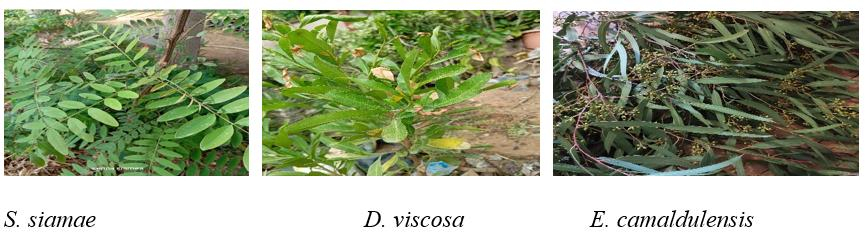
Fresh leaves of Eucalyptus camaldulensis, Senna siamae and Dodonaea viscosa were collected from commercial botanical garden at Tarauni local government area of Kano State. The samples were taken to the herbarium of the department of plant Biology, Bayero University Kano for identification. The selected plant materials were assigned voucher numbers BUKHAN 347 for Eucalyptus camaldulensis. BUKHAN 70 for Senna siamae and BUKHAN 118 for Dodonaea viscosa.
The leaves of the selected plants were properly washed in distilled water and dried under shade for 7 days. Fifty grams (50g) of the pulverized plant materials were macerated in 500ml of ethanol over a period of 72 hours with intermittent shaking. The mixtures were filtered using No.1 Whatman filter paper (15). The filtrates were concentrated using rotary evaporator at reduced temperature and pressure. It was further concentrated using water bath at 50oC. The crude ethanolic extracts were stored in the air tight container at room ready for the analysis.
Antibacterial activity assay
The antibacterial activity of Eucalyptus camaldulensis, Dodonaea viscosa, and Senna siamae crude ethanolic extracts against Salmonella typhi was assessed using the agar well diffusion method, as previously described (16). Briefly, 0.2 ml of standardized bacterial inoculum (107 CFU/ml) was spread on Mueller-Hinton Agar plates. Wells of 6 mm diameter were filled with extract concentrations of 6.25, 12.5, 25, 50, and 100 mg/ml. Ciprofloxacin served as a positive control. Plates were incubated at 37°C for 24 h, and inhibition zone diameters (IZD) were measured to the nearest millimeter
The minimum inhibitory concentration (MIC) of the extracts was determined using the broth dilution technique. For this quantitative assay, a maximum starting concentration of 50 mg/ml was selected to ensure adequate solubility and to allow reliable visual assessment of bacterial growth in liquid medium. Two-fold serial dilutions were prepared to obtain concentrations of 50, 25, 12.5, 6.25 and 3.125 mg/ml in nutrient broth. A test tube without extract served as the negative control. Each tube was inoculated with 0.5 ml of a 0.5 McFarland standard suspension of S. typhi and incubated at 37 °C for 24 hours. The MIC was defined as the lowest concentration of the extract that showed no visible turbidity.
The minimum bactericidal concentration (MBC) was determined as described by (13). Aliquots (0.1 ml) from MIC tubes that showed no visible growth were sub-cultured onto fresh Mueller–Hinton agar plates and incubated at 37 °C for 24 hours.
Acute toxicity study
The acute toxicity study was conducted using a modified OECD Guideline 420 Fixed-Dose Procedure as described by (17). Female mice (7 weeks old, 19–30 g) were selected for the experimentation due to their suitability for preliminary toxicity screening, lower compound requirements, and reduced cost, while acknowledging that species differences may influence toxicity outcomes compared to rats.
Mice were fasted overnight prior to dosing. Each extract (Eucalyptus camaldulensis, Dodonaea viscosa, and Senna siamae) was administered orally at a single limit dose of 5000 mg/kg to groups of three mice, while the control group received distilled water. Mice were monitored for 5 days for signs of toxicity, including tremors, convulsions, salivation, lethargy, and changes in body weight. Body weights were recorded daily to detect potential extract-induced effects. No mortality within this period indicated an LD50 >5000 mg/kg. Following the observation period, mice were sacrificed for histopathological evaluation of target organs.
Histology study
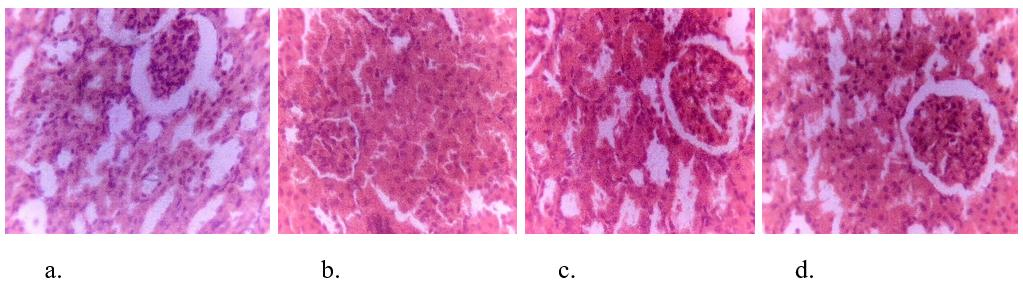
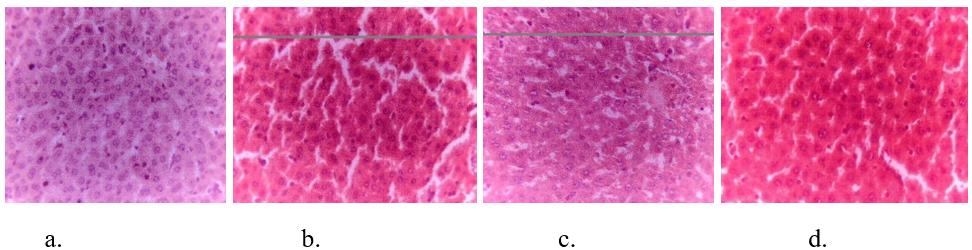
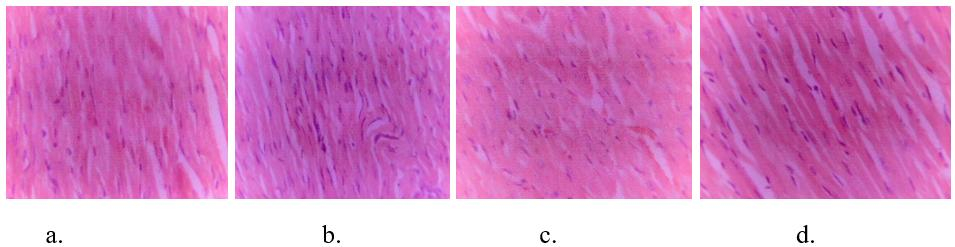
Histological investigation of the liver, Kidney and Heart were performed according to the method described by (18). After sacrificing the mice, parts of the liver, kidney and heart tissues were collected for histological studies. The tissues were washed in normal saline and fixed in 10% neutral formalin fixative followed by dehydration in ascending grades of alcohol, clearing in xylene and embedded in paraffin wax. Paraffin sections (5μm thickness) were stained with hematoxylin-eosin (H and E) and examined under a light microscope at a magnification of ×400 (Leica Buffalo, N.Y. 14240 U.S.A. Model CME Microscope 220–240 VAC 50/60Hz).
Statistical analysis
Descriptive statistics were expressed as Mean ± SEM. To substantiate comparative claims regarding antibacterial efficacy, one-way Analysis of Variance (ANOVA) was applied to IZD data across all concentrations of the plant extracts. Post hoc comparisons were performed using Tukey’s Honestly Significant Difference (HSD) test to determine statistically significant differences between groups (p < 0.05).
Results and Discussion
Antibacterial assay
The result of the antibacterial activity of the selected plants crude extracts against Salmonella typhi by agar well diffusion method was depicted in table 1.
| Plant extract | Concentration (mg/ml) / Zone of inhibition (mm) | |||||
|---|---|---|---|---|---|---|
| 100 | 50 | 25 | 12.5 | 6.25 | Control | |
| D. Viscosa | 13.0±0.00b | 12.0±0.00b | 12.0±1.15b | 12.5±7.25c | 0.0±0.00d | 23.5±0.58a |
| E. camaldulensis | 20.3±2.52b | 17.7±0.58b | 16.7±1.53b | 14.7±1.15c | 13.0±1.00c | 23.0±1.00a |
| S. siamae | 15.0±0.00b | 13.7±1.53b | 12.0±0.00c | 12.7±2.08c | 7.7±6.66d | 22.67±1.1a |
Data given are means of three replicates ± standard deviation. Across the raws, different superscript letters indicate statistically significant differences in the HSD test, with (P˂ 0.05).
Interestingly, all the plants were found to have effect at almost all the concentrations. D. viscosa has the highest activity of 13.0±0.00mm at a concentration of 100mg/ml and lowest activity of 12.5±7.25mm at 12.5mg/ml, no activity was seen at 6.25mg/ml. this is in contrast to the study of (19) where the ethanolic crude extract of D. viscosa did not show activity against S.typhi using agar well diffusion method, the activity was only seen in the ethyle acetate and n-butanol fractions of the extract. This may be due to some differences in the extraction procedures that may prevent the extraction of the compounds that are responsible for the activity in the extract. In a report by (16) a crude methanol extract of D. viscosa exhibit activity against S. typhi.
In S. siamae, activity of 15.0±0.00mm was observed at a concentration of 100mg/ml which is the highest and lowest activity of 7.7±6.66mm was observed at 6.25mg/ml. similar activity of 17.20±0.20mm at 100mg/ml was observed in a research by (13) using the same agar well diffusion method and their research also confirm the antibacterial activity of S. siamae against E.coli, K. pneumoniae and P. aeruginosa. This showed that the antibacterial activity of S. siamae is not limited against S. typhi but also other pathogenic bacteria.
Similarly, for E. camaldulensis all the concentrations were having activity against the tested organism, highest activity of 20.3±2.52mm was observed at 100mg/ml and lowest activity of 13.0±1.00mm was observed at 6.25mg/ml. This is confirmed in a study by (5) where the methanol leaf extract of E.camaldulensis showed antibacterial activity against S.typhi. This is also in accordance to the report by (6) where both the methanol and ethanol extracts of leaf E.camaldulensis exhibit activity against Salmonella typhi, Salmonella paratyphi A and Salmonella paratyphi B at a concentration between 30 mg/ml to 120 mg/ml.
Generally, our study showed that all the three extracts demonstrated dose-dependent activity against S. typhi, with higher concentrations producing larger inhibition zone diameter (IZD) which showed a statistically significant different (p < 0.05) with the control. Although the agar well diffusion assay showed variability—particularly for D. viscosa (12.5 ± 7.25 mm) and S. siamae (7.7 ± 6.66 mm)—this is expected due to the semi-quantitative nature of the method, which is sensitive to diffusion rates, inoculum density, and agar properties. Consequently, MIC and MBC provide a more reliable quantitative assessment of antibacterial efficacy
The MIC and MBC values are summarized in Table 2. lower MIC and MBC values correspond to higher antibacterial activity because smaller concentrations are sufficient to inhibit or kill the test organism (20). E. camaldulensis had the lowest MIC (6.25 mg/ml) and MBC (12.5 mg/ml), indicating the highest antibacterial potency. Both D. viscosa and S. siamae showed MIC values of 12.5 mg/ml and MBC values of 25 mg/ml. These results confirm that E. camaldulensis is the most potent of the three extracts against S. typhi.
| Plants extract | MIC (mg/ml) | MBC (mg/ml) |
|---|---|---|
| D. viscosa | 12.5 | 25 |
| E. camaldulensis | 6.25 | 12.5 |
| S. siamae | 12.5 | 25 |
Acute toxicity test
Oral administration of a single dose of 5000 mg/kg of each extract resulted in no mortality, indicating an LD50 > 5000 mg/kg. Body weight changes over the 5-day observation period were minimal and comparable to the control group (Table 3), suggesting low acute lethality for all extracts.
| Group (3 mice) | Drug administered (mg/kg b. wt.) | Mortality rate (5 days) | Body weight (g) | ||||
|---|---|---|---|---|---|---|---|
| Day 1 | Day 2 | Day 3 | Day 4 | Day 5 | |||
| Group1 (Control) | Distilled water | 0 | 19±0.00 | 20±1.00 | 22±1.15 | 21±1.15 | 24±1.00 |
| Group 2 | 5000 mg of ethanolic Extract of D.viscosa | 0 | 20±1.00 | 25±1.00 | 24±1.00 | 24±3.20 | 24±0.58 |
| Group 3 | 5000 mg of ethanolic extract of E. Camaldulensis | 0 | 20±1.00 | 22±1.15 | 21±1.15 | 23±3.06 | 26±2.31 |
| Group 4 | 5000 mg of ethanolic extract of S.siamae | 0 | 29±1.00 | 28±1.15 | 26±2.52 | 25±1.00 | 26±0.58 |
This is in line with the reports of previous research (21,22,17) that the LD50 values of ethanol extracts of the investigated plants in rats is greater than >5000 mg/kg b.w. However, research by (23) observed that D. viscosa possesses reproductive toxicity in Zebrafish. Therefore, its use and doses must be carefully monitored in pregnant patients.
Histology test
Histological examination of the liver, kidney, and heart revealed normal features for E. camaldulensis and S. siamae-treated mice, as well as in the control group. In D. viscosa-treated mice, minimal tubular necrosis was observed in the kidney and slight hepatic necrosis in the liver. Necrosis was graded using standardized pathology criteria (minimal = <10% of tissue affected), affecting 1out of 3 mice per group. Heart tissues in all groups showed normal histology (Figure 1–3). The extracts exhibit low acute lethality but possesses target organ toxicity at the limit dose as in the case of D. viscosa. This sub-lethal toxicity is a major safety flag for chronic traditional use and demands detailed risk assessment, similar to how stability issues in long-term drugs require comprehensive investigation.
Conclusion
In conclusion, our investigated plant extracts of D. viscosa, E. camaldulensis and S. siamae showed a promising potential antibacterial activity against Salmonella typhi at a concentration between 100mg/ml to 6.25mg/ml. The extracts appeared to have no or low acute toxicity as indicated by high oral median lethal dose (5000 mg/kg). Further toxicity study needs to be carried to confirm the safety of the extracts.
Contribution of authors
Sakina Sani Buhari carried out the research, interpreted the data and wrote the manuscript.
Acknowledgements
The author is thankful to Tertiary Education Trust Fund (TETFUND) for funding the work. A special thanks to Malam Aliyu Ahmed, a technologist in the Department of Pharmacology, Bayero University, Kano for assisting in acute toxicity study using mice.
Conflict of Interest
The author declared no conflict of interest.
Funding
Financial support was received from Tertiary Education Trust Fund (TETFUND).
Data Availability
The data supporting the findings of this study are available from the corresponding author upon request.
References
- Typhoid fever: tracking the trend in Nigeria. Am J Trop Med Hyg. 2018;99(3):41-47.
- Overcoming multidrug resistance in Salmonella spp. isolates obtained from the swine food chain by using essential oils: an in vitro study. Front Microbiol. 2022;12:808286.
- Kano State commercial botanical gardens: ethnobotanical survey of medicinal plants grown therein for the treatment of various human ailments. FUDMA J Sci. 2025;9(2):248-255.
- Eucalyptus camaldulensis for combating multidrug-resistant bacterial strains. Braz J Biol. 2024;84:e282826.
- The antibacterial activity of leaf extracts of Eucalyptus camaldulensis (Myrtaceae). J Appl Sci Res. 2008;4(11):1410-1413.
- In vitro antibacterial activity and toxicity study of Eucalyptus camaldulensis leaf extract against clinical isolates of Salmonella spp. Dutse J Pure Appl Sci. 2018;4(2):213-220.
- In vitro antibacterial activity of crude leaf extracts of Eucalyptus camaldulensis against some bacteria causing nosocomial infection. Afr J Microbiol Res. 2008;2(11):37-41.
- Eucalyptus camaldulensis: phytochemical composition of ethanolic and aqueous extracts of the leaves, stem bark, root, fruits and seeds. J Sci Innov. 2014;3(5):523-526.
- A review on the phytochemistry and pharmacological activities of some species from genus Dodonaea (Sapindaceae family). J Phytopharmacol. 2024;13(1):70-76.
- Phytochemical studies and biological activity of Dodonaea viscosa flowers extract. J Chem Pharm Res. 2015;7(5):109-116.
- Pharmacognostical and phytochemical studies of Dodonaea viscosa (L.) Jacq. (Sapindaceae). Int Res J Plant Sci. 2023;14(2):1-10.
- Phytochemical analysis of Dodonaea viscosa. Asian J Plant Sci Res. 2013;3(1):43-46.
- Antibacterial activity of Senna siamae. J Pharm Biol Sci. 2018;13(2):45-52.
- Antimicrobial activity and phytochemical screening of Cassia fistula and Senna siamae leaf extracts. Afr J Biotechnol. 2009;8(12):2450-2454.
- Phytochemical analysis and antioxidant potential of ethanol extracts of Anogeissus leiocarpus and Acacia nilotica. Biol Sci (Int J Med Pharm Life Sci). 2024;4(1):525-534.
- Phytochemical, antibacterial and antioxidant activities of Dodonaea viscosa Jacq. extracts cultivated in Iraq. Iraqi J Biotechnol. 2017;16(4):37-46.
- Acute toxicity studies of ethanolic extract of Eucalyptus camaldulensis Dehnh leaves. J Netw Commun Emerg Technol. 2015;2(2):1-6.
- Antioxidant, dermal and acute toxicological effects of Eucalyptus camaldulensis essential oil on male Wistar rats. J Phytomed Ther. 2022;21(2):891-905.
- Antibacterial activities of Dodonaea viscosa using contact bioautography technique. Molecules. 2009;14:1332-1341.
- Determination of antibacterial activity of five medicinal plants traditionally used for the treatment of diabetic foot infection in Kano State, Nigeria. Bayero J Pure Appl Sci. 2022;13(1):305-312.
- Anti-inflammatory activity and acute toxicity of Dodonaea viscosa. Fitoterapia. 2006;77(6):478-480.
- Acute toxicity and phytochemical studies of Cassia siamea extract in rats. Pak J Biol Sci. 2005;10:586-588.
- Reproductive toxicity associated with Dodonaea viscosa, a folk medicinal plant in Saudi Arabia. Evid Based Complement Alternat Med. 2021;2021:6689110.
References
References
- Typhoid fever: tracking the trend in Nigeria. Am J Trop Med Hyg. 2018;99(3):41-47.
- Overcoming multidrug resistance in Salmonella spp. isolates obtained from the swine food chain by using essential oils: an in vitro study. Front Microbiol. 2022;12:808286.
- Kano State commercial botanical gardens: ethnobotanical survey of medicinal plants grown therein for the treatment of various human ailments. FUDMA J Sci. 2025;9(2):248-255.
- Eucalyptus camaldulensis for combating multidrug-resistant bacterial strains. Braz J Biol. 2024;84:e282826.
- The antibacterial activity of leaf extracts of Eucalyptus camaldulensis (Myrtaceae). J Appl Sci Res. 2008;4(11):1410-1413.
- In vitro antibacterial activity and toxicity study of Eucalyptus camaldulensis leaf extract against clinical isolates of Salmonella spp. Dutse J Pure Appl Sci. 2018;4(2):213-220.
- In vitro antibacterial activity of crude leaf extracts of Eucalyptus camaldulensis against some bacteria causing nosocomial infection. Afr J Microbiol Res. 2008;2(11):37-41.
- Eucalyptus camaldulensis: phytochemical composition of ethanolic and aqueous extracts of the leaves, stem bark, root, fruits and seeds. J Sci Innov. 2014;3(5):523-526.
- A review on the phytochemistry and pharmacological activities of some species from genus Dodonaea (Sapindaceae family). J Phytopharmacol. 2024;13(1):70-76.
- Phytochemical studies and biological activity of Dodonaea viscosa flowers extract. J Chem Pharm Res. 2015;7(5):109-116.
- Pharmacognostical and phytochemical studies of Dodonaea viscosa (L.) Jacq. (Sapindaceae). Int Res J Plant Sci. 2023;14(2):1-10.
- Phytochemical analysis of Dodonaea viscosa. Asian J Plant Sci Res. 2013;3(1):43-46.
- Antibacterial activity of Senna siamae. J Pharm Biol Sci. 2018;13(2):45-52.
- Antimicrobial activity and phytochemical screening of Cassia fistula and Senna siamae leaf extracts. Afr J Biotechnol. 2009;8(12):2450-2454.
- Phytochemical analysis and antioxidant potential of ethanol extracts of Anogeissus leiocarpus and Acacia nilotica. Biol Sci (Int J Med Pharm Life Sci). 2024;4(1):525-534.
- Phytochemical, antibacterial and antioxidant activities of Dodonaea viscosa Jacq. extracts cultivated in Iraq. Iraqi J Biotechnol. 2017;16(4):37-46.
- Acute toxicity studies of ethanolic extract of Eucalyptus camaldulensis Dehnh leaves. J Netw Commun Emerg Technol. 2015;2(2):1-6.
- Antioxidant, dermal and acute toxicological effects of Eucalyptus camaldulensis essential oil on male Wistar rats. J Phytomed Ther. 2022;21(2):891-905.
- Antibacterial activities of Dodonaea viscosa using contact bioautography technique. Molecules. 2009;14:1332-1341.
- Determination of antibacterial activity of five medicinal plants traditionally used for the treatment of diabetic foot infection in Kano State, Nigeria. Bayero J Pure Appl Sci. 2022;13(1):305-312.
- Anti-inflammatory activity and acute toxicity of Dodonaea viscosa. Fitoterapia. 2006;77(6):478-480.
- Acute toxicity and phytochemical studies of Cassia siamea extract in rats. Pak J Biol Sci. 2005;10:586-588.
- Reproductive toxicity associated with Dodonaea viscosa, a folk medicinal plant in Saudi Arabia. Evid Based Complement Alternat Med. 2021;2021:6689110.
Downloads

This work is licensed under a Creative Commons Attribution 4.0 International License.
Copyright (c) 2026 Sakina Sani Buhari
License terms
-
Attribution — You must give appropriate credit, provide a link to the license, and indicate if changes were made. You may do so in any reasonable manner, but not in any way that suggests the licensor endorses you or your use.
- No additional restrictions — You may not apply legal terms or technological measures that legally restrict others from doing anything the license permits.